10–14 Days on a Catamaran: the Whole Croatian Coast from Zadar to Dubrovnik
A 12–14 day one-way catamaran route down the whole Croatian coast, from the Kornati to the Elaphiti, with pacing and one-way drop-off tips.
Read more
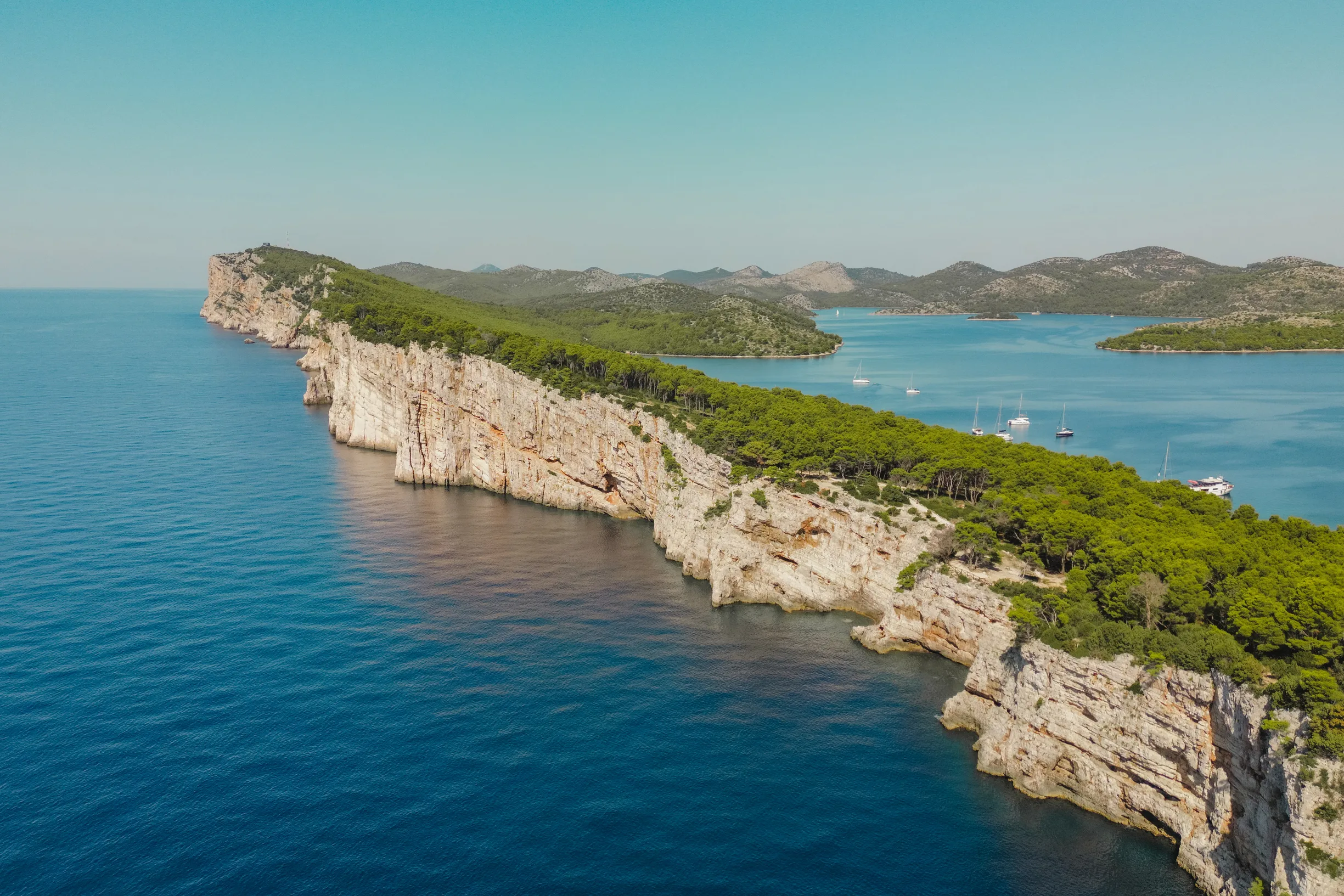
A nevera is a fast, violent summer squall that sweeps in off the Adriatic, usually from the west or north-west, often after a run of hot still days. It builds in minutes, can gust to 40 or 50 knots for a short, intense burst, then clears almost as quickly as it came. On a charter holiday in July, nevera storm Adriatic sailing is the one bit of weather worth understanding before you leave the dock, and reading one early is the single most useful safety skill you can carry.
The good news for nevera storm Adriatic sailing on a catamaran: a wide multihull, well anchored or under reduced sail, handles these squalls calmly if you prepare in time. This guide covers the warning signs, which bays shelter you, how the boat behaves, and the heat tactics that keep July comfortable aboard.
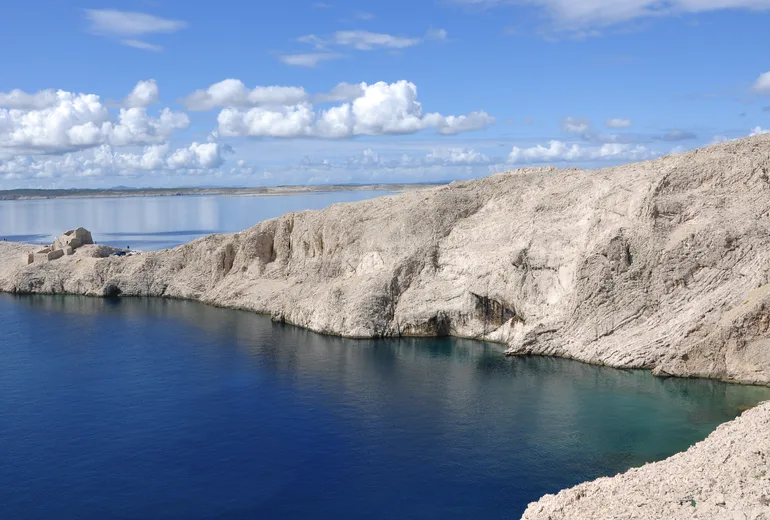
A nevera is a thermally driven squall line, most common from late June through August when the land heats up and unstable air piles in from the west. It is not the same as the bora, the cold north-easterly that mainly bites in the off-season, nor the steady maestral that fills in most summer afternoons. The nevera is brief and sharp: heavy wind, often thunder and a downpour, then calm.
Because it is short, the danger is being caught unprepared in the open or dragging anchor at the moment it hits. Crews who watch the sky and the forecast usually have ten to thirty minutes of warning, which on a manageable boat is plenty. Our overview of sailing weather in the Split area puts the nevera in the context of the region’s other summer winds.
The classic tell is a dark wall of cloud building on the western horizon, often with a hard, defined leading edge and sometimes a greenish tint. The air goes oddly still and heavy, the temperature drops a touch, and the barometer dips. If you see lightning offshore to the west on a hot afternoon, treat it as a nevera until proven otherwise.
Modern forecasts help enormously. Check a reliable model the night before and again at lunchtime; Croatian meteo services and the usual sailing apps flag squall risk well. Listen to the VHF for any warnings, and watch what experienced local boats do, because they leave busy anchorages early when they smell one coming.
Once the cloud wall is closing, act rather than wait. Get everyone aboard, drop and stow the awning and bimini extensions that act like sails, and close hatches. If sailing, reef hard or drop sail and motor; if anchored, check your scope, let out more chain, and start the engines so you can motor against the anchor if it drags. A few minutes of preparation turns a scary squall into a non-event.
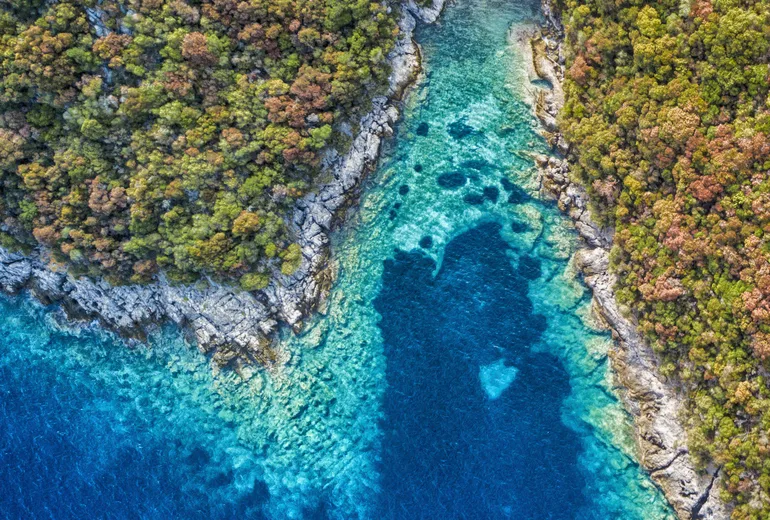
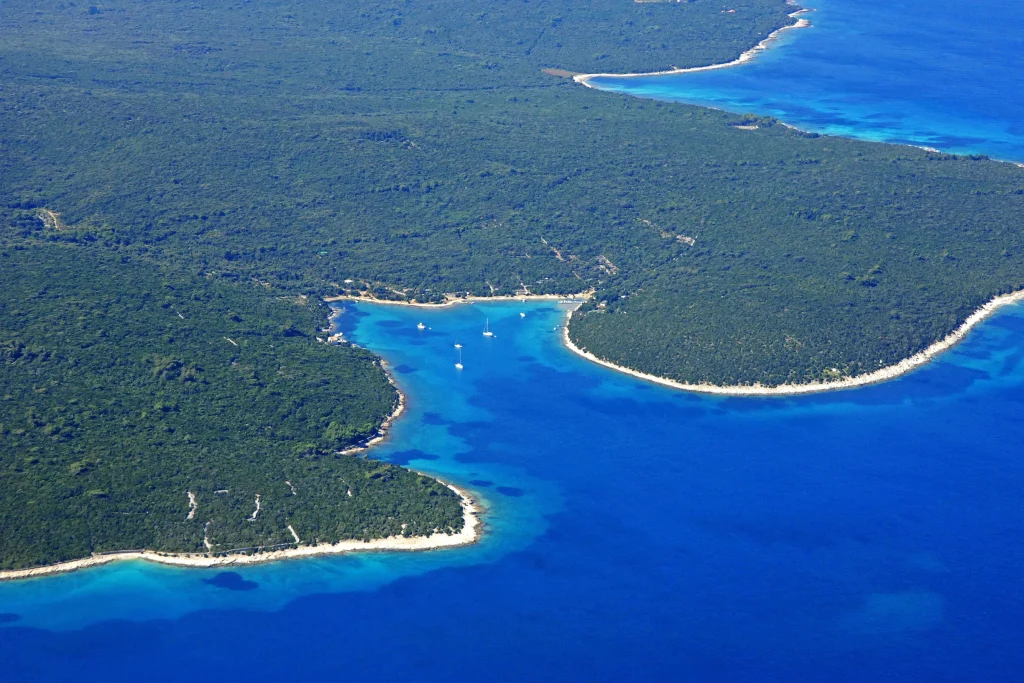
Because the nevera comes mostly from the west and north-west, you want a bay closed off in that direction, with high ground to the west. A south- or east-facing inlet behind a hill is ideal. Deep, narrow anchorages with steep sides break the wind far better than a wide-open bay that only protects you from the prevailing maestral.
In central Dalmatia, the Brač south-coast inlets like Lučice, the well-enclosed bays on Vis, and the deeper Pakleni channels near Hvar all give good western shelter. Avoid spending a doubtful night exposed to the open west; if a squall is on the cards, a town quay or marina is worth the fee. Knowing the safe corners is exactly why we recommend reading our planned anchor-only Dalmatia week, which favours bays with that western protection built in.
A catamaran’s width gives it real form stability, so it does not heel and round up the way a monohull can when a gust slams in. Under sail you ease and depower fast; the boat accelerates rather than burying a rail. That said, a cat presents a lot of windage with its tall rig and big freeboard, so reefing early matters more, not less.
At anchor the wide stance means the boat sails around its anchor less, which helps holding. The two engines are a genuine asset, letting you steer and hold position precisely if you need to motor against the chain. None of this makes a nevera trivial, but it does mean a prepared crew on a well-found cat rides out the burst comfortably and is swimming again half an hour later.
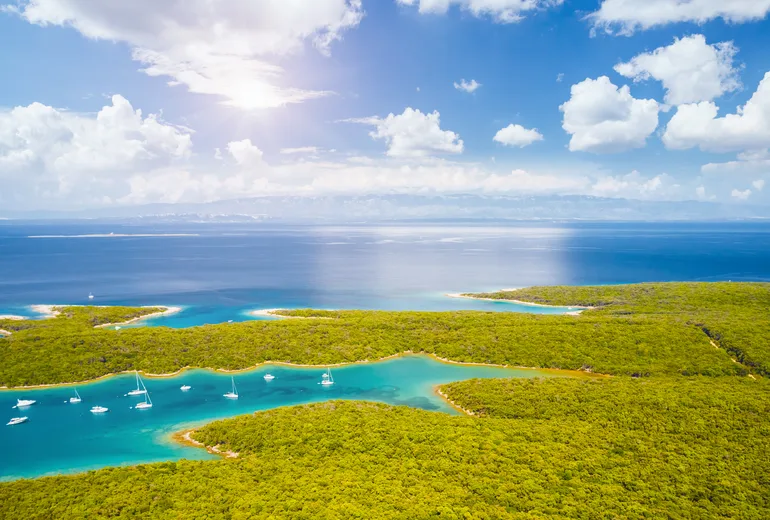
Set the anchor properly the first time, on sand if you can find it, with generous scope. Reverse hard to dig it in and pick a transit ashore so you can tell instantly if you start to move. Keep an anchor-watch alarm running on your phone. If the bay is crowded and you are not confident of your set, move to a quieter corner before the weather arrives rather than relying on the boat next door to hold.
The other half of a Croatian July is heat. Daytime air sits around 30–33°C, the sea warms into the mid-20s, and a dark saloon can become an oven. A catamaran helps here too, with cross-flow ventilation through the saloon and big shaded cockpit, but you still plan around the sun.
Anchor bow to the breeze so air flushes through the boat, rig sun awnings over the cockpit and foredeck, and run the generator for air conditioning in the worst of the afternoon if the boat has it. Swim often, drink far more water than feels necessary, and shift the active part of the day to early morning and evening. The sea is warm enough to swim from late spring; our guide to Croatian sea temperatures by month shows how July compares to the shoulder season.
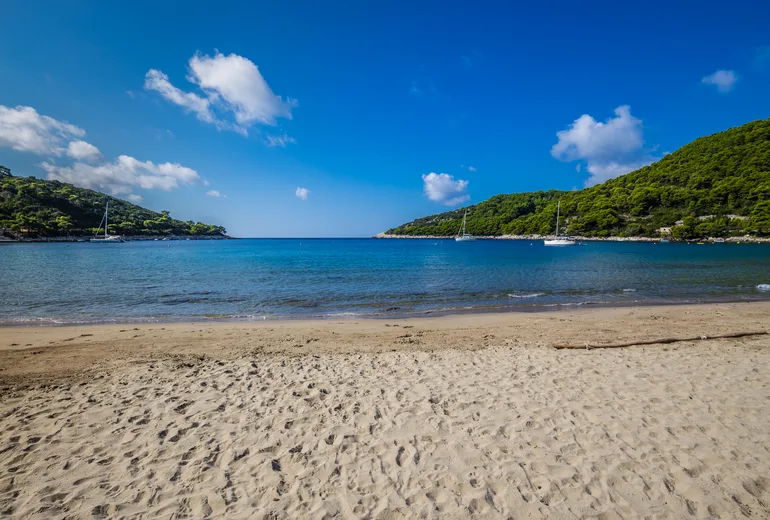
Between roughly noon and four the foredeck becomes too hot to walk on barefoot, so that is the window to be at anchor in the shade rather than sailing. Rig the awning early, before the sun is overhead, and trail a couple of fenders or a swim line off the stern so non-swimmers have something to hold. A wet sarong over a hatch acts like a cheap evaporative cooler, and a bag of ice from a town shop keeps the saloon bearable for an afternoon. Plan the day’s cooking for the cooler evening, when the cockpit is the nicest room on the boat.
Build a daily habit: check the forecast over morning coffee, note any squall risk, and plan that day’s final anchorage with western shelter in mind. Reach your overnight bay by mid-afternoon, before the heat-driven instability peaks. Stow loose gear and awnings before sunset so you are never scrambling in the dark.
Most weeks you will see one or two neveras and dozens of golden, calm evenings. Treated with respect, the squalls are part of the Adriatic’s summer rhythm rather than a reason to worry. Crews who prepare barely remember them by the time they hand the boat back.
For a prepared crew it is manageable rather than dangerous. The squall is brief and intense, so the risk is being caught unready, dragging anchor, or carrying too much sail. Reef early or drop sail, anchor properly with western shelter, and keep the engines available, and a wide catamaran rides it out comfortably.
Often ten to thirty minutes once the cloud wall appears on the western horizon, and far more if you watch the daily forecast. Heat, stillness and lightning offshore in the afternoon are the classic precursors. That window is enough to stow awnings, close hatches and secure the boat if you act promptly.
Most arrive from the west or north-west during the summer, driven by afternoon instability. That is why bays protected to the west, with high ground on that side, give the best shelter. The cold bora from the north-east is a separate, mainly off-season wind.
July is hot but very workable, especially on a catamaran with its airy saloon and shaded cockpit. Anchor into the breeze, use awnings, swim often and run air conditioning in the afternoon if fitted. Shifting active hours to morning and evening keeps the heat from dictating your day.
Want to time your trip around the kindest weather? Compare conditions month by month on our Croatia catamaran destinations pages and pick the week that suits your crew.