10–14 Days on a Catamaran: the Whole Croatian Coast from Zadar to Dubrovnik
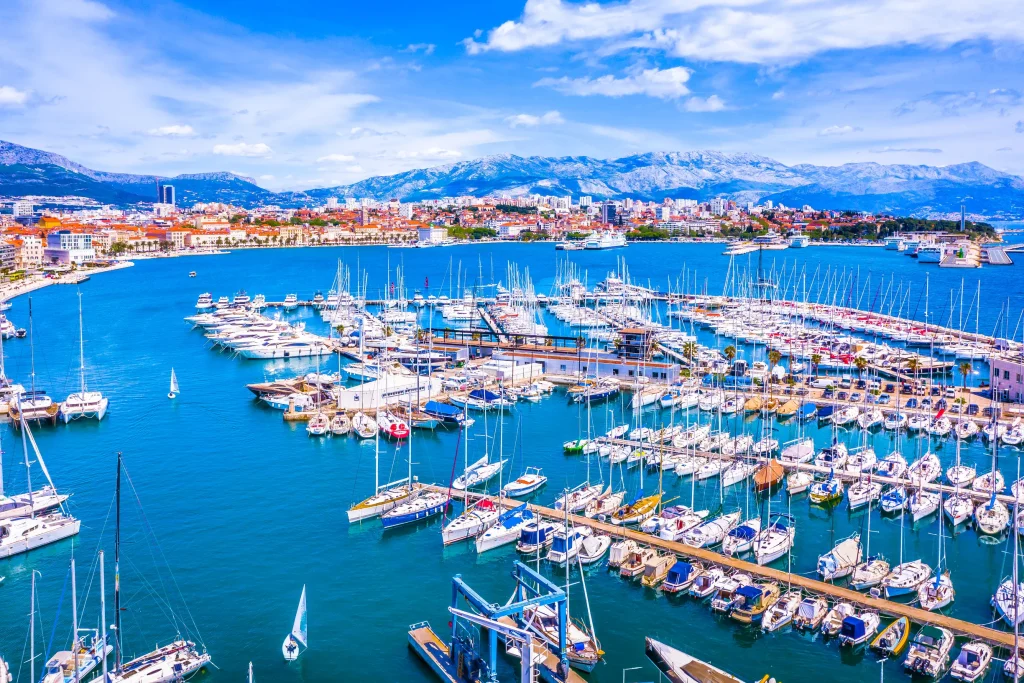
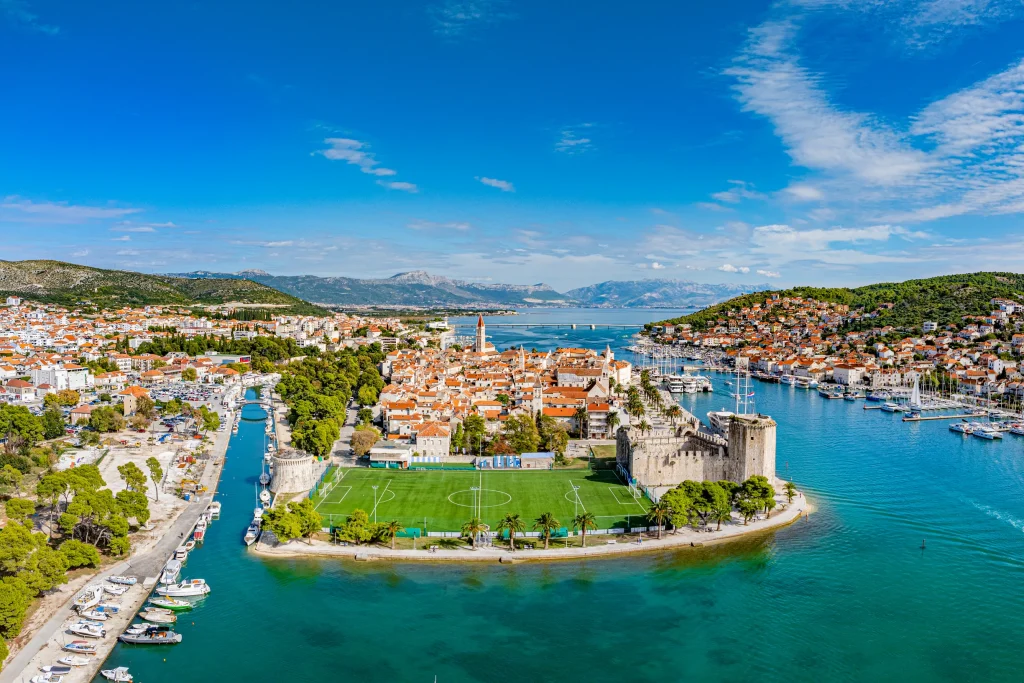
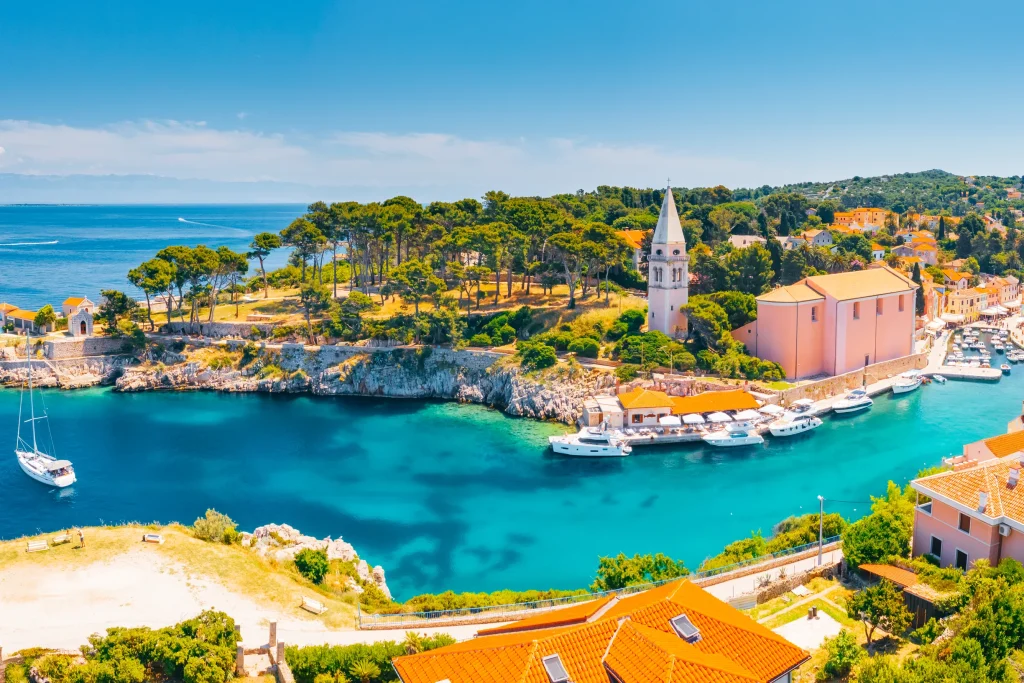
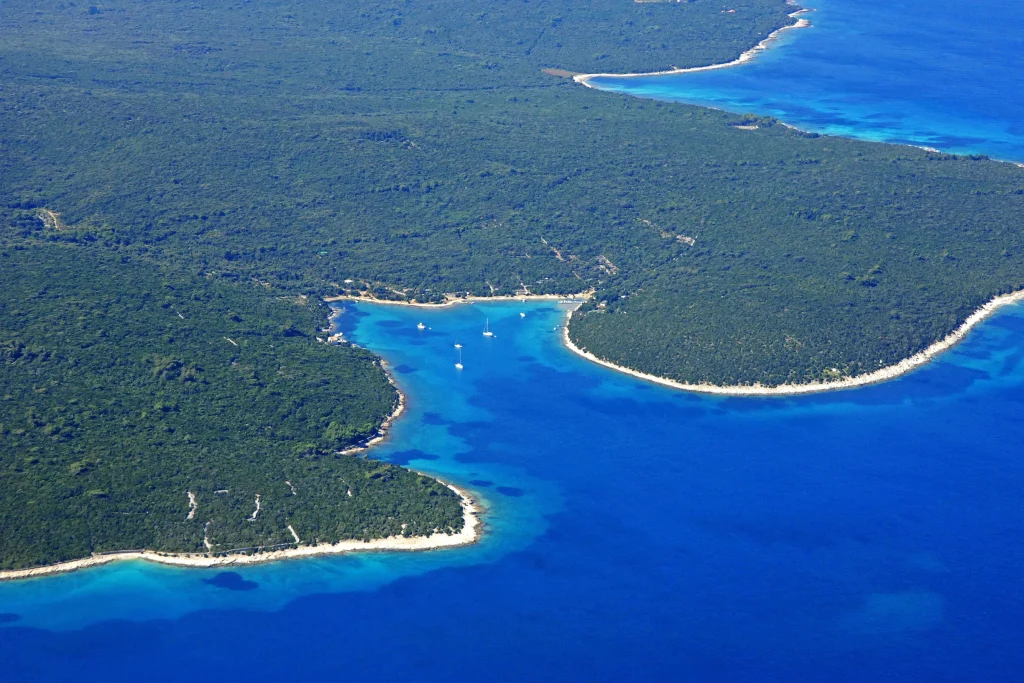
A 12–14 day one-way catamaran route down the whole Croatian coast, from the Kornati to the Elaphiti, with pacing and one-way drop-off tips.
Read more
In Croatia, a charter yacht or catamaran may carry a maximum of 12 passengers, not counting professional crew or infants under one year of age. The limit comes from the Croatian Maritime Code and international SOLAS rules: any vessel carrying more than 12 passengers is legally a passenger ship and needs commercial certification that standard charter yachts do not hold.
The rule is not a charter-company policy or an insurance quirk — it is written directly into how Croatian law defines vessels. The Croatian Maritime Code (Pomorski zakonik, Official Gazette 181/04 with amendments through 17/19) draws its category lines at exactly 12 passengers:
The same threshold exists internationally. The SOLAS Convention defines a passenger ship as one carrying more than 12 passengers, and the EU’s passenger ship safety directive (2009/45/EC) harmonises safety standards for passenger ships on domestic voyages within member states, including Croatia. Since a 2017 amendment (Directive 2017/2108), the harmonised EU rules apply to passenger ships of 24 metres and over, with smaller passenger vessels regulated by national rules. Croatia’s 12-passenger line is therefore the local expression of a threshold recognised across the entire maritime world.
One practical nuance matters more than any of the legal texts: the binding number for your specific boat is what is written in its registration documents. The permitted number of persons is determined by the harbour master’s office and recorded in the vessel’s papers. Many charter catamarans are certified for exactly 12 persons, but some are certified for 10 or 11 — and that lower number, not the theoretical maximum, is what an inspector will check.
Twelve passengers is the internationally agreed point at which a pleasure vessel becomes public transport. Above that line, regulators assume the operator is running a small ferry or cruise vessel, and the safety expectations change accordingly. Passenger ships must satisfy far stricter requirements for hull subdivision and damage stability, structural fire protection, life-saving appliances, evacuation arrangements and crew certification. They are surveyed more often and crewed by professionally licensed mariners.
A production sailing catamaran, however well built, is simply not designed to those standards — and retrofitting it would be neither practical nor economical. Rather than forcing passenger-ship engineering onto leisure yachts, the law caps how many paying guests they may carry. The result is a clean split: yachts and catamarans up to 12 guests under the recreational regime, purpose-built passenger vessels above it.
The rule also protects charterers. Everyone on board a 12-passenger catamaran can be accounted for in seconds, fits into the liferaft capacity, and can be briefed by a single skipper. Those safety margins are precisely what the certification threshold is designed to preserve.
The Croatian Maritime Code defines a passenger as every person on board except two groups: children under one year of age, and persons employed on board in any capacity. In practice, on a Croatian charter this means:
So a crewed catamaran can legally sail with 12 guests plus a skipper and hostess — 14 people on board — as long as the vessel’s certificate permits that total number of persons. Conversely, on a bareboat charter where one of your own group acts as skipper, that person is not employed on board and still counts as a passenger.
A group of 13 cannot squeeze onto one charter catamaran, but Croatia is arguably the best-equipped destination in the Mediterranean for larger groups. The realistic options, roughly in order of popularity:
Croatia takes the rule seriously, and it is enforced through paperwork before you ever leave the marina. Under the charter ordinance (Official Gazette 42/17), every charter company must register its crew and passenger lists in the Ministry’s central database before the vessel puts to sea. Your charter base will ask for the full names, dates of birth and travel document numbers of everyone on board — this is why. The list must match the people actually sailing; adding a thirteenth guest “just for a day hop” is not possible without falsifying it.
On the water, harbour master offices and the maritime police run routine checks, especially in July and August. Carrying more persons than the vessel’s papers allow is a misdemeanour under the Maritime Code, and inspectors can levy on-the-spot fines against both the operator and the skipper under the misdemeanour provisions of the Maritime Code — the exact amount depends on the vessel category and the severity of the breach. The practical consequences usually hurt more than the fine itself: the voyage can be stopped until the excess passengers disembark, the charter company may treat the breach as grounds to terminate the contract without refund, and exceeding certified capacity can void the vessel’s insurance — leaving the group personally exposed if anything goes wrong.
The takeaway for planning is simple: count your group honestly at the enquiry stage, remember that only under-ones and registered crew sit outside the count, and if you are 13 or more, plan around two boats or a certified passenger vessel from the start. It costs nothing to get right and a great deal to get wrong.
No. Under the Croatian Maritime Code, persons employed on board — a professional skipper, hostess or cook registered on the crew list — are not passengers. A crewed catamaran may therefore carry 12 guests plus its crew, provided the total stays within the number of persons stated in the vessel’s registration documents.
Yes, with one exception: children under one year of age are excluded from the passenger definition in the Croatian Maritime Code. Every child aged one or older counts as a full passenger, so a group with many kids still needs to stay within 12 countable passengers or book a vessel certified for more.
Exceeding the permitted number of persons is a misdemeanour enforced by harbour master offices and the maritime police, who verify the registered passenger list against the people on board. Expect a fine, an interrupted voyage until excess guests disembark, potential termination of the charter contract without refund, and possible loss of insurance cover.
Book two catamarans sailing the same itinerary, or choose a vessel certified above the 12-passenger line: a large passenger yacht (24 metres and over, up to 36 guests), a crewed gulet, or a Croatian mini-cruiser hosting up to around 40 guests. Cabin charter on a crewed vessel is another simple option for flexible groups.