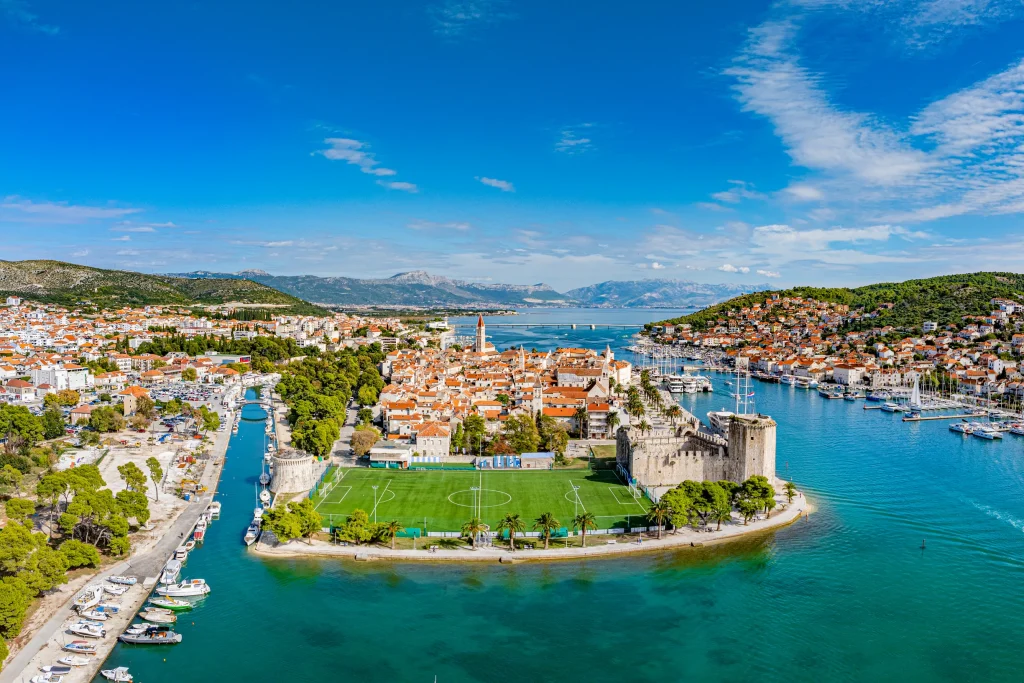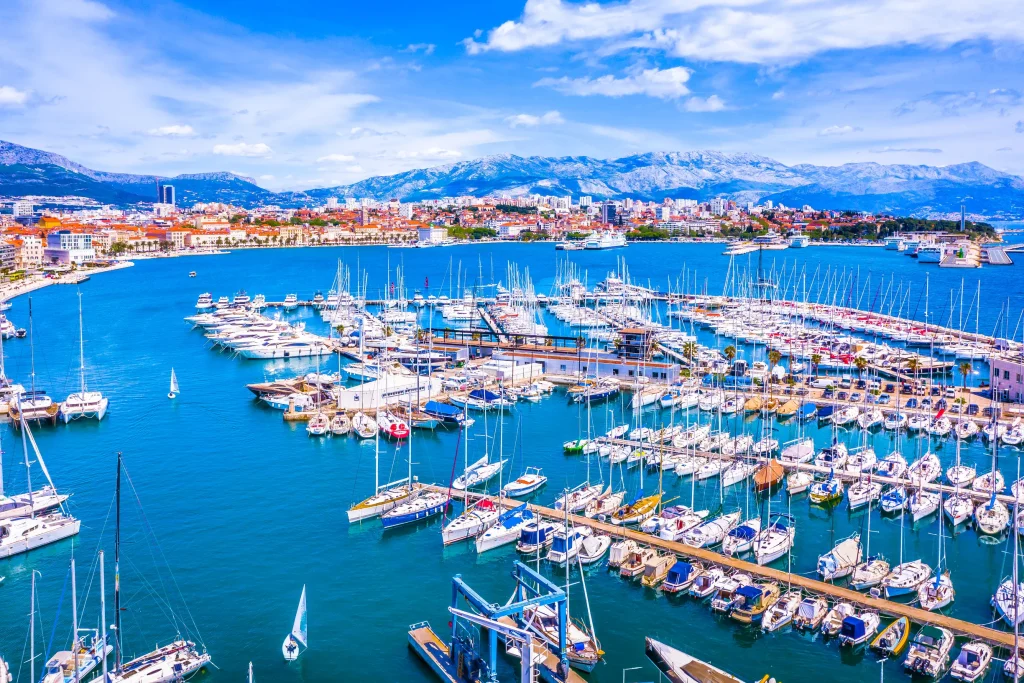
Split, Trogir or Šibenik? Picking Your Catamaran Base for 2027
Split, Trogir or Šibenik? A practical comparison of Croatia’s three central catamaran bases on transfers, berths and the routes each one opens up.
Read more
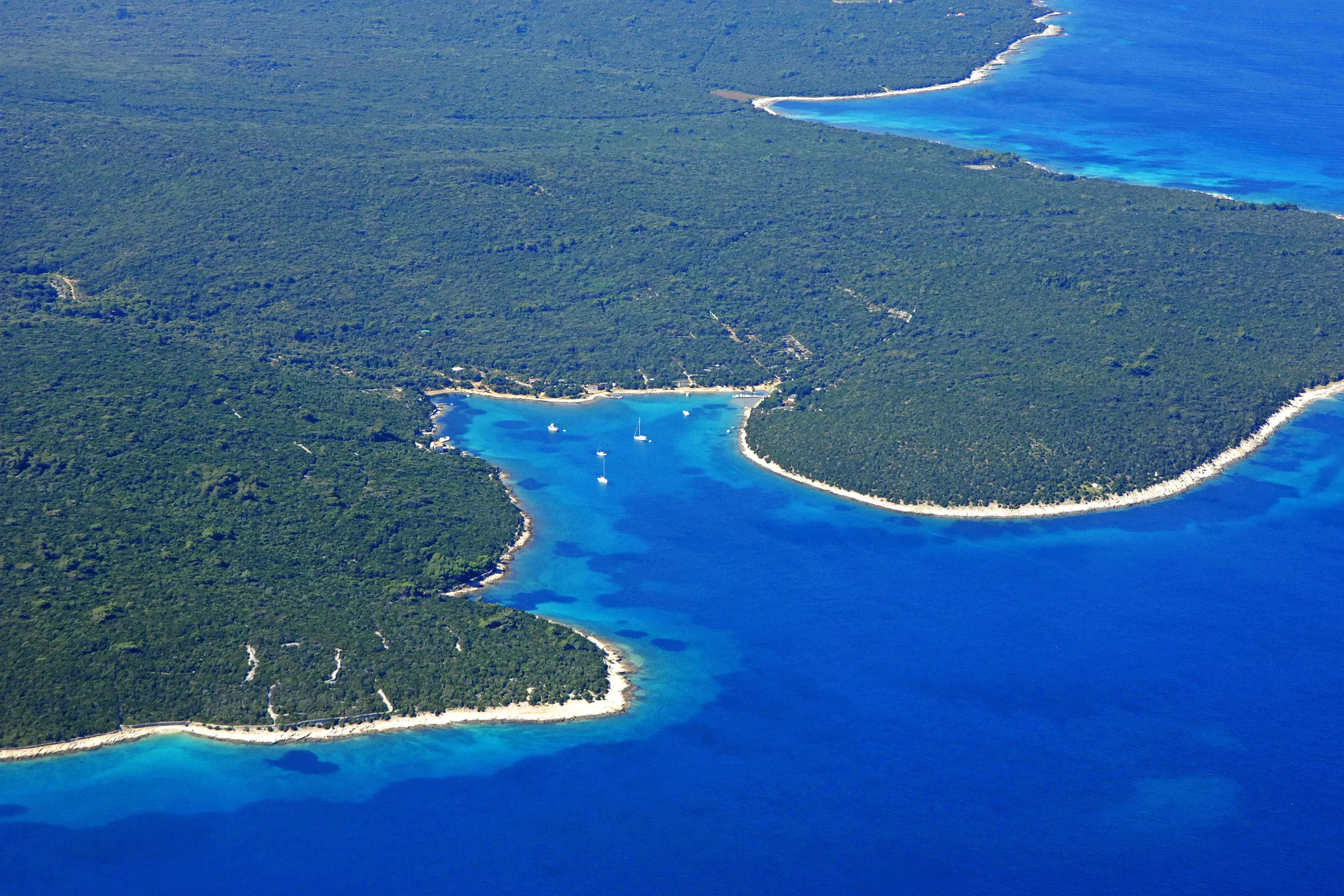
Two weeks is the length where Croatia stops being a postcard you visit and starts being a coast you actually sail. With a two week sailing itinerary croatia gives you, you can run the whole working coastline from the Kornati in the north to the Elaphiti islands off Dubrovnik, with time to anchor twice in the same bay because the first morning was too good to leave.
The honest answer to “can you sail the whole Croatian coast in two weeks?” is yes, but only if you treat the trip as a north-to-south transit rather than a there-and-back loop. The distance from Zadar to Dubrovnik is roughly 150 nautical miles as the gull flies, more like 180–200 once you weave between islands. Spread over twelve or fourteen days that is a relaxed 15–18 NM a day, with a couple of longer legs you knock out early. Here is the blueprint long-haul guests tend to book first, and the one decision that changes all the maths.
Before you plot a single anchorage, settle the base question. A one-way charter that starts in Zadar or Biograd and drops off in Dubrovnik lets you sail in one direction the whole time, so every mile is new water. Most fleets charge a one-way fee for repositioning the boat back north, typically €400–900 depending on the company and the distance, and a few cap one-way bookings to high-season turnaround Saturdays.
The alternative is a round trip out of Split or Trogir, going as far south as Korčula or Mljet and turning back. You lose the far ends, the Kornati and Dubrovnik, but you save the drop-off fee and the airport logistics are simpler. For a genuine coast-to-coast run, the one-way premium usually pays for itself in sailing variety. If you have read our breakdown of catamaran charter prices in Croatia for 2026, fold the one-way charge into the season band before you compare quotes.
Pick the boat up in Biograd or Zadar on Saturday afternoon, provision, and sleep aboard. Start gently the next morning with a short hop to Telašćica on Dugi Otok, a deep fjord-like bay with the salt lake Mir a short walk over the ridge and cliffs that drop 160 metres straight into the sea on the seaward side. There is a string of restaurant buoys in the inner bays; expect to pay €30–50 for an overnight mooring that usually comes free if you eat ashore.
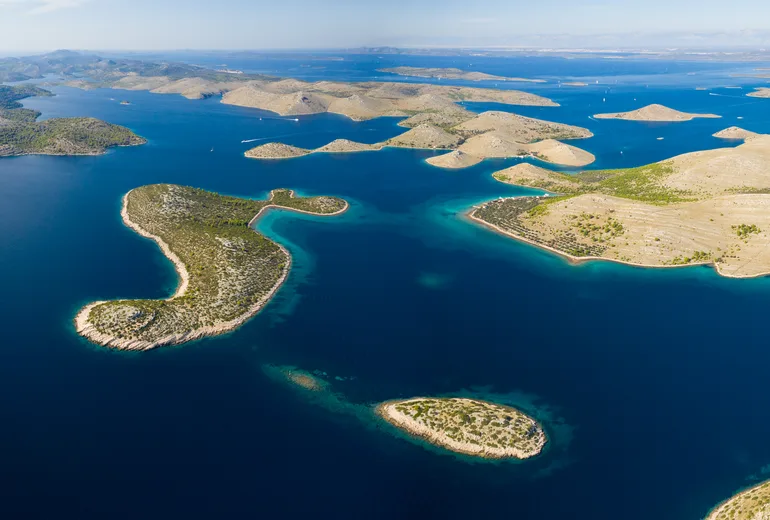
Day two is the Kornati proper, a national park of around 140 mostly barren islands. The park ticket runs roughly €60–150 per day for a catamaran depending on length and whether you buy it in advance or from a ranger boat (it is cheaper bought ahead). Anchor off Levrnaka or pick up a konoba buoy in Lavsa, where lobster from the live tank is the standard splurge. Day three, drift south through the Žut channel toward Murter and out toward the open run to Šibenik.
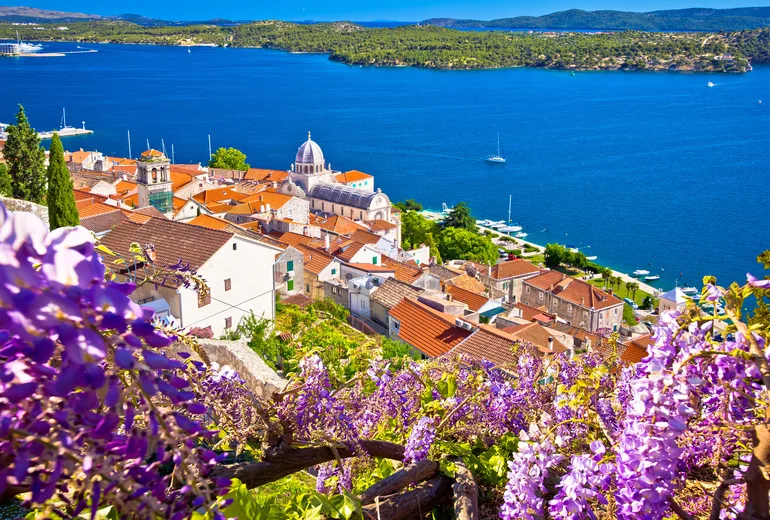
The Šibenik archipelago is the part most two-week crews underrate. Sail up the St Anthony channel into the town itself, moor at D-Marin Mandalina or on the old riverfront quay, and climb to St James Cathedral. The optional detour here is up the river to Skradin, gateway to Krka waterfalls, an easy motor in flat water that makes a complete change of scene from the salt and rock of the Kornati.
This is also a natural resupply point. The big supermarkets in Šibenik and the fuel dock make it the cleanest place to top up before the longer southern legs. If you are sailing with children, the calm river anchorages here echo the sheltered spots in our family catamaran guide to Croatia’s best bays for kids.
From Šibenik the coast gets livelier. Rogoznica’s Marina Frapa is a comfortable overnight before the run down to the Split islands. Brač gives you Milna for a quiet marina night and Lučice for a pine-fringed anchorage; Bol and the Zlatni Rat spit are worth a daytime stop but get crowded by midday in summer.
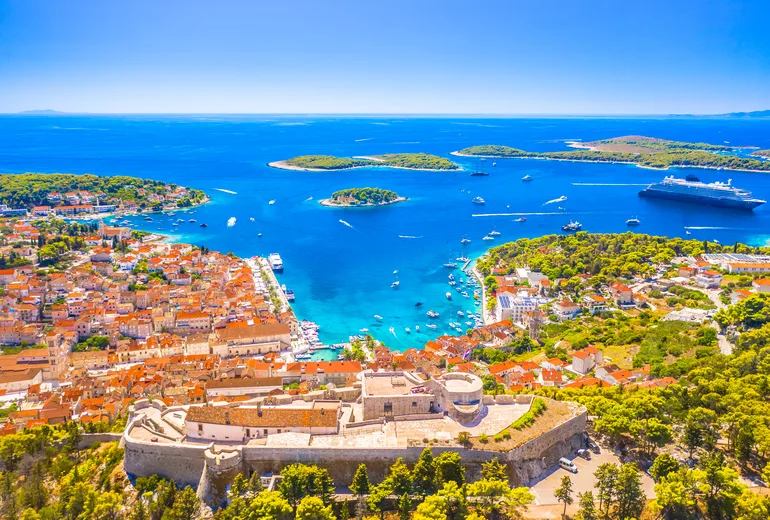
Hvar is the social pivot of any Croatian cruise. Tie up or anchor off the Pakleni islands, dinghy into Hvar town for dinner, and decide whether you want one party night or none. Stari Grad on the north side is the calmer alternative if a marina berth in Hvar town feels like a scrum. From here you are roughly halfway through both the distance and the trip.
The legs around Split are short and forgiving, which is exactly why this stretch tends to fill the middle of the itinerary. Milna to Hvar is about 15 NM, Hvar to the Pakleni anchorages barely two. Use the spare hours to provision properly: the Tommy and Konzum supermarkets in Hvar town and Stari Grad are the last big resupply before the run offshore to Vis, and fresh produce, wine and ice are easy to find here. If anyone in the crew wants a flat-water swim stop, the Palmižana bay on the Pakleni side has buoys and a couple of well-known beach restaurants for a long lunch.
Vis rewards the detour offshore. The town bay holds plenty of anchored yachts, Komiža on the west side is the fishing-village counterpoint, and a day trip to the Blue Cave on Biševo is the standard excursion (go early; the light is best mid-morning and the queue worst at noon). Vis is also where the food gets serious, the peka, slow-baked under an iron bell, is a local institution. We dig into the island in detail in our guide to Vis by catamaran and its best bays and anchorages.
Cross to Korčula next. The walled old town, often called a miniature Dubrovnik, has a marina right under the walls and a string of anchorages along the south coast at Lumbarda and on the Pelješac side. This is the part of the route where most crews start lingering, dropping a planned leg to spend a second night somewhere that clicked. Build that slack in deliberately; it is the difference between a sail and a delivery run.
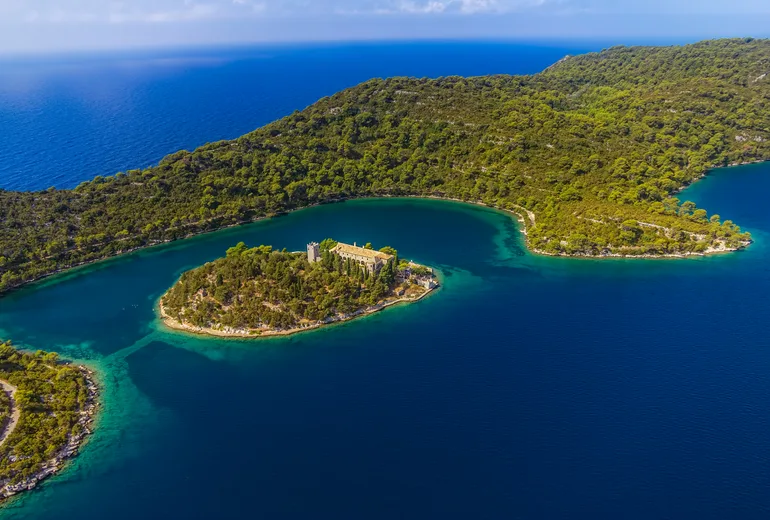
Mljet’s national park, with its two connected salt lakes and the islet monastery, is the last big set-piece before the south. Anchor in Polače or pick up a buoy in Pomena, rent a bike or kayak, and treat it as a rest day. The park fee here is separate and modest, around €25 per person in season.
Polače is the more sheltered of the two main anchorages and the better choice if any weather is forecast; it is a long, protected inlet with restaurant pontoons and easy access to the park entrance. Pomena sits closer to the smaller of the two lakes and the Pelješac channel. Either way, leave the bikes and kayaks for the afternoon and the swim in the lakes for the morning before the day-trip boats arrive from the mainland.
The Elaphiti islands, Šipan, Lopud and Koločep, are the gentle finale, low and green after the bare Kornati, with sandy bays and almost no cars. From the Elaphiti it is a short final leg into the Dubrovnik area marinas at Gruž or ACI Dubrovnik. Time the last day so you arrive with the boat clean and fuel topped, and leave the actual walled-city sightseeing for after you have handed back the catamaran. If you would rather invert the whole plan and sail south to north, our 7-day Split to Dubrovnik itinerary covers the southern half at a faster pace, and the quiet northern route from Zadar through Silba, Ist and Molat adds an even calmer alternative for the first leg.
A two week sailing itinerary in Croatia gives you something a one-week charter never does: the freedom to motor through the dull legs early so you can sail the good ones. The stretch from Zadar down to Šibenik is often light in the morning, so motor or motor-sail it and save the diesel-free days for the afternoon thermals around Hvar and Vis, where the maestral typically fills in 12–18 knots from the northwest after lunch.
Keep one buffer day unscheduled. The bura can blow hard and cold down the channels with little warning in shoulder season, and the jugo brings rain and a building southerly swell. A free day means a forecast that turns nasty becomes an extra night in a sheltered bay rather than a white-knuckle passage. Most crews find that single unplanned day ends up being their favourite of the trip.
Yes, comfortably, if you do it as a one-way transit from the Zadar area to Dubrovnik rather than an out-and-back loop. That keeps daily distances to a relaxed 15–18 nautical miles and still leaves room for two or three rest days.
For a full coast run, usually yes. The one-way fee of roughly €400–900 buys you continuous new scenery instead of retracing your wake, and over fourteen days the variety more than justifies the cost for most crews.
North to south, starting in the Kornati and ending in Dubrovnik, tends to follow the prevailing summer winds and saves the most famous old town for the finale. South to north works too and can be cheaper on flights into Dubrovnik.
Plan for national park tickets (Kornati and Mljet together can run €200–400 for the trip), marina nights at €60–150 each, fuel of perhaps €300–600 depending on how much you motor, and provisioning. A two-week catamaran trip is a bigger ticket than a single week in every line.
Late May to mid-June and early to mid-September give you warm water, lighter crowds and steadier shoulder-season prices. July and August deliver the most reliable swimming weather but the busiest anchorages and the highest rates.
Ready to map your own coast-to-coast run? Browse the Croatian sailing destinations to pin down your start and finish points, then talk to us about a one-way catamaran for your two weeks on the Adriatic.