10–14 Days on a Catamaran: the Whole Croatian Coast from Zadar to Dubrovnik
A 12–14 day one-way catamaran route down the whole Croatian coast, from the Kornati to the Elaphiti, with pacing and one-way drop-off tips.
Read more
Almost every charter route in Croatia funnels south from Split toward Hvar, Vis and Korčula. That leaves the islands northwest of Zadar oddly empty, even in late August. If you want a north Dalmatia sailing route that trades the crowds for silence, this is the corner to head for: Silba, Ist, Molat, Olib and Premuda, a cluster of low, car-free islands where the anchorages stay quiet and the bottom is often clean sand.
The legs are short, mostly under 15 nautical miles, which suits a relaxed pace and a catamaran’s easy cruising. You trade the famous towns for empty bays, simple konobas and the kind of week where the loudest sound is the wind in the pines. Here is a seven-day loop from Zadar that works in either direction.
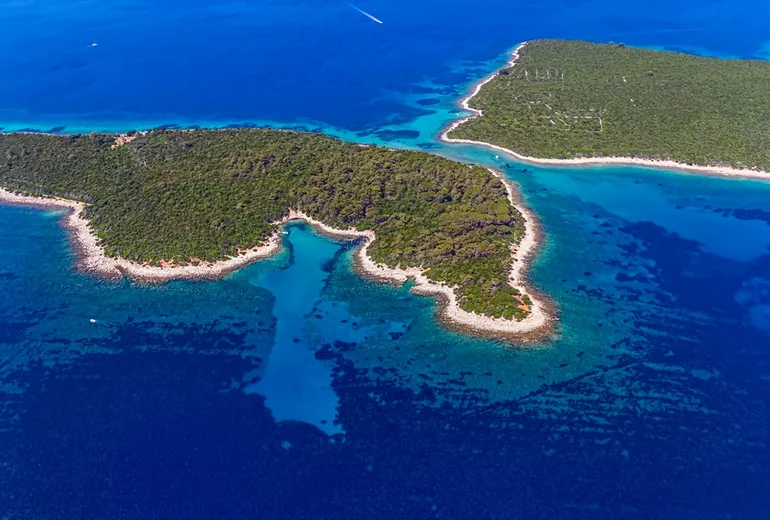
These islands are car-free or near enough, with tiny year-round populations and no big resorts. There is no marquee sight pulling day boats, no party harbour, and the charter fleets simply do not point this way. The result is a north Dalmatia sailing route where you can drop the hook in a sandy bay in mid-August and share it with two boats instead of twenty.
The sailing is straightforward. Distances are short, the channels are open, and the holding over sand is excellent, which matters for a catamaran that swings on its anchor more than a keelboat. The main thing to respect is the bura: this northern stretch catches the cold north-easterly hard, so you plan your shelter around the forecast. For the local weather picture, our notes on sailing weather conditions in the Zadar area are worth reading before you cast off.
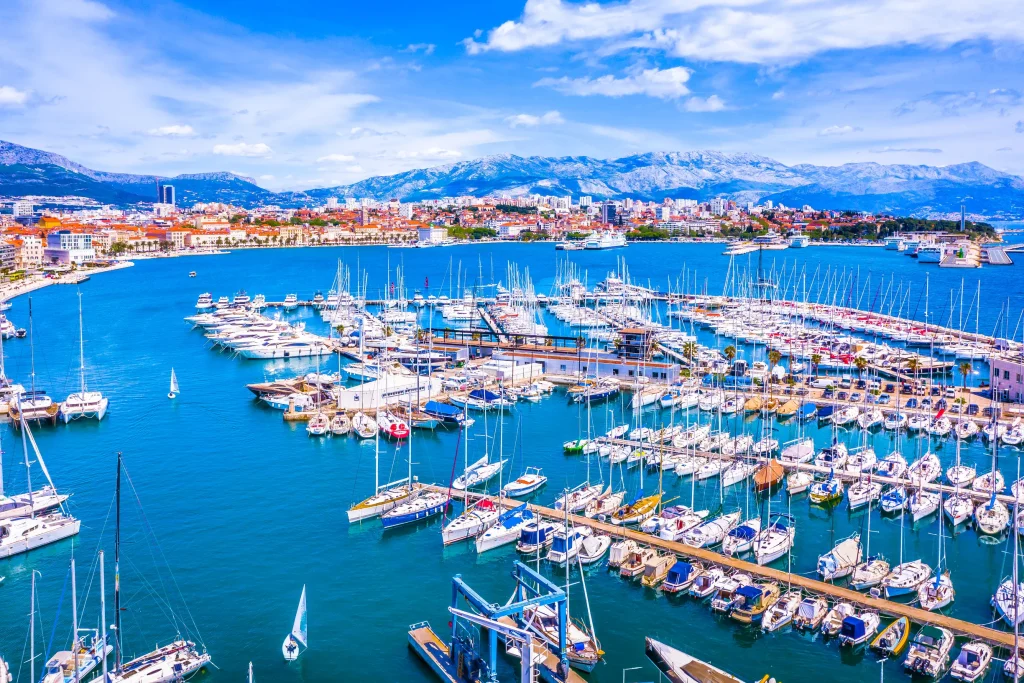
Most northern charters leave from one of the big marinas around Zadar rather than the city quay itself. D-Marin Dalmacija in Sukošan, just south of the city, is the largest and the most common charter base, with a fuel dock, chandlery and a supermarket nearby. Marina Zadar and the marinas at Biograd na Moru a little further south are the other usual options. Wherever you collect the boat, build in time on the first afternoon for a full provisioning run, because this is the last serious shop you will see for several days.
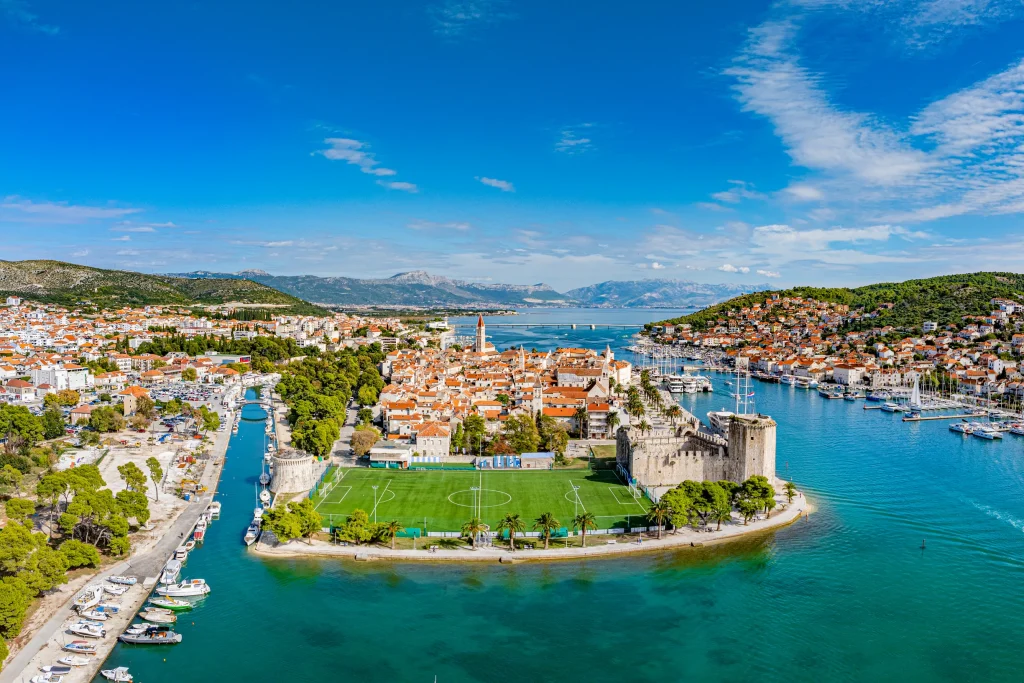
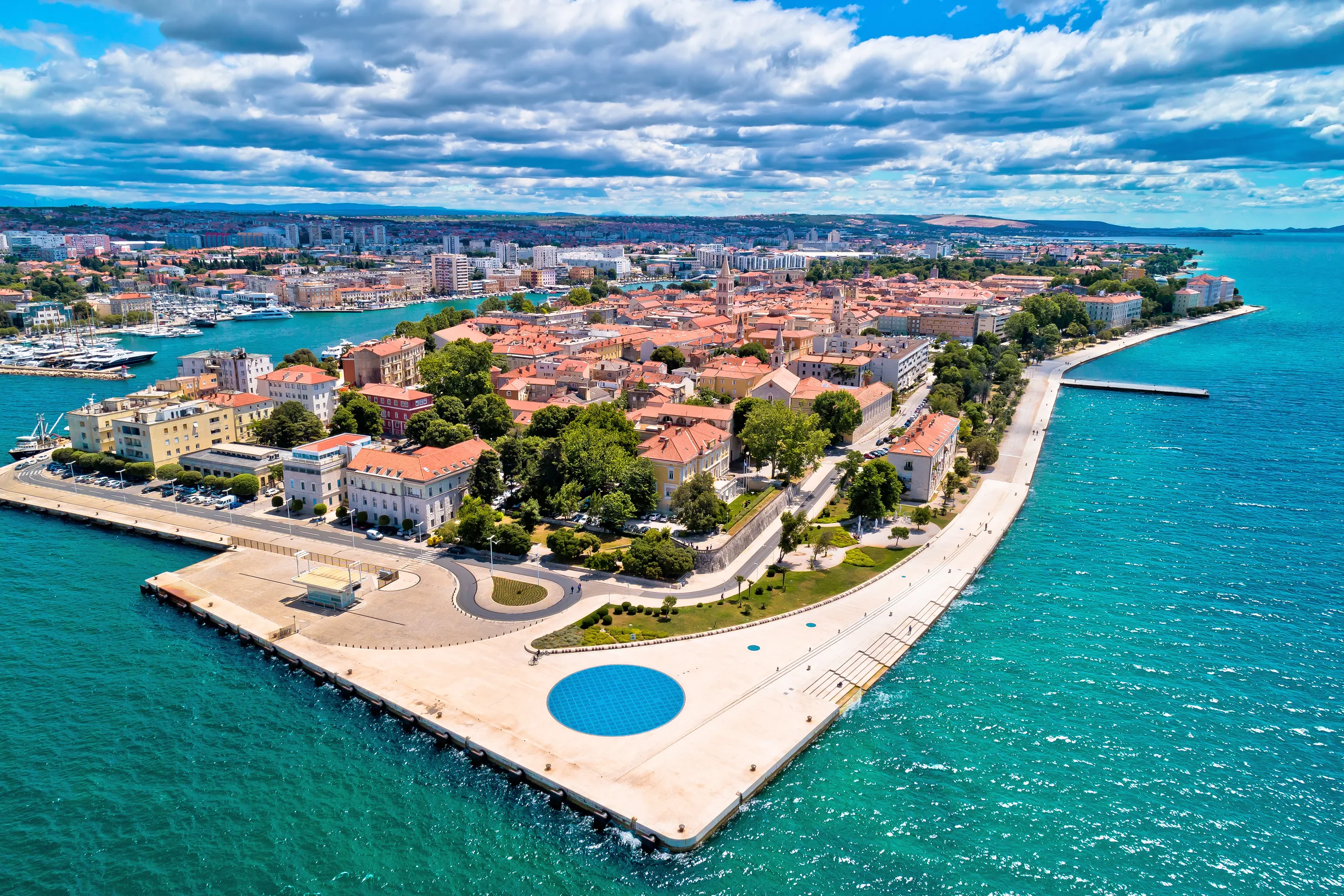
Zadar the city deserves a night at either end of the trip. The old town sits on a stubby peninsula, walkable in an evening, with the Sea Organ that plays as the swell pushes through its pipes and the Greeting to the Sun light installation on the point. The Roman forum, the round church of St Donatus and a couple of good fish restaurants round out a relaxed start before you head into the quiet islands.
Provision in Zadar, then point northwest. Zadar itself is worth an evening before you leave: the Sea Organ and the Greeting to the Sun on the old-town tip, plus good markets for stocking the boat. On day one, make the open crossing to Olib or push on to Silba, roughly 20–25 nautical miles depending on wind. Olib has wide sandy shallows and a sleepy village; Silba is the social hub of the group, car-free and pretty, with two harbours either side of a narrow waist.
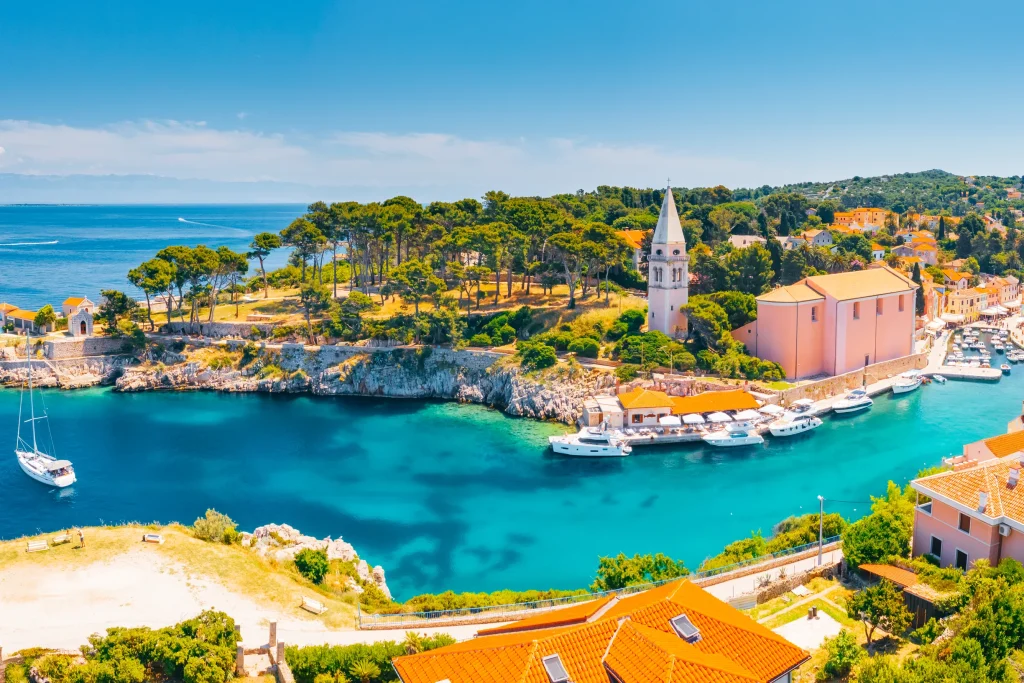
Silba’s eastern bay, Mul, is the usual overnight, with a small quay and room to anchor. The island bans cars entirely, so the lanes are quiet and the pace drops the moment you step ashore. A couple of konobas serve fresh fish and the local lamb, and the swimming off the sandy shelves is some of the best in the area.
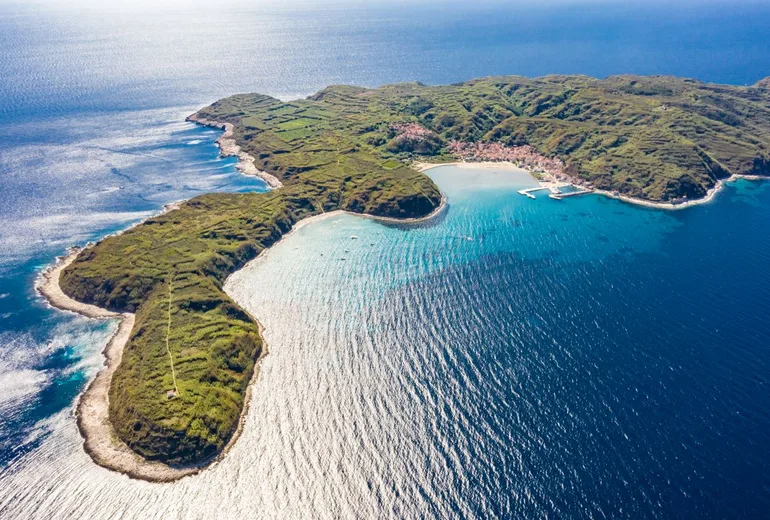
From Silba it is a short hop, under 8 nautical miles, to Ist, a tiny island split by an isthmus with sheltered bays on both sides. Anchor in Kosirača or Široka for clean sand and clear water. There is little to do but swim, walk and eat, which is exactly the point. A single konoba near the harbour does an honest grilled-fish dinner.
Next, cross to Molat, three villages and a handful of deep, well-protected bays. Jazi bay on the south side is a reliable anchorage with good holding, and the harbour at Zapuntel gives shelter if the wind turns. Molat is bigger and greener than Ist, with more walking and a couple of beaches reachable on foot. These two islands form the quiet heart of the route, the legs barely an hour each.
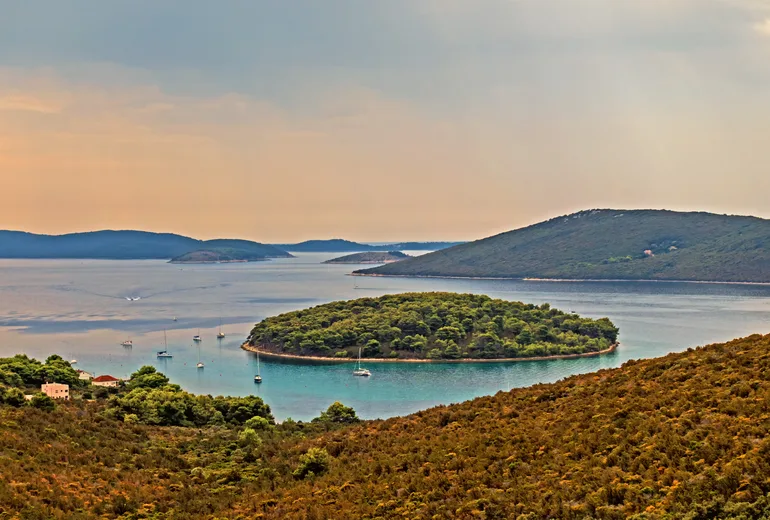
Push west to Premuda, the most remote of the group and the one experienced crews speak about quietly. Krijal bay on the south side is the main anchorage, with a small konoba and buoys. Premuda’s draw is underwater: the so-called Katedrala, a cave-and-arch system just offshore where shafts of light pierce the rock at depth, is a famous dive site. Even snorkellers can enjoy the clear water over the reefs.
This is the turnaround point of the loop, the furthest you will be from the mainland. The crossing from Molat is around 12 nautical miles of open water, so pick a settled day. Premuda’s isolation means you should arrive provisioned and self-sufficient; the konoba is the only commerce on the island.
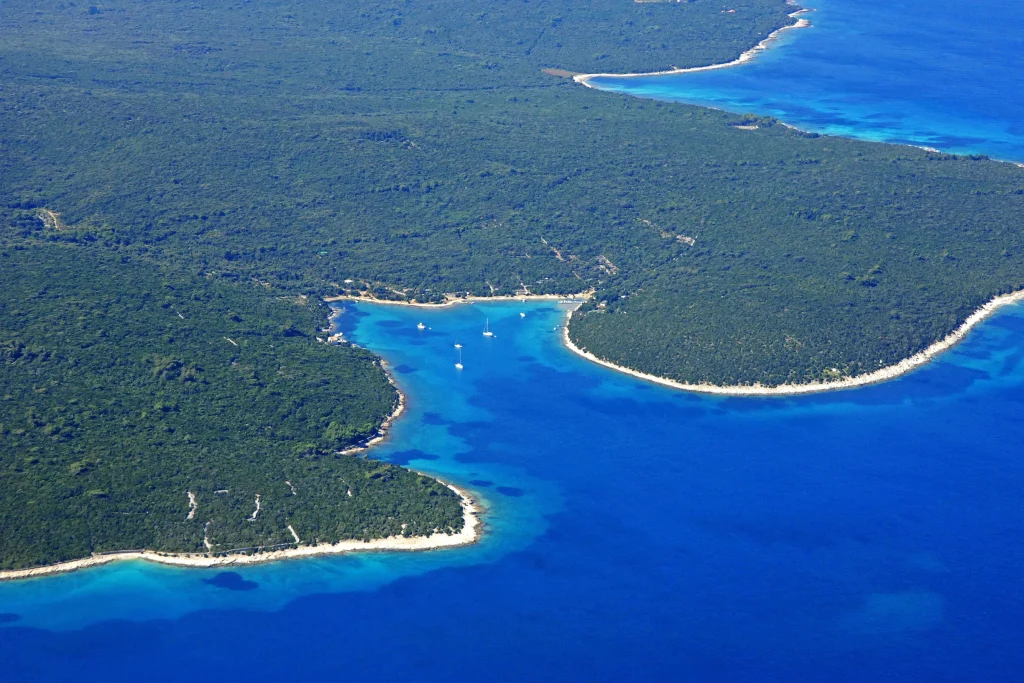
Because so many of these bays are sand over a thin layer of weed, the trick is to find a clear sandy patch, drop in it, and lay generous scope, around five to one in the settled summer pattern. On a catamaran with its higher windage and lighter swing, an oversized anchor and a snubber earn their keep here. In the more open bays, check the holding before you commit to a night, especially if any bura is forecast, and do not be shy about re-setting if the first attempt drags through weed.
Turn south and aim for Dugi Otok, the long island that shelters the whole archipelago. The headline anchorage is Telašćica nature park at its southern end, a deep, branching bay beside towering sea cliffs and the salt lake Mir. The holding is good, the scenery is dramatic, and a buoy field plus a couple of konobas handle the evening. Pay the modest park fee and walk up to the cliff viewpoints.
On the way you can break at Sakarun on Dugi Otok, a rare white-sand bay with shallow turquoise water that genuinely earns the comparisons people make. From Telašćica you are well placed to slip into the northern Kornati if you want a day among the bare islands and lagoons before heading home.
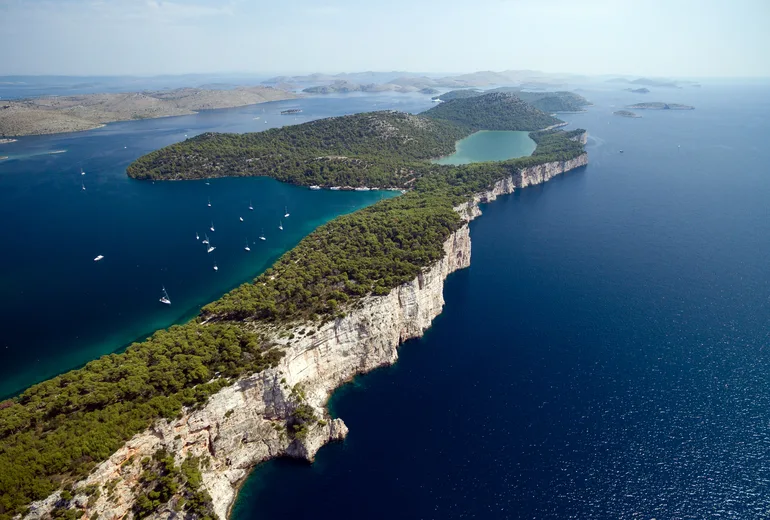
Close the loop with a run back toward Zadar, optionally clipping the northern Kornati for a final lunch stop in a turquoise lagoon. The whole week rarely exceeds 90–100 nautical miles, which leaves long mornings at anchor and short, civilised afternoon passages. If the Kornati pull at you, our companion guide to a one-week sailing route from Zadar through the Kornati and beyond covers the park in detail and pairs neatly with this quieter northern loop.
Because these islands have so few marinas, you will spend most nights at anchor or on a konoba buoy. If that is your preference, the approach in our guide to a no-marina catamaran week built around anchorages and buoys applies directly here.
Zadar is your only big provisioning point, so stock up well; the island shops are small and stock thins by late season. Water and fuel are limited north of Zadar, so top up tanks before you head out and refill at D-Marin Dalmacija in Sukošan or in Zadar on the way back. Sea temperatures in late August sit around 24–25°C, and the late-summer light is softer than the July glare, ideal for photography and long evenings at anchor.
The character here is quieter and older than the central Dalmatian honeypots. Silba and Ist were once captains’ islands, their grander stone houses built on profits from the age of sail, and you still see that faded prosperity in the architecture. There are no big beaches with bars, no glass-bottom day boats, and crucially no cars on Silba and Ist, so the soundtrack ashore is cicadas rather than scooters. Wildlife is part of it too: late summer brings dolphins through these channels, and the clear, lightly fished water makes for good snorkelling over the rocky points. It is the rare corner of the Croatian coast where late August still feels like an off-season find.
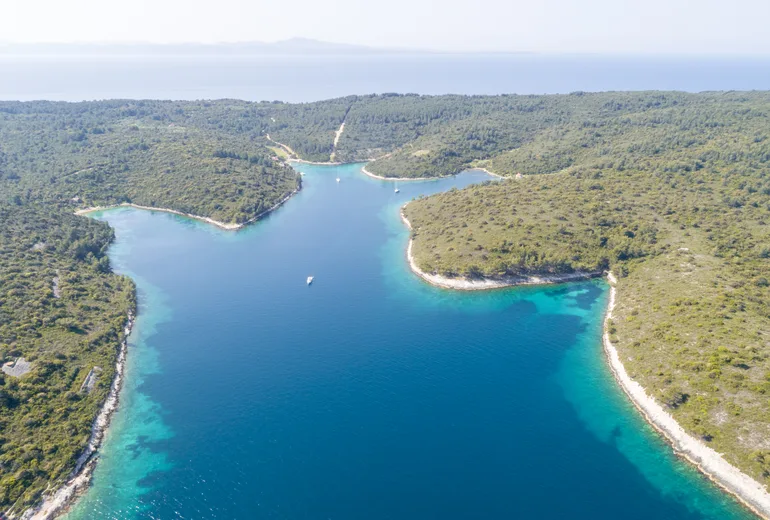
The islands northwest of Zadar, Silba, Ist, Molat, Olib and Premuda, stay remarkably quiet even in August. They are car-free or near it, have no big resorts and sit off the main Split-to-south charter highway, so anchorages there are far emptier than around Hvar or Korčula.
Short. Most hops between the islands are under 15 nautical miles, often barely an hour under power, with the longest legs being the Zadar crossing and the run out to Premuda. The whole seven-day loop totals roughly 90–100 nautical miles, leaving plenty of time at anchor.
Yes. Many of these bays have clean sand bottoms, which hold well and suit a catamaran that swings more freely than a keelboat. Olib, Ist and Sakarun on Dugi Otok all offer sandy shelves and clear, shallow water that a shoal-draft cat can use to its advantage.
This stretch catches the bura, the cold north-easterly, harder than central Dalmatia, so plan shelter around the forecast. Deep bays on Molat and the protected Telašćica on Dugi Otok give good cover, and Zadar-area marinas are within reach if a strong blow is coming.
Want to trade the August crush for empty bays? Browse our Croatia catamaran charter destinations and routes and build a quiet northern week from Zadar.