10–14 Days on a Catamaran: the Whole Croatian Coast from Zadar to Dubrovnik
A 12–14 day one-way catamaran route down the whole Croatian coast, from the Kornati to the Elaphiti, with pacing and one-way drop-off tips.
Read more
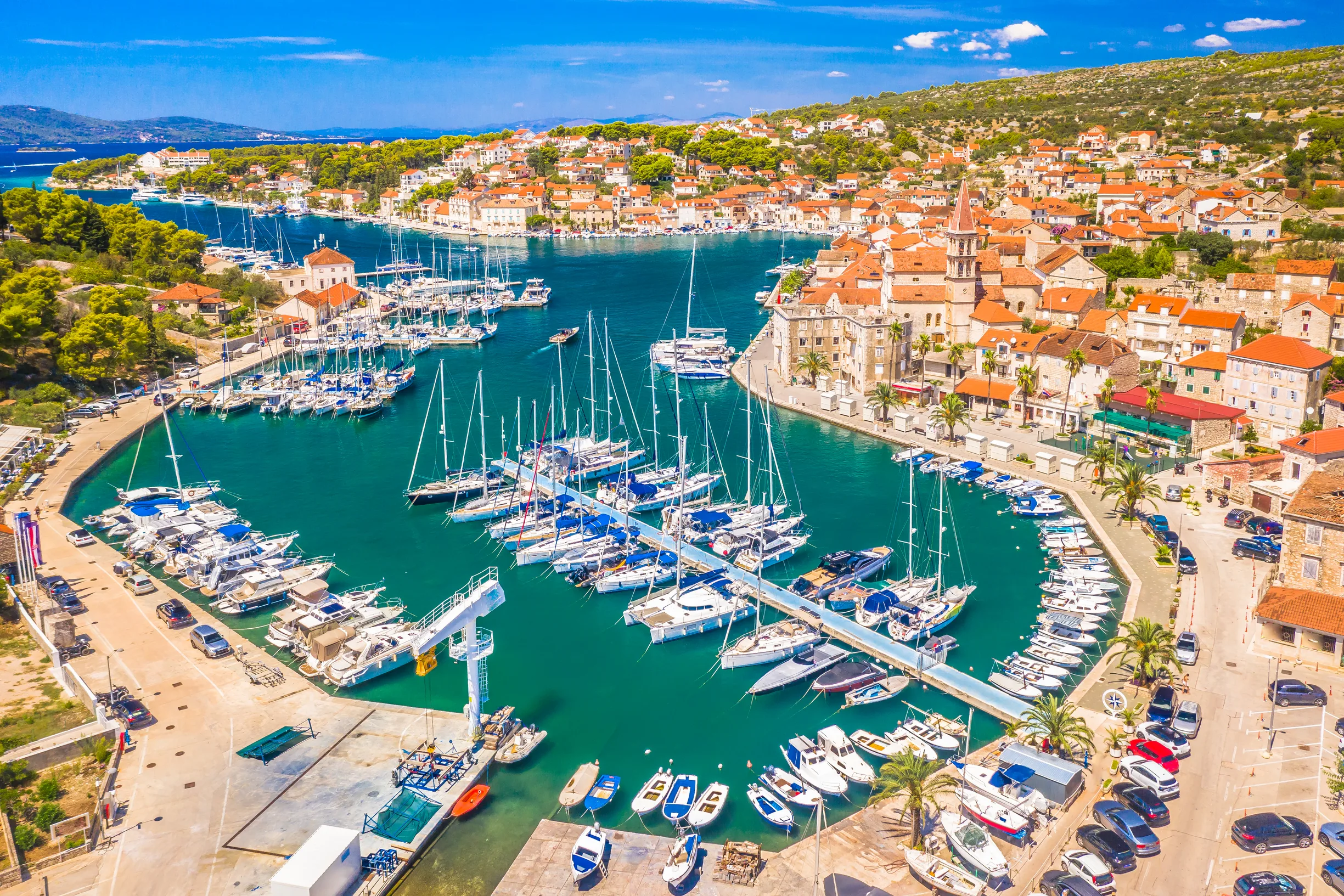
Brač is the big island you can see from Split, and the one most charter crews underestimate. Approached by ferry it is busy and beach-focused; approached by catamaran it is a string of quiet inlets, stone villages and one of Croatia’s most photographed beaches. Done right, Brač anchorages sailing rewards crews who arrive early and know which bays stay calm overnight rather than those who chase the obvious beaches by road.
This is a guide from the water, not the road. We cover day-anchoring off Zlatni rat before the tripper boats, the sheltered overnight inlets at Bobovišća and Lučice, the marina village of Milna, and stone-cutting Pučišća, with the wind notes and shallow spots that matter on a wide-beam cat.
Brač sits right on the doorstep of the Split and Trogir charter bases. Milna, on the west tip, is only about 12 NM from Split, a comfortable 2 hours, which makes Brač an easy first or last island. The south coast inlets are a little further but still within a half-day’s sail. The Brački channel between the island and the mainland can funnel the maestral, so expect a lively reach in the afternoon.
Because it is so close, Brač pairs naturally with its neighbours. Many crews fold it into a Šolta-Brač-Hvar loop, and the planned Šolta micro-guide sets up the obvious first leg before you cross to Brač.
Milna is a deep, sheltered natural harbour and the island’s main yachting village, with a couple of marinas, a town quay and good anchoring in the outer bay. It is well protected from most summer winds, which makes it a reliable overnight even when the channel is blowing. The waterfront is genuinely pretty, a row of stone houses around the church tower, with restaurants that stay reasonable by Dalmatian standards.
Anchor in the outer reaches of the bay over sand and weed in 6–10 metres, or take a berth if you want to step ashore for dinner and provisions. Milna’s shops and bakery make it a sensible resupply point mid-week. It is also a calm place to wait out unsettled weather, with shelter from the west that suits a squally afternoon.
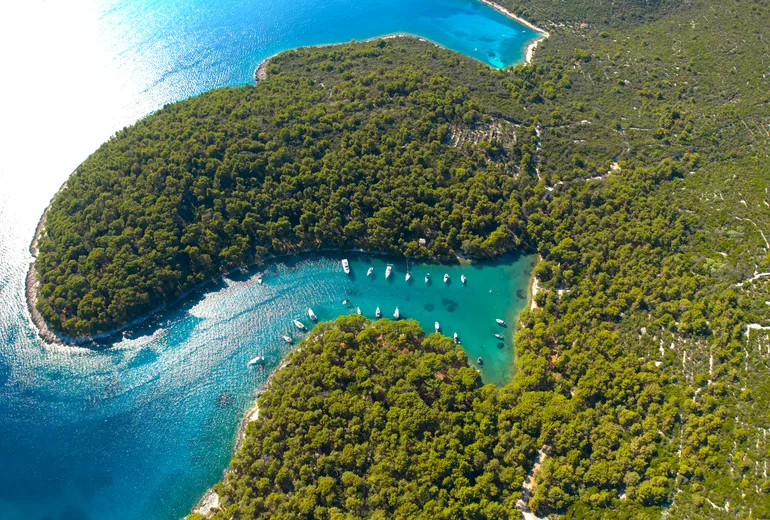
Just north of Milna, Bobovišća is a deep, fjord-like inlet that stays quiet even in season. It bites well into the island, giving all-round shelter and room to swing, with holding over sand and mud once you set the hook properly. There is a hamlet at the head, a konoba or two, and not much else, which is precisely the appeal.
This is the kind of bay a catamaran is made for: drop in the shallower inner arm, lay generous scope, and you have a flat, sheltered night with pine shade and clear water. It is a strong nevera refuge too, tucked away from the open west. For more bays in this vein, our best anchoring locations in Croatia guide lists the inlets worth detouring for.
On the south coast, Lučice is the standout, a many-fingered inlet near Milna’s southern approaches with several arms to choose from. It offers good shelter, pine-fringed shores and free anchoring, and even in August you can usually find a quieter finger if you arrive by mid-afternoon. The water is clear and deep enough to swim straight off the boat.
The neighbouring south-coast bays around Smrka and Osibova give similar shelter on calmer days. These are swim-and-sleep anchorages rather than villages, so provision before you arrive. Watch the maestral funnelling along the channel; the deeper inlets break it well, but a shallow open bay can get gusty by late afternoon.
Holding in the Brač inlets is generally good over sand once you reverse hard to set, but weed patches near the heads of bays can foul an anchor, so check your set every time. In the narrow fingers, lay enough scope for the depth but watch your swinging circle against the shore and other boats. A tripping line is sensible where the bottom is unknown or rocky.
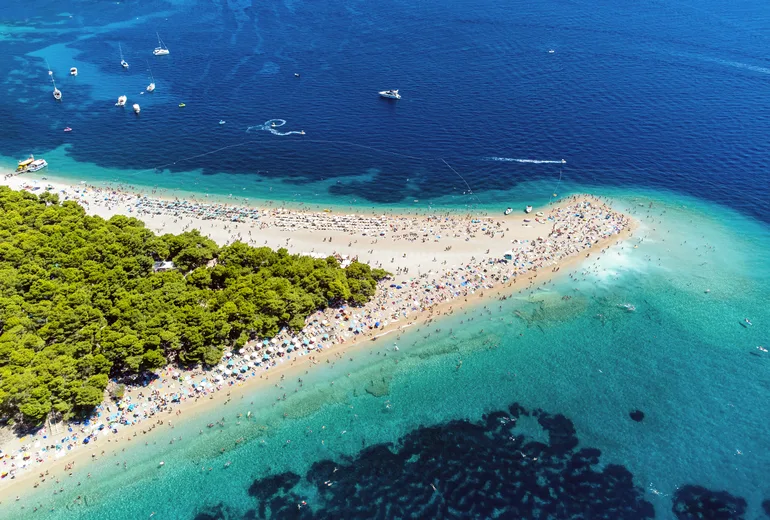
Zlatni rat, the shifting pebble spit off Bol, is the picture everyone knows. By late morning the tripper boats and beach crowds arrive, and the water off the spit fills with day boats. The answer is simple: anchor off early, before the rush, for a swim and a photo, then move on to overnight elsewhere. The spit itself has no good overnight anchorage, and Bol’s town quay is busy and exposed.
Drop the hook off the bay in clear water, swim in, walk the spit if you like, and be gone by lunchtime when the day fleet converges. Treated as an early morning visit rather than a destination, Zlatni rat is a highlight; treated as an overnight, it is a frustration. Bol itself is worth a wander for the Dominican monastery and a glass of Bol’s Plavac mali red.
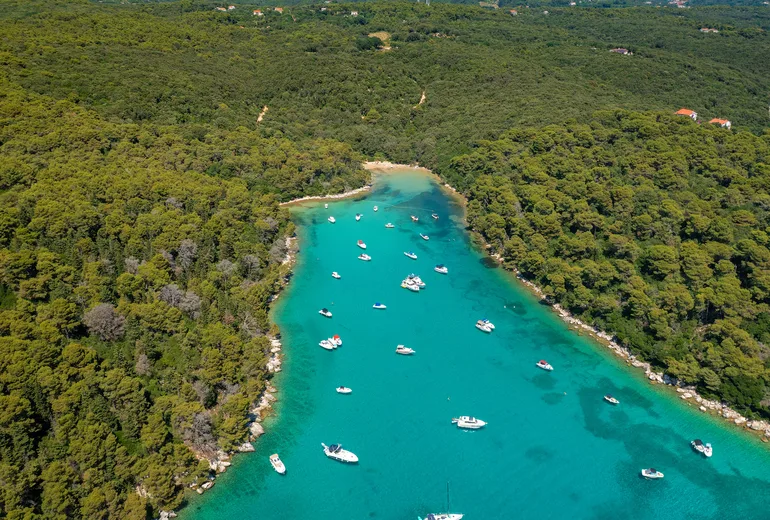
A quick summary of Brač anchorages and the sailing around them. The west and south coasts hold the best overnight bays, Milna, Bobovišća and Lučice, all well sheltered from the prevailing maestral. The north coast is more exposed and saved for calm days and the stone-town visit to Pučišća. Day-anchoring off Zlatni rat works only early, before the fleet arrives. The Brački channel sails best in the morning before the wind builds, so plan passages early and anchor early, and the island opens up quietly even in the height of the season.
Brač eats well, and a little local knowledge sharpens the week. The island is lamb country, raised on the wild herbs of the interior, and a lamb peka, slow-roasted under an iron bell, is the dish to order if a konoba offers it; most want a few hours’ notice, so call ahead from the boat. Vidova gora, the highest peak in the Adriatic islands, looks down on vineyards producing Plavac mali, the robust local red, while the white Bol and Murvica wines suit a hot afternoon. Pair either with the island’s hard sheep’s cheese and a drizzle of Brač olive oil.
In Milna and Bol you will find proper restaurants; in the small inlets, plan to cook aboard or carry provisions, because Lučice and Bobovišća have little or nothing ashore. Fresh fish is easiest to buy in Milna or by flagging a passing fisherman in the morning. As across all of Dalmatia, the best meals tend to be the simplest: grilled fish, blitva with potato and garlic, and a carafe of house red.
Brač works at either end of a central-Dalmatia week. As a first island it is close enough that handover-day fatigue is no problem; as a last island it leaves an easy run back to base. The one thing to plan around is the afternoon maestral in the Brački channel, which is why morning passages and early anchoring, the same rule that beats the August crowds, serve you just as well here.
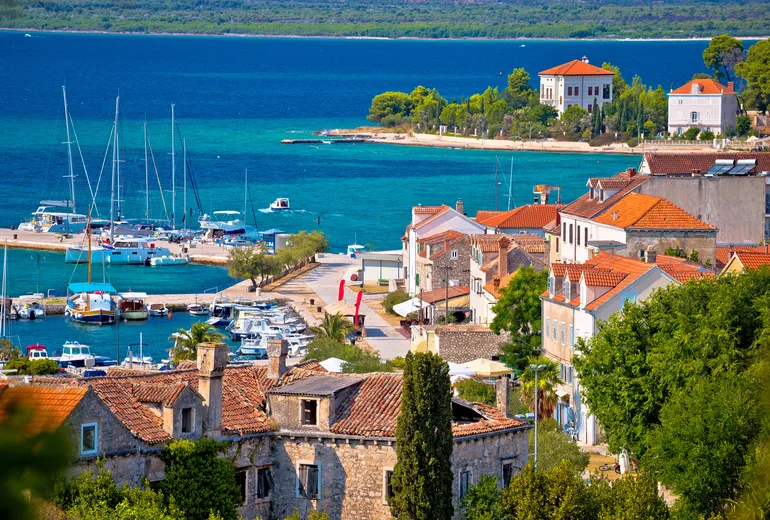
On the north coast, Pučišća is the stone-cutting town, set deep in a Z-shaped inlet, where the famous white Brač limestone that built Diocletian’s Palace and, the locals will tell you, parts of grander buildings abroad, is still worked at the historic masonry school. The inlet is sheltered and you can anchor or take the town quay; it is a fascinating contrast to the beach-and-bay rhythm of the rest of the island.
It is a longer leg around the north coast, so fold it in only if the wind suits, but the bright white quarry faces and the working stone yard are unlike anywhere else on the route. Brač’s villages, from Milna to Pučišća, give the island a depth that the ferry crowds on the beaches never see, much like the towns in our roundup of things to do in Split just across the channel.
If the weather turns, Brač is a reassuring island to be near. Milna’s deep harbour and the fjord-like inlets at Bobovišća and Lučice all give solid shelter, and you are never far from the Split or Trogir bases if you need to cut a leg short. That combination of close-to-base convenience and genuinely quiet anchorages is what keeps Brač on so many itineraries, even for crews who think they have seen it from the ferry.
You can day-anchor off the bay near the Zlatni rat spit for a swim, ideally early before the tripper boats and beach crowds arrive by late morning. There is no good overnight anchorage at the spit itself and Bol’s quay is busy and exposed, so plan to move on to a sheltered inlet like Lučice or Bobovišća to spend the night.
Bobovišća and Lučice are the standouts for a sheltered night, both deep inlets with good holding and room to swing. Milna’s outer bay is also reliable and adds shops and restaurants. All three protect you well from the prevailing maestral and from a western squall, which makes them dependable choices in changeable weather.
The channel between Brač and the mainland can funnel the afternoon maestral into a brisk reach, which is fun sailing but choppy if you are crossing late in the day. An earlier passage is calmer. The deeper inlets on the island break the wind well, so your overnight bay stays comfortable even when the channel is lively.
Milna’s stone waterfront and church, the working masonry school and white quarries at Pučišća, and the Dominican monastery at Bol are all worth the time. Try the island’s Plavac mali reds and lamb dishes ashore. From the water, the quiet inlets at Bobovišća and Lučice show a side of Brač the ferry day-trippers never reach.
Want to build Brač into a wider central-Dalmatia route? Explore the islands and anchorages on our Croatia catamaran destinations pages and plan your week around the early-anchor rule.