Flybridge or No Flybridge? What It Changes on a Croatian Catamaran Week
Flybridge pros (helm view, second lounge) versus cons (bura windage, boom height, price), which Croatian fleets carry them and who should skip it.
Read more
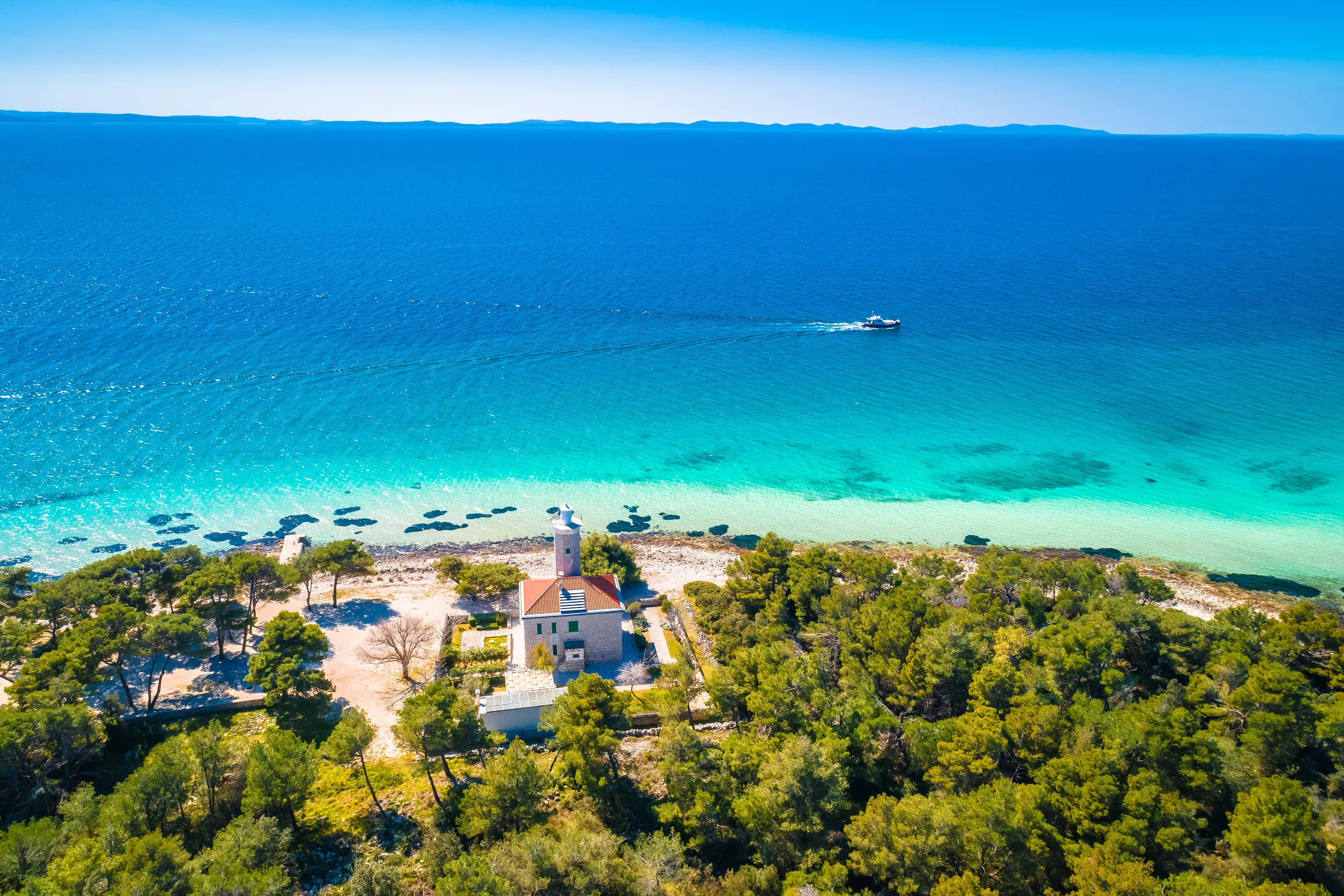
A catamaran charter Croatia from Australia takes a full day of travel, one connection and a bit of planning around the Australian winter, and most crews who do it say the week on the water is worth every hour in the air. The logic is simple: June to September is the Adriatic summer, which lands right in the school holidays and the coldest months back home.
This guide covers the practical side for Australian guests: which routes get you to Split or Dubrovnik fastest, what the time difference does to your first day aboard, how far ahead Australians need to book, what your state boat licence is worth in Croatia, and what a week on a catamaran costs in Australian dollars.
There is no non-stop flight between Australia and Croatia. Every itinerary has at least one stop, and the sensible ones have exactly one. From Sydney, Melbourne, Brisbane and Perth the Gulf carriers do most of the work: Qatar Airways via Doha, Emirates via Dubai and Etihad via Abu Dhabi, with Turkish Airlines via Istanbul and Singapore Airlines via Singapore as the other one-stop options. Total journey time is typically 24 to 30 hours door to door, depending on the connection.
Where you land matters. Zagreb is served year-round from the Gulf hubs, and from there Croatia Airlines runs a 45-minute hop to Split or Dubrovnik several times a day. In summer the picture gets better: Istanbul and Doha both have seasonal services straight into Split and Dubrovnik, which cuts out the domestic leg. Check both options when you price the trip. A fare that looks cheaper into Zagreb can cost you half a day and a second airport.
Most catamaran bases on the Croatian coast sit within half an hour of Split airport: Marina Kaštela, ACI Trogir and Marina Baotić are all closer to the airport than the city itself. If your boat starts in Dubrovnik, ACI Marina Dubrovnik is a 20-minute taxi from the terminal. Our Croatian charter destinations page lists the bases and what each one is good for.
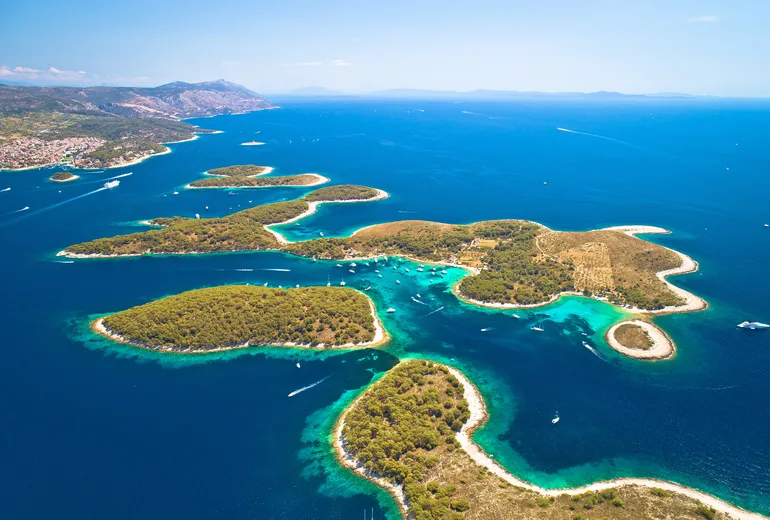
Croatia runs on Central European Summer Time in the charter months, which puts Split eight hours behind Sydney, Melbourne and Brisbane, and six hours behind Perth. That is a kinder adjustment than flying to the US east coast, but 26 hours of travel still flattens most people on day one.
Charter weeks in Croatia start on Saturday afternoon, with check-in from about 17:00. In practice that means two choices. You can land on Saturday morning, go straight to the marina and sleep aboard the first night in the berth, which most crews cope with fine. Or you can fly in on Thursday, give yourselves a night in Split or Trogir, and walk onto the boat rested. The second option costs one hotel night and pays for itself in how much you enjoy the first sailing day. A hotel night in Trogir in July runs roughly A$250 to A$400 for a double.
One more tip from the time difference: the eight hours mean your office in Australia is asleep when you wake up and starting work as you anchor for the evening. Crews who need to stay in touch usually do a short call over a morning coffee, then put the phone away.
Peak season in Croatia is July and August, when the sea is 25 to 27°C, the wind is light and the islands are busy. For Australians this coincides with the winter school holidays, so demand from your side of the world is highest exactly when the coast is fullest. June and September are the weeks experienced crews prefer: water still warm, marinas easier, prices 20 to 35 percent below the August peak.
The afternoon maestral blows from the northwest most summer days at 10 to 20 knots, which is ideal for a catamaran reaching between the islands. The bura, a cold northeasterly that can hit 40 knots, is rare in summer but worth respecting; a crewed boat or skipper will read the forecast for you. Our post on peak season for sailing in Croatia goes into the month-by-month detail.
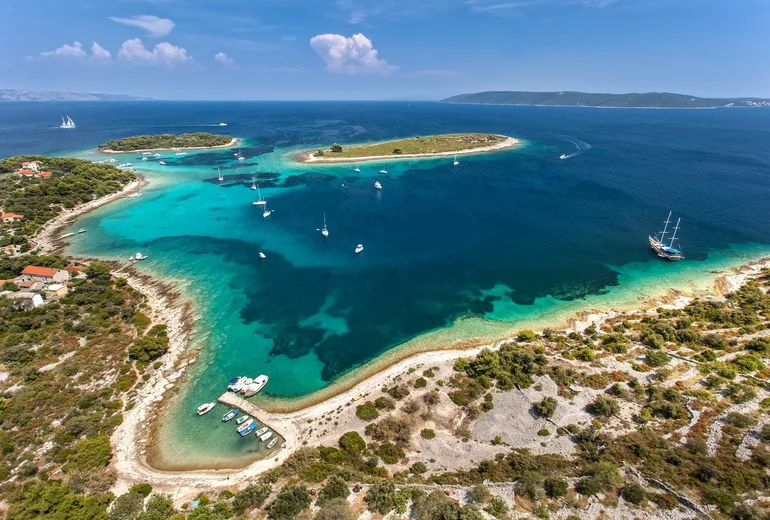
Further ahead than most Europeans. A German or British crew can book a Croatian catamaran in March for July and still find a good boat. Australian crews are choosing dates around flights that are themselves cheaper when booked early, around annual leave that has to be approved, and often around a longer European trip. The Lagoon 42s, Bali 4.4s and Fountaine Pajot Astréas that suit a family or two couples are the first to go for July and August, and by February the choice for peak weeks is thin.
The realistic rule for an Australian crew: book the boat 9 to 12 months out for July or August, 6 to 9 months out for June or September. Early booking discounts in Croatia typically run from September to the end of January for the following summer, which happens to match when Australians plan their European year. Most charters take a 30 to 50 percent deposit at booking, with the balance due four to six weeks before departure. Read how early to book a catamaran trip for the finer points of deposits and cancellation.
One practical reason to decide early is that a catamaran week is rarely the whole trip. Most Australian guests spend three to four weeks in Europe and treat Croatia as the centrepiece, flying in through Rome, Athens or Istanbul. Fixing the boat dates first makes the rest of the itinerary easier to build around.
Australian passport holders enter Croatia visa-free for up to 90 days in any 180-day period. Croatia joined the Schengen area in 2023, so those 90 days are shared with Italy, Greece, France and the rest of the zone; a month in Italy before your charter counts. Your passport needs to be valid for at least three months beyond the day you leave the Schengen area.
The EU’s ETIAS travel authorisation, a pre-trip online registration with a small fee, has been announced for several years and its start date has been pushed back more than once. As of late 2026 it is not yet in force. Check the official EU travel pages a couple of months before you fly, because when it does start the application is quick but mandatory.
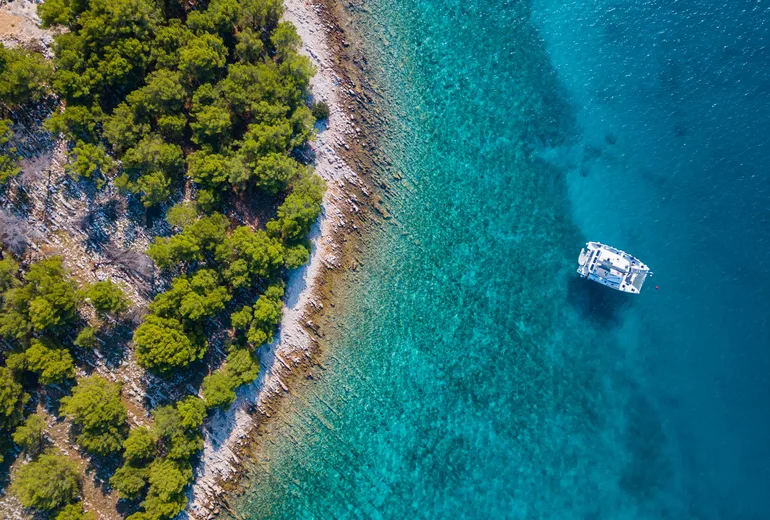
This is the question we get asked most by Australian skippers, and the answer is better than most people expect. Croatia’s Ministry of the Sea, Transport and Infrastructure keeps a published table of foreign certificates it recognises, and five Australian state licences are on it:
Each of those is accepted for bareboat chartered yachts up to 30 gross tonnes in Croatian internal and territorial waters, which covers every catamaran up to about 46 feet in a normal charter fleet. Two conditions apply. Croatia also requires a VHF radio operator certificate, which the Australian licences above do not include, so you will need a separate short-range radio certificate; the Australian Maritime College and several sailing schools issue one in a day. And the charter company makes its own judgement on experience, so expect to be asked for a sailing CV showing miles on a boat of similar size.
If you hold an RYA Day Skipper or an International Certificate of Competence, those are accepted too. If you have none of these, a skipper costs roughly €1,400 to €1,750 per week, around A$2,250 to A$2,800, and removes the paperwork entirely. Our guide to boating licence rules for catamaran charters in Croatia covers the skipper option in more detail.
Prices on this site are quoted in euro and shown in Australian dollars when you browse from Australia, converted at the current rate. At the time of writing one euro buys about A$1.60, and the examples below use that rate; the exchange rate will move, the euro price will not.
Split across eight people a June bareboat week works out near A$900 per person for the boat, before flights. Compare that with a week of hotels and ferries across the same islands and the catamaran usually wins on cost, and it is not close on experience. The full breakdown by boat size and month is in our catamaran charter prices in Croatia guide.
Two money details Australian guests ask about: Croatia uses the euro, so one currency for the whole trip, and card payments are accepted almost everywhere, but small konobas on the outer islands and mooring fees in bays are often cash only. Bring a few hundred euro in notes.
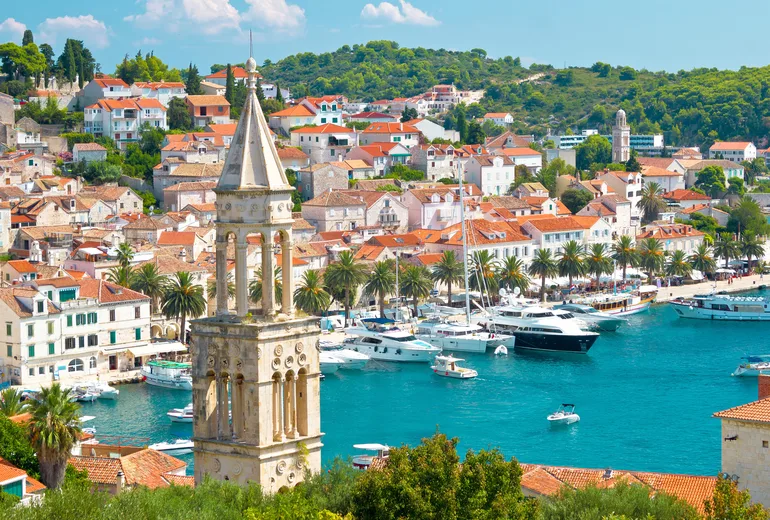
For a first week from Split the classic loop is hard to beat: Split to Milna or Bobovišća on Brač, round to Hvar and the Pakleni islands, across to Vis and the Blue Cave on Biševo, back via Šolta’s Maslinica and the Krknjaši lagoon off Drvenik Veli. The legs are 12 to 25 nautical miles, three to five hours of easy sailing, with a swim stop in the middle. Hvar town in July is lively; the anchorage at Palmižana two miles away is where crews sleep.
From Dubrovnik the water is quieter and the distances a little longer: the Elaphiti islands, Mljet’s saltwater lakes at Pomena, Korčula’s walled old town and Lastovo if the weather is settled. Australians who have sailed the Whitsundays will find the Dalmatian coast familiar in one way, the short hops and sheltered water, and completely different in another: every anchorage has a stone village, a konoba grilling fish over vine wood and a bell tower older than Sydney.
If you are weighing Croatia against the Greek islands for the same trip, the Greek version of this guide on our sister site covers the Athens routing and the Ionian, where the sailing is just as gentle but the wind and the culture are different.
Pack soft bags, not hard suitcases; catamaran lockers are generous but a rigid case will live in a cabin corner all week. Bring reef-safe sunscreen, a hat with a strap and a light long-sleeve layer for the evening maestral. Croatian pharmacies stock everything else. Power on board is 220V with European two-pin sockets, so an Australian adaptor and a multi-port USB charger cover a crew. Mobile data is cheap: a Croatian prepaid SIM or an EU eSIM with 20 GB costs under A$30 and works on every island.
Travel insurance from an Australian insurer should list sailing as a covered activity, and for bareboat charters ask specifically about the security deposit, which is typically €2,500 to €5,000 held on a credit card; deposit insurance from the charter company costs around €150 to €300 per week and most Australian crews take it.
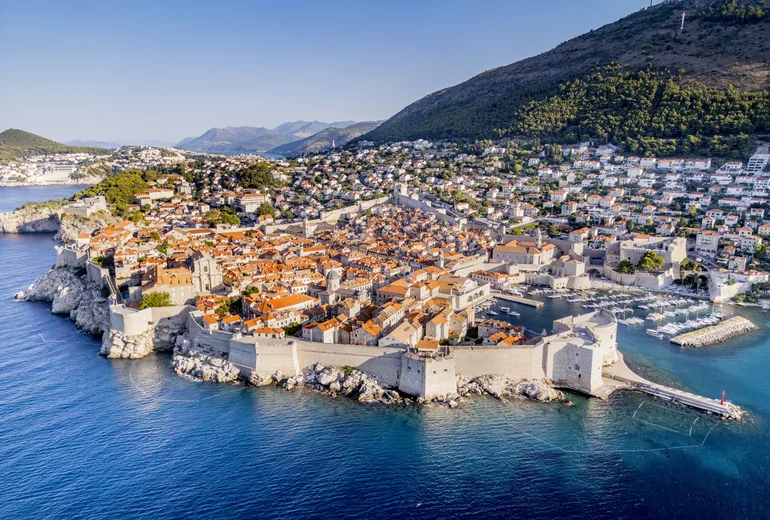
Plan on 24 to 30 hours door to door with one stop, most often in Doha, Dubai, Abu Dhabi, Singapore or Istanbul. Summer services from Istanbul and Doha fly directly into Split and Dubrovnik; outside the season you connect through Zagreb with a 45-minute domestic flight.
Yes. The NSW General Boat Driving Licence, Queensland Marine Licence Verification Certificate, South Australian Boat Operator’s Licence, Western Australian Recreational Skipper’s Ticket and Victorian Marine Licence are all on Croatia’s list of recognised foreign certificates for bareboat yachts up to 30 GT. You also need a VHF radio certificate and the charter company will ask for a sailing CV.
June and September give warm water, lighter crowds and prices well below August. July and August match the Australian winter school holidays and are the busiest and most expensive weeks, so book those 9 to 12 months ahead.
No visa for stays up to 90 days in any 180-day period across the Schengen area, which Croatia joined in 2023. The ETIAS online authorisation is expected at some point but was not in force as of late 2026; check the official EU site before you travel.
A 40 to 42-foot bareboat catamaran runs about A$5,000 to A$12,000 per week outside the peak and A$9,600 to A$18,900 in late July and August, at roughly A$1.60 to the euro. A skipper adds about A$2,250 to A$2,800 per week.
In the charter season Croatia is eight hours behind Sydney, Melbourne and Brisbane, and six hours behind Perth.
When you are ready to pick dates, browse the Croatian catamaran bases and routes and send us your week; we will tell you honestly which boats are still open for it.
Your privacy
You can read more about how we protect your personal data and use cookies in our Privacy Policy.
With your consent, we and Google use cookies and similar technologies to store and access information on your device and to process personal data such as your visit to this website, your IP address and cookie identifiers. You can withdraw your consent at any time through “Cookies Settings” at the bottom of every page.
We and Google process data for:
Website analytics and visit statistics, recordings of visits to improve the website, ad measurement and remarketing, storing and accessing information on your device