Flybridge or No Flybridge? What It Changes on a Croatian Catamaran Week
By the Catamaran Charter Croatia editorial team·10 Nov 2026·10 min read
The flybridge is the upgrade charter agents get asked about most in booking season, and the one crews most often regret picking on autopilot. A flybridge catamaran charter puts the helm and a second lounge up on the coachroof, which sounds like pure upside until you sail one through a Croatian bura or try to duck under a low marina gantry. Whether it is worth the premium depends entirely on how and when you sail.
So, is a flybridge catamaran worth it for a charter in Croatia? For some crews, clearly yes; for others it is paying extra for a feature that becomes a liability. This is a booking-season decision piece: the real pros, the real cons in Adriatic conditions, which Croatian fleets actually carry flybridge models, and the crews who should save the money and skip the upgrade.
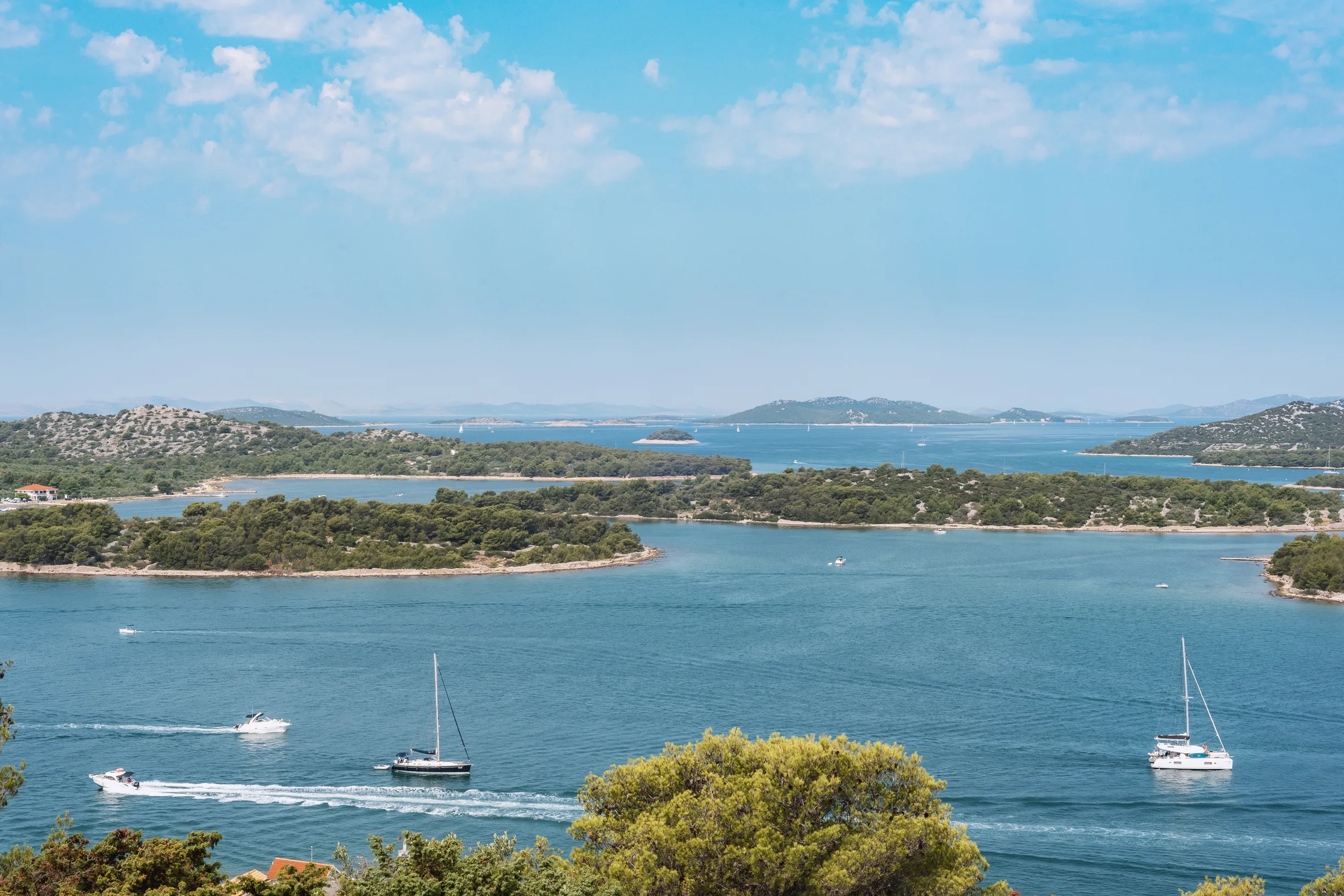
A flybridge adds windage that matters most when anchoring in a blow or a gusty bura.
What a flybridge actually is, and isn’t
A flybridge catamaran moves the steering position up onto the coachroof, between or behind the hulls’ superstructure, usually paired with an extra sun lounge or seating area and sometimes a wet bar up there. A conventional, or “lounge-deck,” catamaran keeps the single helm at cockpit level, off to one side, and uses the coachroof for sunbathing instead of a second living space.
The distinction matters because it changes the boat’s whole personality. Up top you get a commanding view and a private deck; down low you stay connected to the cockpit and the crew. Neither is simply better, they suit different weeks. If you are still weighing hull layouts more broadly, our guide to choosing the right catamaran for your group covers the cabin and berth side of the decision first.
The case for a flybridge catamaran charter: view, space and sociability
The biggest draw is the helm view. From up top the skipper sees over the bows into a busy anchorage, reads the water for shoals and mooring lines, and lines up a marina approach far more easily than from a cockpit-level wheel half-blocked by the bimini. For threading the Pakleni anchorages or the tight ACI marinas, that elevated sightline is genuinely useful.
Second is the living space. A flybridge gives you another full outdoor lounge, often the best seat on the boat for sundowners, away from the cockpit dinner crowd. On a group week that extra zone keeps eight people from living on top of each other. And there is the sociability of sailing: friends can sit with the skipper up top on a long downwind leg instead of being parked below.
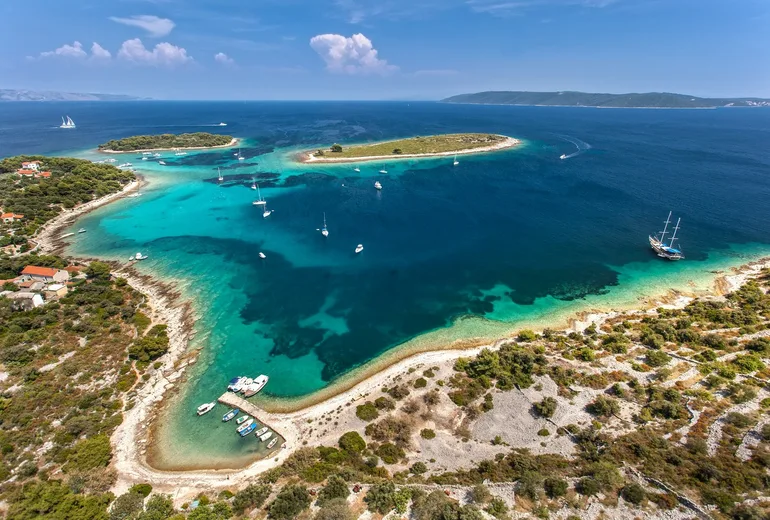
The elevated helm helps in tight marinas, but the extra windage adds to the workload in a crosswind.
For crews who spend their days actively sailing and their evenings entertaining, the flybridge earns its keep. The same logic that makes the bigger Bali and Lagoon models popular, more open-air living, applies double up here. Our look at the best catamarans for cruising shows where flybridge layouts sit in the wider charter fleet.
The case against: windage, boom height and the bura
Now the honest downsides, and in Croatia they are not trivial. A flybridge raises the boat’s centre of effort and adds a lot of surface area up high, which means more windage. In the bura, the cold, gusty northeasterly that funnels down the Velebit channel and can hit 40 knots in winter and shoulder season, that extra windage makes the boat harder to hold on anchor and more of a handful to dock in a crosswind.
There is also the boom. To clear a raised flybridge, many flybridge cats sit the boom higher, which can hurt mainsail efficiency and, more practically, makes reefing and sail handling a stretch. And the helm is exposed: lovely in sunshine, much less so when a nevera squall rolls through with rain and a 30-knot gust, when the cockpit-level skipper stays dry and the flybridge skipper is soaked and high up in the weather.
One more booking-season reality: air draft. A taller boat has to think about the height of marina fuel-dock canopies and a couple of low fixed structures, rarely a showstopper in Croatia but worth a question to your fleet. None of this rules out a flybridge; it just means the “free upgrade” framing is misleading.
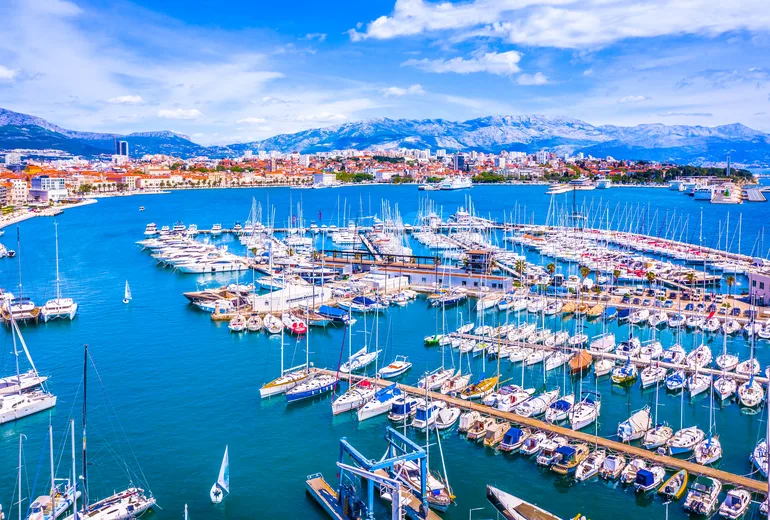
In settled summer weather the flybridge downsides rarely show; in shoulder season they do.
Which Croatian fleets carry flybridge models
Flybridge catamarans are well represented in Croatian fleets, though they are the minority next to lounge-deck boats. On the Bali side, the larger models like the Bali 4.8 are offered with a flybridge option, adding a helm and lounge above the brand’s signature open decks. Lagoon’s mid-to-large range, the 46 and up, is built around the flybridge concept and is common on Split and Trogir pontoons. Fountaine Pajot and other builders field flybridge models in the 45-foot-plus bracket too.
Below roughly 44 feet, flybridge versions thin out, the boats are simply not big enough to carry the weight and windage well, so a flybridge in practice means stepping up in size and price. If your shortlist already includes a larger cat reviewed elsewhere on this blog, such as our Bali 4.4 charter review, note that the flybridge sits a model or two above it.
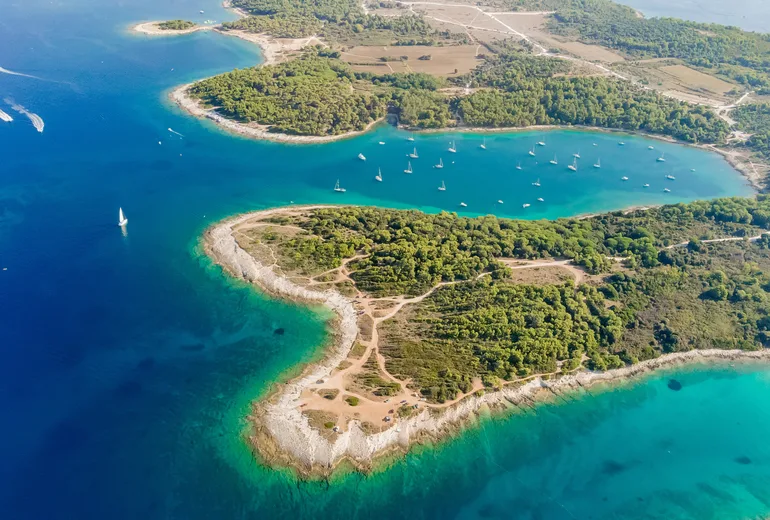
Flybridge versions thin out below about 44 feet, so the upgrade usually means a bigger, pricier boat.
Who should book a flybridge and who should skip it
Book the flybridge if you have an experienced skipper who values the helm view, a group of eight who will use the extra lounge, and a summer week, June to early September, when the bura is rare and the weather settled. In those conditions the upside is real and the downside seldom shows up.
Skip it if you are sailing in shoulder season when the bura is more likely, if your skipper is less experienced and would rather stay connected to the cockpit during manoeuvres, if your crew is small enough that the second lounge goes unused, or if the premium, often a meaningful step up in weekly rate plus the jump to a bigger boat, stretches the budget. Most crews who skip the flybridge and put the saving toward a shoulder-season upgrade or a better week never feel they missed out. If a flybridge is on your shortlist, our write-up of the Lagoon 46 for Croatia charter covers a popular flybridge-equipped model in detail.
Frequently Asked Questions
Is a flybridge catamaran worth it for a charter in Croatia?
It is worth it for experienced skippers and full crews sailing in settled summer weather, who will use the helm view and the extra lounge. It is less worth the premium in shoulder season, for small crews, or when the bura is likely, because the added windage and exposure outweigh the benefits.
What are the downsides of a flybridge catamaran?
The main drawbacks are extra windage that makes the boat harder to handle in strong wind like the bura, a higher boom that can reduce sail efficiency and complicate reefing, an exposed helm in rain or squalls, and a price premium that usually means stepping up to a bigger boat.
Does a flybridge make a catamaran harder to handle in Croatia?
It can in strong wind. The raised structure adds windage, so a flybridge cat is more affected when anchoring or docking in the bura or a crosswind. In calm summer conditions the difference is small, and the elevated helm view actually helps in tight marinas.
Which catamaran models in Croatia have a flybridge?
Larger models carry them: the Bali 4.8 and up as an option, Lagoon’s 46 and larger built around the concept, and Fountaine Pajot and others in the 45-foot-plus range. Below about 44 feet, flybridge versions are rare, so choosing one usually means a bigger, pricier boat.
Should a less experienced skipper book a flybridge?
Often it is better to skip it. The elevated helm gives a great view but takes the skipper further from the cockpit and crew during manoeuvres, and the extra windage adds to the workload when docking. A cockpit-level helm is usually the more forgiving choice for newer skippers.
Weighing a flybridge against a lounge-deck boat for your dates? Compare both layouts across the available Croatian catamaran charter options and book the helm setup that matches your crew and your week.
You can read more about how we protect your personal data and use cookies in our Privacy Policy.
With your consent, we and Google use cookies and similar technologies to store and access information on your device and to process personal data such as your visit to this website, your IP address and cookie identifiers. You can withdraw your consent at any time through “Cookies Settings” at the bottom of every page.
We and Google process data for:
Website analytics and visit statistics, recordings of visits to improve the website, ad measurement and remarketing, storing and accessing information on your device