From Australia to a Catamaran Charter in Croatia: Flights, Licences, AUD Costs
Flights, time zones, booking lead times, recognised Australian boat licences and weekly costs in AUD for a catamaran charter in Croatia.
Read more
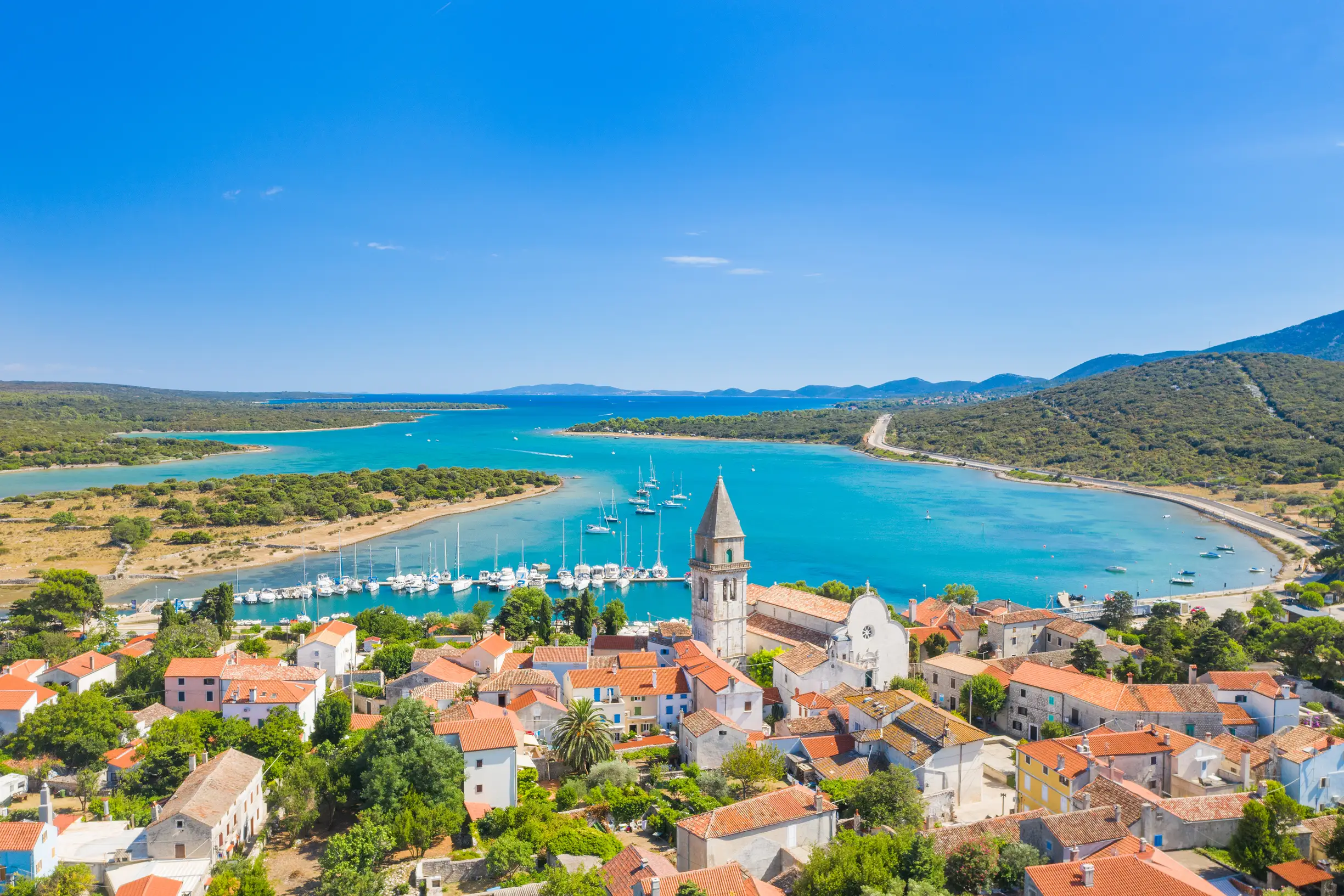
Yes, you can book a single cabin on a catamaran in Croatia and sail with people you’ve never met. A catamaran cabin cruise croatia sells berths the way an airline sells seats: you pay per person, a host skipper runs the boat, and the week is built around a loose Dalmatian route rather than a fixed flotilla schedule. It’s the cheapest legitimate way onto a modern cat without chartering the whole thing.
The catch is that it isn’t a private holiday. You share a saloon, a couple of heads, and a swim platform with five to seven strangers. That works beautifully for solo travellers and couples who like company, and badly for anyone expecting silence at 8am. Below is how the product actually runs, what the price covers, and the small social rules that decide whether your week is great or grim.
The operator owns or charters a four-cabin catamaran — usually a Lagoon 42, Bali 4.2 or Fountaine Pajot Astrea 42 — and sells the four guest cabins separately. A professional skipper lives aboard for the week, handles navigation and mooring, and acts as the loose social glue. Some boats add a hostess who cooks; most don’t, and meals become a shared, slightly chaotic group effort.
Departure is typically Saturday from Split, Trogir or Kaštela, looping out toward Brač, Hvar and Vis and back. Routes flex with wind and mood, which is half the appeal. Nobody hands you a minute-by-minute itinerary, because a hosted cat week is meant to feel like a sailing trip with new friends, not a coach tour on water.
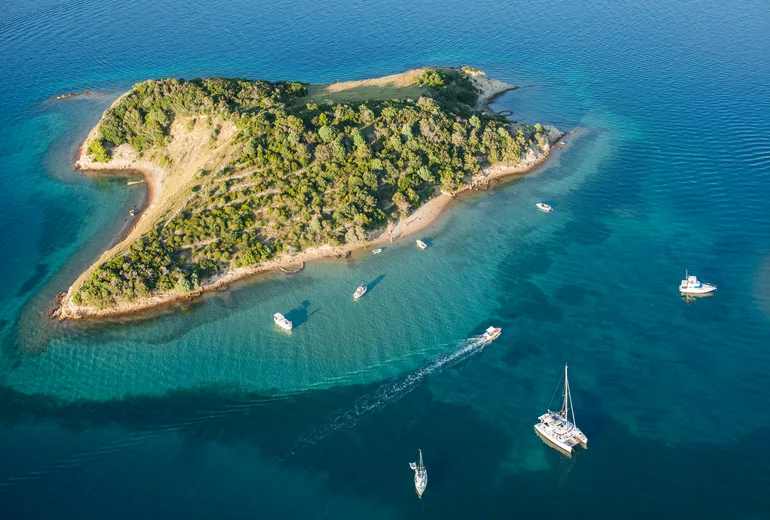
Two crews tend to thrive on these: solo travellers in their late twenties to forties, and couples who’d rather split costs than have a 12-metre boat to themselves. Families rarely book a single cabin — for them a private boat makes more sense, which we cover in our guide to sharing a catamaran with a group of eight friends.
Per-cabin pricing in Croatia usually lands between roughly €700 and €1,400 per person for the week, sometimes quoted per cabin for a couple. The spread comes down to season and boat age. A May or late-September week on a five-year-old Lagoon sits near the bottom; peak July on a current-model Bali pushes the top.
Add it up and a realistic all-in for a mid-season week is the cabin fare plus €350–500 of extras. That still undercuts a private charter heavily. For the wider context on what private boats run, our full breakdown of catamaran charter prices in Croatia shows where the savings really sit.
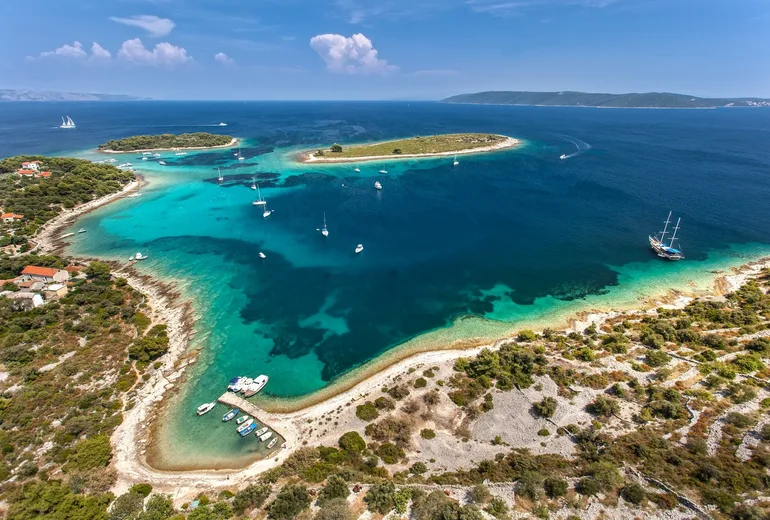
Embarkation is mid-afternoon Saturday. You’ll meet the skipper, claim a cabin (book early and you get a pick of the better aft doubles), and do a provisioning run together at a Tommy or Konzum near the base. The first night is often spent in the home marina so the group can settle and the boat clears customs paperwork.
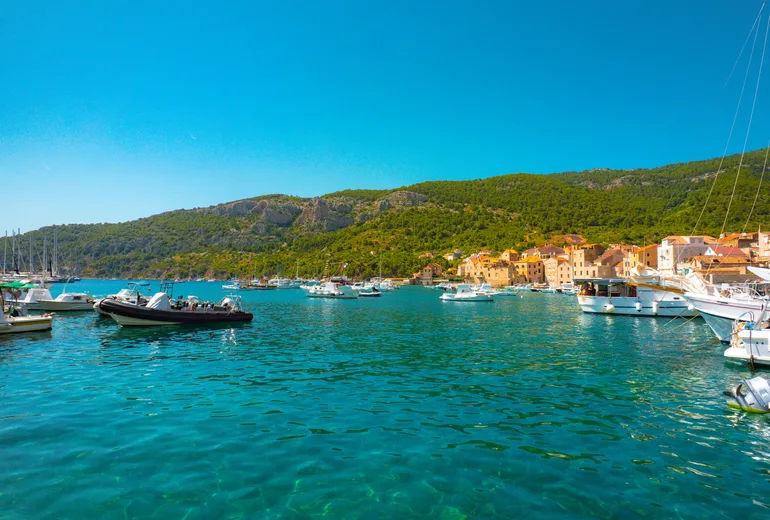
From Sunday the rhythm sets in. Most days mean a short morning hop — Split to Maslinica on Šolta, then across to the Pakleni islands off Hvar — a long lunch swim stop in a bay like Stipanska, and an evening either on anchor or moored in a town. Hvar Town and Vis get a night each because that’s where the group wants dinner and a bar. Komiža on Vis, with its fishing-harbour calm, is a frequent favourite for the quieter crews.
Skippers read the weather daily. If a maestral builds in the afternoon, you sail; if a rare squall threatens, you duck into a sheltered bay early. That flexibility is the real luxury of going by cabin — someone competent is making the call so you don’t have to.
Living with strangers on a catamaran is mostly common sense, but a few habits separate a smooth week from a tense one. The boat is small, the water tank is finite, and the heads are shared.
A cat carries plenty of fresh water, but tanks aren’t bottomless between fills. Keep showers short, and learn the marine-toilet routine on day one — nothing goes in that didn’t pass through you first, paper included on most systems. A blocked head four days from base is the fastest way to sour a group.
Mornings are sacred to some; agree early on whether the coffee crowd keeps it down until eight. Don’t colonise the saloon table with your gear. And settle the kitty honestly — most boats run a shared cash pot for food, fuel and moorings, with one person tracking it. Pay in promptly and over-tip rather than under.
You’re not crew, but you’re not a cruise-ship passenger either. Help with lines when the skipper asks, take a turn washing up, and offer to fetch ice. The people who muck in get the better cabins next time and the warmer goodbyes.
Croatia’s other famous shared-boat product is the gulet cabin cruise — a wooden motor-sailer with a full crew, fixed buffet meals and 8 to 16 cabins. Gulets are about comfort and being looked after; the engine does the work, the route is set, and you rarely raise a sail. Our sister sites cover gulet cruising in depth, so we’ll keep to the contrast.
A shared catamaran is smaller, more nimble and far more participatory. You actually sail, you anchor in bays a gulet can’t reach thanks to the cat’s shallow draft, and the group is six to eight rather than thirty. If you want hotel service afloat, take a gulet. If you want a proper small-boat sailing week without buying the whole boat, the cabin cat wins.
One more distinction: catamaran cabin trips skew younger and more social, while gulet cruises pull a broader age range. Neither is better — they’re different holidays wearing similar marketing.
Shared weeks for July and August on the good boats fill by late winter, so November to February is the sensible window to commit. When you enquire, ask three things: the exact boat and its build year, whether a hostess is aboard, and how the operator handles a half-empty boat — some cancel or merge departures if fewer than three cabins sell.
Read who else is booked, if the operator will say. A cabin cruise pitched at a stag crowd is a very different week from one marketed to solo professionals. And confirm the security deposit arrangement: even on a per-cabin deal you’re usually liable for a share of any damage, so understand the insurance before you wire a deposit. The mechanics overlap heavily with a normal crewed booking, which we walk through in our piece on crewed catamaran charter in Croatia.
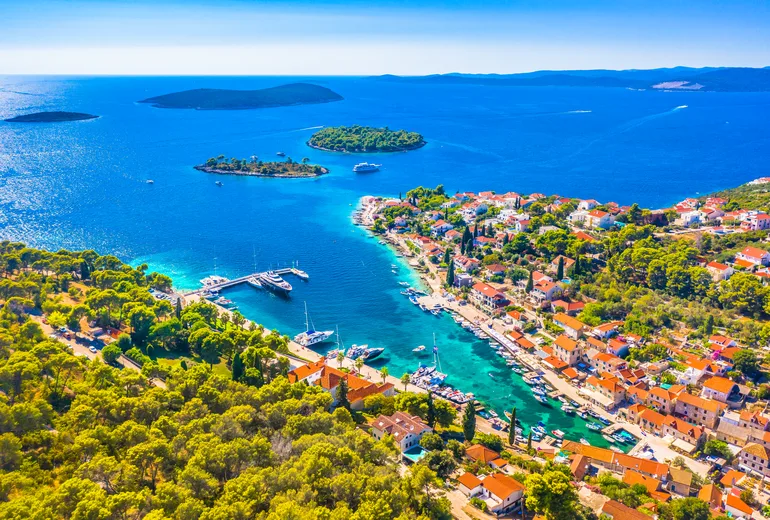
Yes. Operators sell the four guest cabins of a hosted catamaran individually, so solo travellers and couples pay per person rather than for the whole boat. A skipper runs the week and you share the communal spaces with the other guests.
Most cabin fares fall between roughly €700 and €1,400 per person for the week, depending on season and boat age. Budget another €350–500 each for the food kitty, mooring splits, fuel, tourist tax and a skipper tip.
Usually not. Unless a hostess is aboard, the group runs a shared kitty and provisions together at a supermarket near the base, then cooks aboard or eats ashore. Plan on €150–250 per person across the week for food and drink.
They suit sociable solo travellers and couples who like meeting people and want to sail without the cost of a private charter. Families and crews wanting privacy are usually better off chartering a whole boat instead.
You don’t need any sailing qualification, since the professional skipper handles navigation and mooring. Most crews pitch in with lines and chores anyway, which makes for a happier week, but it isn’t compulsory.
Want to compare a shared cabin against having a boat to yourselves? Browse our Croatia catamaran routes and destinations to see what a private Dalmatian week could look like, then weigh it against the per-cabin price.
Your privacy
You can read more about how we protect your personal data and use cookies in our Privacy Policy.
With your consent, we and Google use cookies and similar technologies to store and access information on your device and to process personal data such as your visit to this website, your IP address and cookie identifiers. You can withdraw your consent at any time through “Cookies Settings” at the bottom of every page.
We and Google process data for:
Website analytics and visit statistics, recordings of visits to improve the website, ad measurement and remarketing, storing and accessing information on your device