10–14 Days on a Catamaran: the Whole Croatian Coast from Zadar to Dubrovnik
A 12–14 day one-way catamaran route down the whole Croatian coast, from the Kornati to the Elaphiti, with pacing and one-way drop-off tips.
Read more
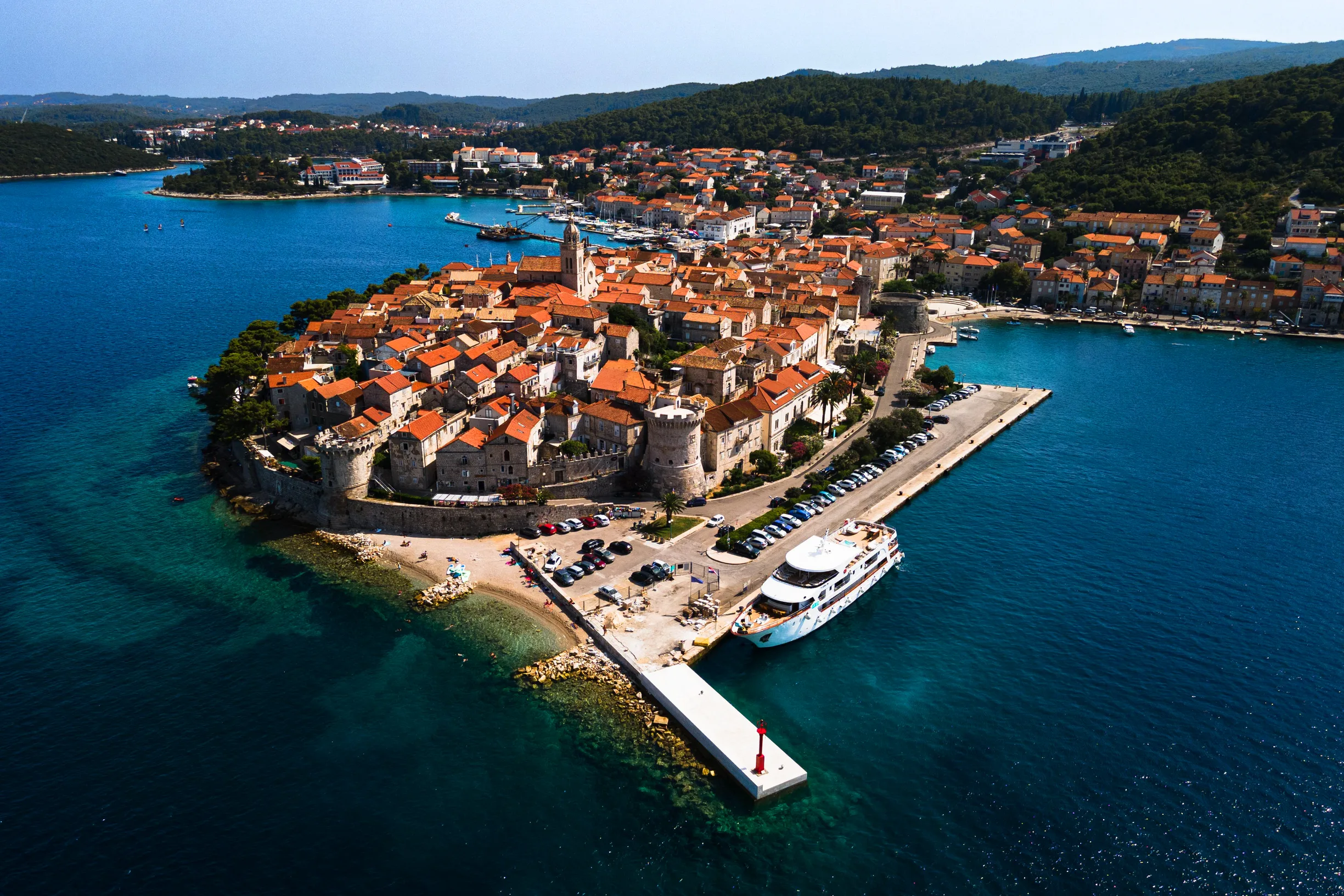
Korčula rewards crews who plan their mooring before they arrive. The walled old town, the supposed birthplace of Marco Polo, juts into a tidal channel where the current runs and the wind funnels, so the romantic idea of tying up under the medieval walls needs a bit of homework. This Korčula sailing guide lays out the real options: the town quay, the nearby marina, and the calmer anchorages off Badija islet and the Lumbarda sands.
The short version: the old town is glorious but exposed and pricey to lie alongside; the best nights are often spent anchored a mile or two away with the dinghy doing the work. Get the mooring right and Korčula becomes one of the most satisfying stops on the southern Dalmatian run.
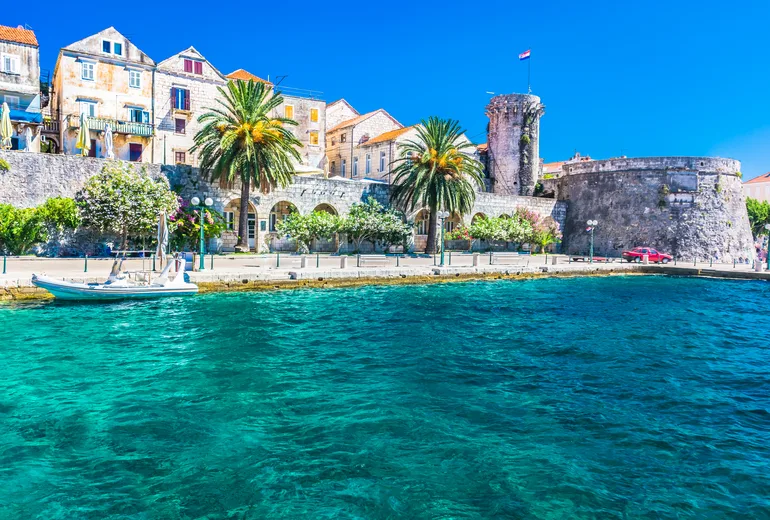
Korčula town sits on the narrow Pelješac channel, which acts like a venturi for the two big local winds. The bura, the cold north-easterly, accelerates down off the Pelješac mountains and can make the town quay untenable in a blow. The jugo, the warm humid southerly, pushes swell straight up the channel. In settled summer weather the afternoon maestral is the main player, filling to 12–18 knots, but always check the forecast before committing to a channel-side berth.
This exposure is the single most important thing to grasp about sailing Korčula. It shapes where you sleep, where you eat, and whether you wake up to a calm morning or a slapping chop against the hull. When the channel kicks up, the answer is to drop south or east into shelter rather than tough it out on the quay.
You have three realistic ways to visit the old town by boat. Each suits a different priority.
The municipal quay on the east side of the peninsula puts you steps from the gate, which is the dream on a calm evening. It is stern-to with laid lines, and a 40–45 foot catamaran can usually find space if you arrive by early afternoon. Expect roughly €90–150 a night in high season for a cat of that size, water and power included. The catch is the exposure: when the channel runs, it is rolly and noisy, and big-boat wash adds to it.
The ACI marina sits just east of the old town and offers more shelter and full services. It is the calmer, more reliable choice if the forecast is uncertain, and it is a short, flat walk into the centre. Berths run a little higher than the town quay for the convenience and protection. For a first visit or a tired crew, the marina is the low-stress pick.
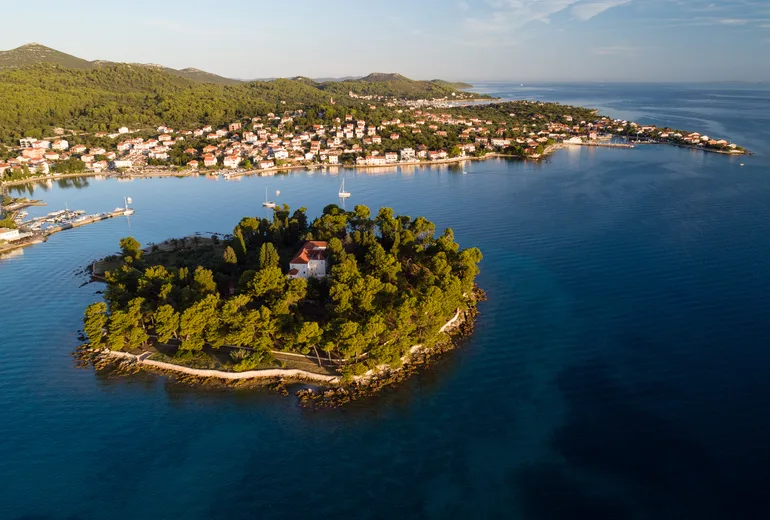
The most rewarding option in fair weather is to anchor off Badija, the wooded islet a mile north-east of town with its 15th-century Franciscan monastery. The holding is good over sand in 5–10 metres, the swimming is superb, and you can dinghy into town in ten minutes. You get the old-town evening and a quiet, cool night at anchor, which is the best of both. Watch the buoy zones and keep clear of the marked swimming areas.
Korčula’s old town is compact and built on a clever herringbone street plan: the lanes off the main spine angle to catch the cooling maestral while blocking the cold bura, a piece of medieval climate engineering that still works. An hour’s wander covers the highlights. Climb the bell tower of St Mark’s Cathedral for the rooftop view, look in at the house that claims Marco Polo as a son, and walk the surviving stretches of the town walls and round towers above the water.
Evenings are the best of it, once the day-trip catamarans have gone and the stone glows in the low sun. Time your visit for the Moreška, the traditional sword dance performed in summer, if your dates line up. Then settle into a konoba for dinner: the island’s cooking leans on fresh fish, žrnovski makaruni pasta, and the local olive oil, all of it improved by a bottle of the Pošip you tasted earlier.
Arrive at the quay or marina earlier in the afternoon than you think you need to, because both fill in August and the channel is no place to be hunting for a berth at dusk. If you anchor off Badija, run the dinghy in before dark and keep an eye on the wind, since a freshening evening breeze can make the return trip wet. Carry small cash for the town quay fee and the dinghy dock, and book a popular konoba ahead in peak weeks.
If the old-town channel feels too exposed or too busy, Vela Luka at the island’s western end is a calm, deep, well-protected bay with a town quay, a marina and full provisioning. It is far less glamorous than Korčula town, but it is sheltered in almost any wind, which makes it a reliable bolt-hole when the forecast turns. The bay branches into several arms with quiet anchorages, and the local fish restaurants are honest and good value.
Vela Luka also works as a practical hub: it is the car-ferry port from Split, so it is the natural place for a mid-week crew change, and the supermarkets here are the best stocked on the island. From here you are well placed to slip across to the Lastovo archipelago to the south for a couple of nights of real remoteness before turning back.
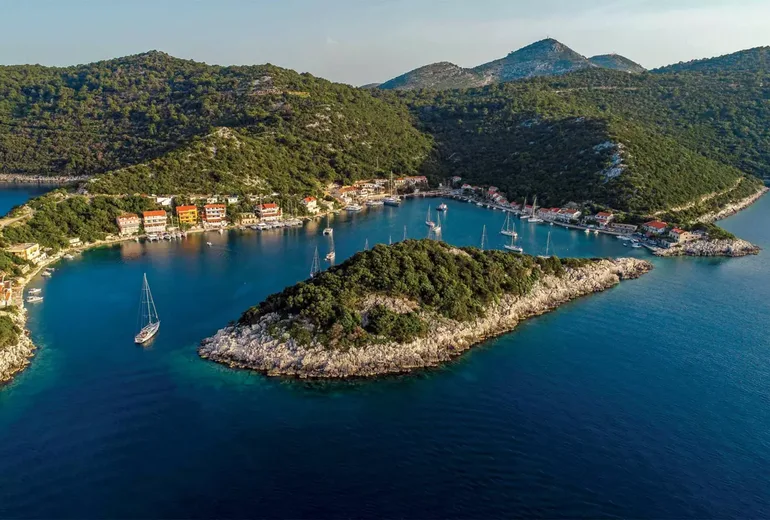
Six kilometres east of Korčula town, Lumbarda is the island’s gentle counterpoint: low sandy soil, real sand beaches at Vela Pržina and Bilin Žal, and the vineyards that produce Grk wine. The bays around Lumbarda offer sheltered anchoring over sand, a rarity in Croatia, which makes the hook bite cleanly. It is an easy spot for a swim-led day and a quieter night than the channel.
From Lumbarda you can cycle or taxi the short distance into Korčula town for dinner, or simply settle in for a beach day. The sandy bottom and shallow shelves suit a catamaran’s draft perfectly, and the water glows that pale turquoise you usually associate with the Kornati. It is also the launch point for the wine hop below.
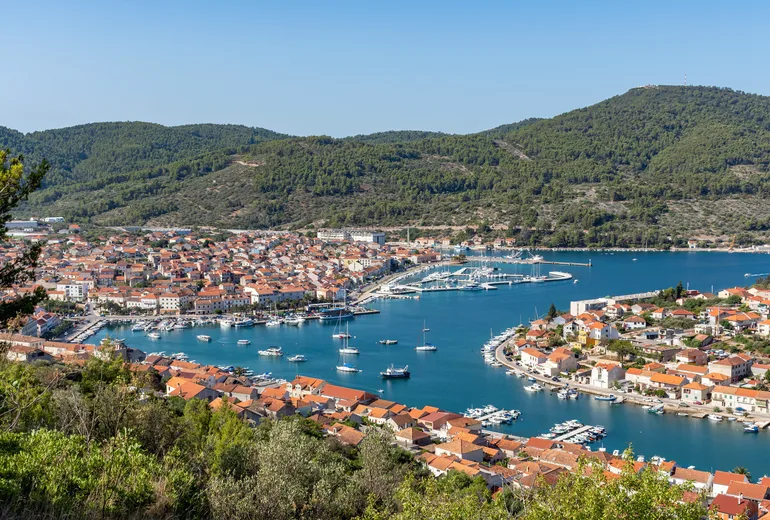
Korčula is one of Croatia’s serious wine islands, and a half-day tasting run is well worth the time off the boat. Two grapes define it. Grk is a rare white grown almost only in the sandy soils around Lumbarda; small family cellars there pour it straight from the barrel. Pošip, the island’s flagship white, comes from the inland villages of Čara and Smokvica, and the bigger producers run proper tasting rooms.
The easy plan: anchor or berth near Lumbarda in the morning, walk or cycle to two or three Grk cellars, then taxi inland to a Pošip producer in Čara for lunch and a tasting. Buy a case for the boat while you are there. Pair the wine with the island’s seafood, and you have the kind of slow Dalmatian day that justifies the whole charter. Korčula’s konobas serve excellent local fish, and our guide to the best seafood restaurants across the Croatian islands flags a few standouts here.
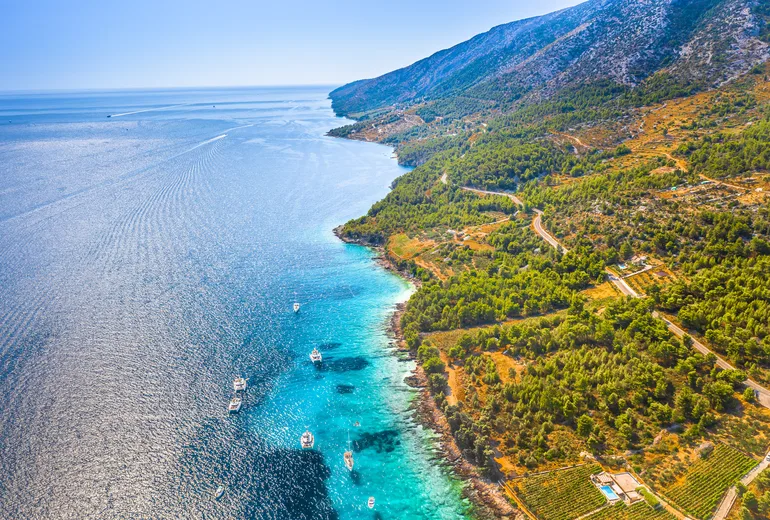
Korčula is a natural anchor point on the way south from Split. From Hvar it is a comfortable 30–35 nautical mile day, and many crews break the journey with a night at the quiet nature-park island just off Hvar’s south shore. If you are still mapping that approach, our guide to Šćedro’s Lovišće and Mostir anchorages off Hvar covers the perfect stepping stone before Korčula.
Heading on, Korčula links well toward Mljet and the Elaphiti islands as you push toward Dubrovnik. For the full shape of that southern journey, the seven-day Split to Dubrovnik sailing itinerary shows where Korčula fits and how to time the legs.
Korčula town and Vela Luka, the larger port on the island’s west end, both have good supermarkets, a fish market and chandlery basics. Vela Luka is also the car-ferry port from Split, useful for crew changes. Fuel is available at the ACI marina. Top up water and provisions in town before you head for the quieter anchorages, since Badija and the smaller bays have no services.
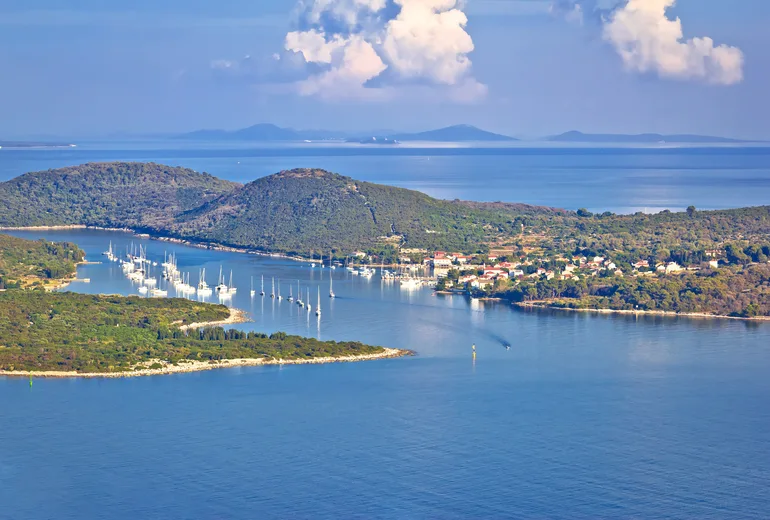
Three main options: the municipal town quay right by the gate, ACI Marina Korčula just to the east for more shelter, or anchoring off Badija islet a mile away and taking the dinghy in. In settled weather, anchoring off Badija gives the quietest night with an easy run to town.
Yes. The town quay sits on the Pelješac channel, which funnels the bura and jugo and gets rolly when either blows or when there is heavy boat wash. In calm weather it is wonderful; if the forecast is unsettled, the ACI marina or a sheltered anchorage is the safer call.
Yes, and it is one of the better sand-bottom anchorages in the area. The bays around Lumbarda hold well over sand, with real sand beaches and the Grk vineyards onshore. The shallow, clear shelves suit a catamaran’s draft and make it a calm alternative to the town channel.
Two whites stand out: Grk, a rare grape grown almost only in the sandy soils around Lumbarda, and Pošip, the island’s flagship from the inland villages of Čara and Smokvica. Many cellars offer tastings, and a half-day wine hop pairs well with a Lumbarda anchorage.
Planning a southern Dalmatian week that ends near Dubrovnik? See our Croatia catamaran charter destinations and routes to build an itinerary with Korčula at its heart.