10–14 Days on a Catamaran: the Whole Croatian Coast from Zadar to Dubrovnik
A 12–14 day one-way catamaran route down the whole Croatian coast, from the Kornati to the Elaphiti, with pacing and one-way drop-off tips.
Read more
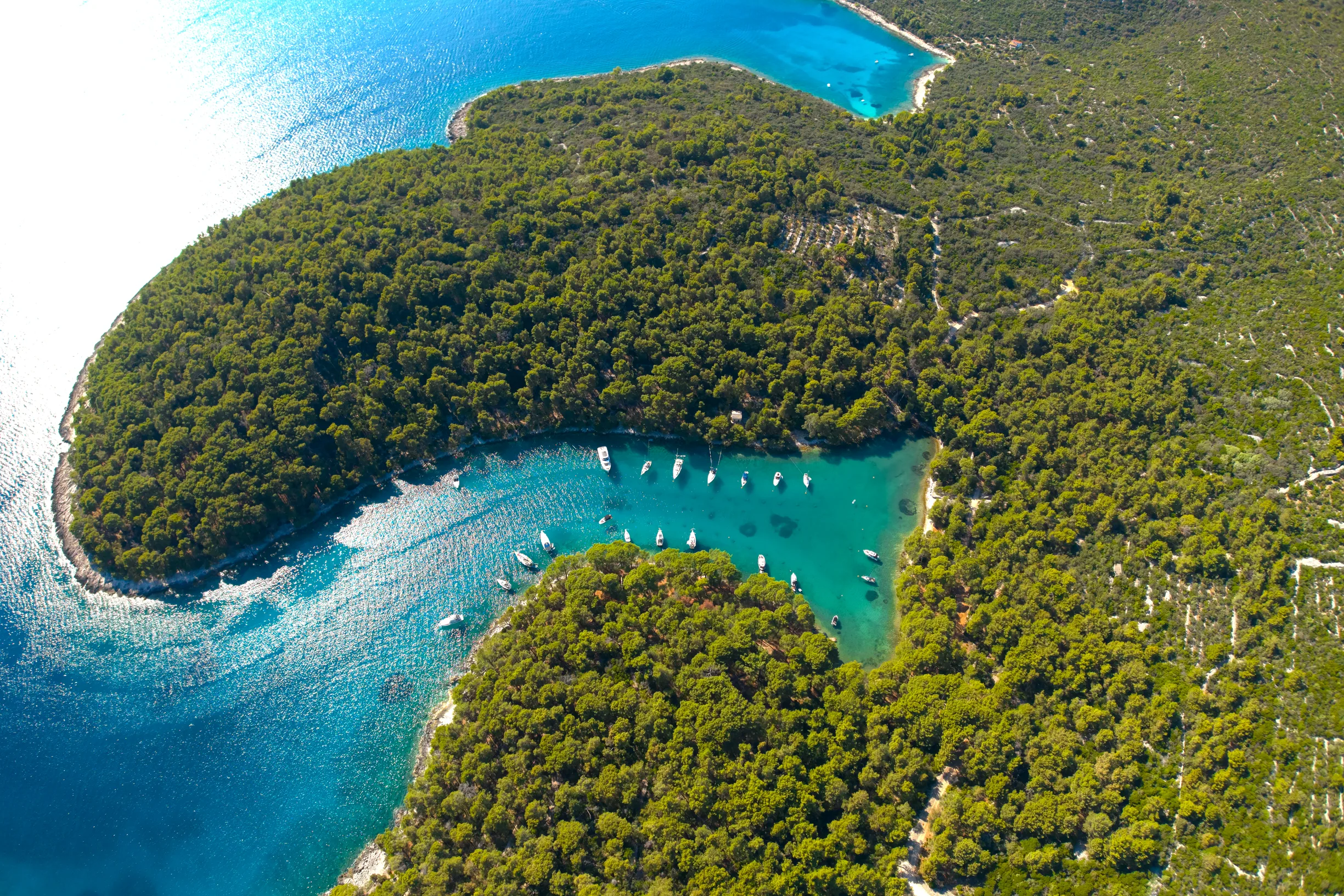
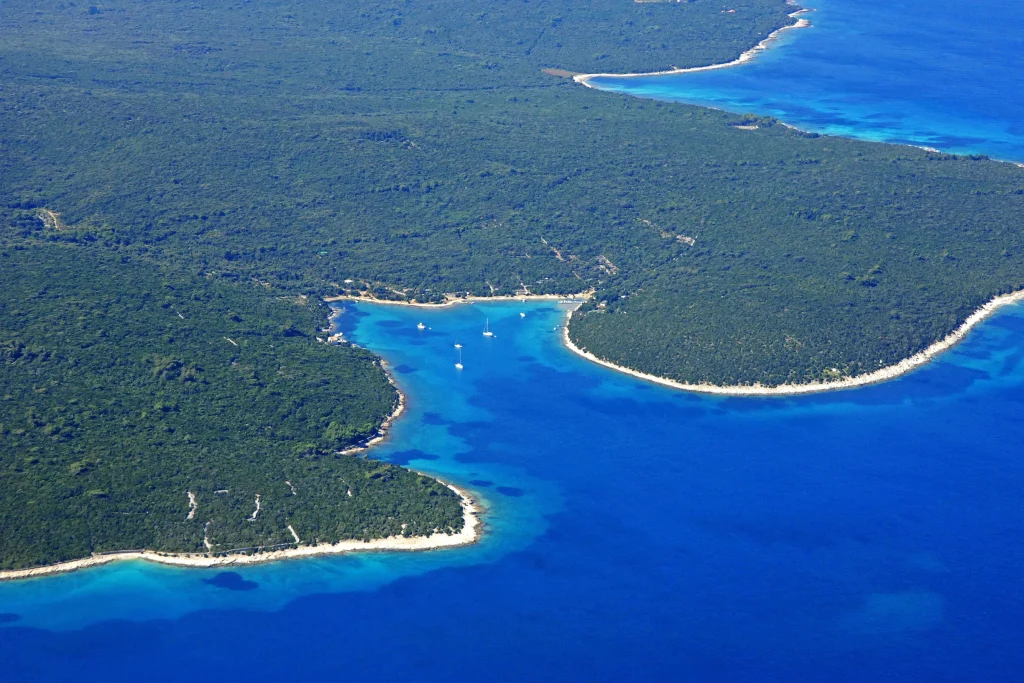
Just over a nautical mile off Hvar’s southern coast sits Šćedro, a car-free nature-park island that most charter crews sail straight past on their way to Korčula. That is exactly its appeal. While Hvar town packs out in August, the Šćedro island anchorage stays calm, low-key and refreshingly dark at night, with no street lights and almost no engine noise.
This is a small place, roughly eight square kilometres of pine and macchia with two main bays that matter to sailors: Lovišće on the north side and Mostir to its east. Both are protected as part of a nature park, both have konobas that hand out free buoys to dinner guests, and neither has mains electricity. If your high-season plan needs an escape hatch, this island is it.
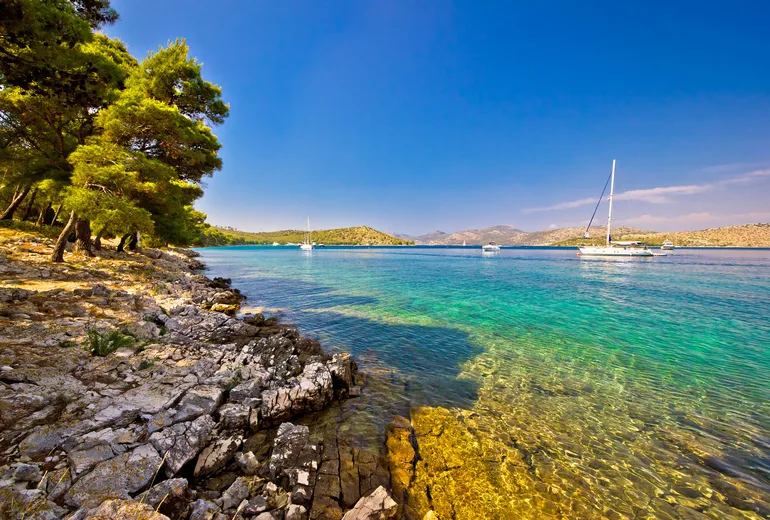
Šćedro lies in the channel between Hvar and Korčula, so it falls naturally on the run south from Split or Trogir. From Hvar town it is a short 6–8 nautical mile hop, barely an hour under power. The reason it stays quiet is simple: there is no village, no ferry port and nothing to do ashore but walk pine trails and eat well. Day-trip boats rarely bother, and the bareboat crowd tends to chase the bigger names.
For a catamaran, that low profile is a gift. The bays are sheltered, the bottoms hold well, and the shoal draft of a typical cat lets you tuck close to shore where the swimming is best. If you have already worked your way down from the north, it slots neatly after a stop in the bays around Vis and its caves and quiet anchorages, then across to Hvar’s south shore.
Šćedro has been inhabited on and off since antiquity, sitting on the old Roman sea route between Greece and the head of the Adriatic; the name comes from the Greek word for generous, a nod to its safe harbours. The Dominican monastery at Mostir, founded in the early 1400s, anchored a small community for centuries before the island slowly emptied. Today only a handful of people stay year-round, mostly running the konobas in summer, which is precisely why the place feels suspended in time. No development pressure, no marina, no nightlife, just two protected bays and a network of stone paths through the pines.
Lovišće is the larger and more popular of the two anchorages, a deep inlet on the island’s north coast that branches into several arms. The holding is good over sand and weed in the 4–8 metre range, and the surrounding hills cut the afternoon maestral nicely. Two konobas operate here through the season, and both put out mooring buoys for guests who book dinner.
The deal is the long-standing Croatian tradition: take a buoy free of charge, eat ashore in the evening, everyone is happy. Expect to pay roughly €30–55 a head for a full grilled-fish or peka dinner with house wine, which is fair value for a private buoy in a sheltered bay. Arrive by mid-afternoon in August, because the dozen or so buoys fill, and call ahead on VHF or by phone if you can.
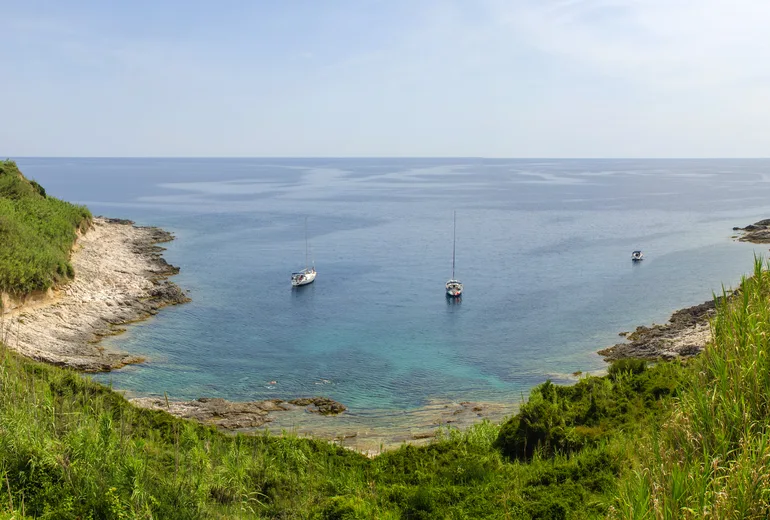
If the buoys are taken, you can still anchor in the outer parts of Lovišće, though space tightens in peak weeks. Drop in a clear sandy patch, lay plenty of scope, and dive on the hook to check it has bitten through the weed. The bay is well protected from the prevailing summer winds but opens somewhat to the north, so it is not the spot to sit out a bura blowing down the channel.
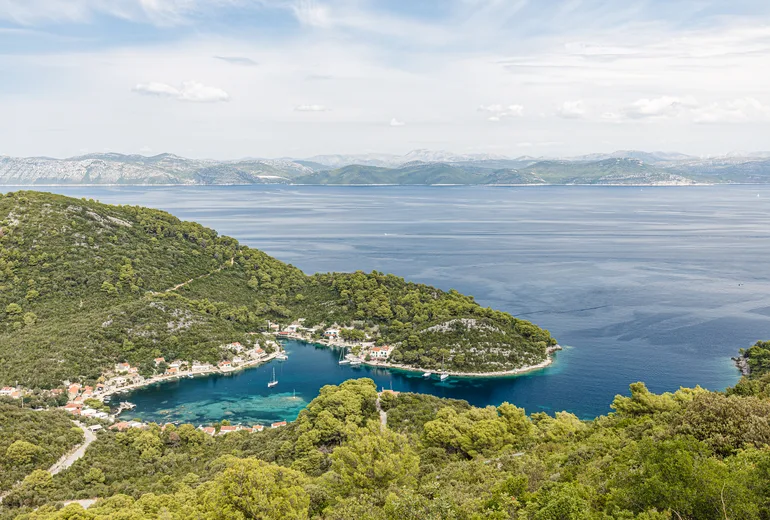
East of Lovišće, Mostir is the more intimate choice. The bay shelters a ruined 13th-century Dominican monastery onshore, a short walk through olive trees, and the swimming off the rocks is excellent. There is a konoba here too, smaller and more rustic, again with a handful of buoys for dinner guests. The whole feel is a step back in time: oil lamps, the smell of grilled fish, and a sky full of stars once the generators go off.
Mostir is more enclosed than Lovišće, which makes it cosier but also smaller, so it fills early. If you value quiet over space, aim here; if you have a big cat and want swinging room, Lovišće is the safer bet. Either way, the no-electricity rhythm means you will run on your own batteries and solar, so plan your fridge and lighting load accordingly.
A couple of hours ashore is part of the appeal. A marked path links Lovišće and Mostir across the island’s waist in about 30–40 minutes through olive terraces and pine, with the monastery ruin as the obvious turnaround. There are no shops, no cafés along the way and no shade in the open stretches, so go early or late and carry water. The reward is the kind of silence that is genuinely hard to find on the Dalmatian coast in August, plus views back across the channel to Hvar’s south-shore vineyards.
Šćedro’s konobas are the reason most crews come, not an afterthought. Both bays serve what the boat caught or the garden grew: grilled dentex and sea bream, octopus salad, lamb or fish peka cooked under the iron bell, and Hvar wines like Plavac Mali from the south-facing vineyards across the channel. Portions are generous, the setting is candlelit, and the bill is honest for the location.
Because there is no shop on the island, provision before you arrive. Buy bread, water, fruit and breakfast supplies in Hvar or Stari Grad, and treat the konoba dinner as the main event. If seafood is your priority for the whole trip, our round-up of the best seafood restaurants across the Croatian islands will help you plan the other evenings too.
The smartest way to use this island is as a relief valve. When Hvar town’s quay is a wall of charter boats and the prices on the Riva make you wince, slip across to Šćedro for the night. You get a sheltered buoy, a proper dinner and silence, then sail back into Hvar refreshed the next morning. In a packed August week, that one quiet night can reset the whole trip.
It also works as a deliberate stop on a slower south-bound route. If you are stringing together discreet anchorages rather than party harbours, pair Šćedro with the kind of quiet coves we mapped in the guide to naturist-friendly and secluded anchorages for catamaran crews. Both lean on the same idea: distance from the crowds plus a stable boat to live aboard.
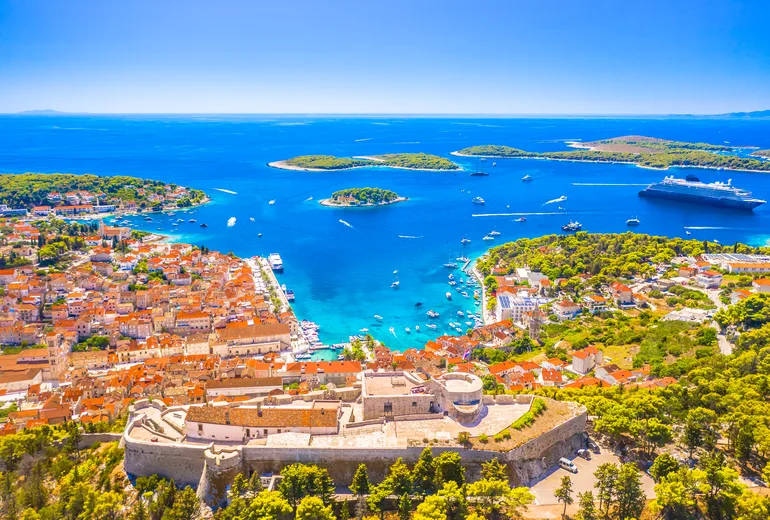
July and August give the steadiest weather, with the maestral filling in around midday at 10–16 knots and dropping at dusk. The channel between Hvar and Šćedro can get a short, sharp chop when the afternoon breeze runs against any swell, so time your crossing for the morning calm if you can. Sea temperatures sit around 24–26°C in high summer, ideal for the long swims this island rewards. In a strong bura or jugo, neither bay is a true storm hole, so watch the forecast and keep Stari Grad or Vrboska in mind as harbour options.
Šćedro is small enough that you will not spend a whole week here, but it shines as one night on a larger loop. A classic shape from Split: down to Hvar and the Pakleni islands, across to Šćedro for a konoba night, on to Korčula and Vis, then back north. Each leg stays under about 25 nautical miles, leaving long mornings at anchor. For the bigger picture of a south-bound itinerary, our seven-day sailing route from Split toward Dubrovnik shows how the southern islands connect.
From Hvar town, head out past the Pakleni islands and shape a course south-east down Hvar’s coast; the island shows as a low green mass about a mile off the shore, with Lovišće opening on its north side. From Korčula it is a 20–25 nautical mile leg back up the channel. The waters between Hvar and Šćedro are deep and clear of hazards, but the entrance to each bay narrows, so come in slowly and have a crew member spotting the buoys and any swimmers off the boats already moored. There are no lit marks, which is another reason to arrive in daylight and well before dinner.
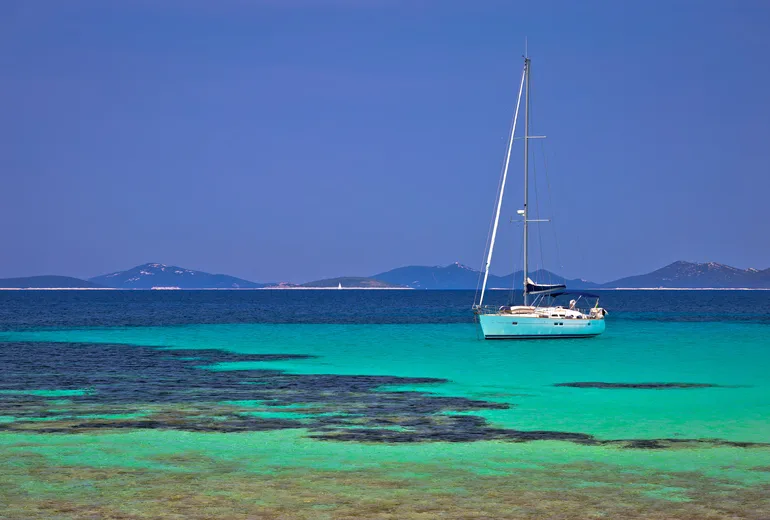
Yes. Both Lovišće and Mostir bays have mooring buoys put out by their konobas, free if you book dinner ashore, plus room to anchor in the outer parts of Lovišće. There is no marina and no mains electricity, so you live off your own batteries for the night.
For peace and price, often yes. Hvar town has the nightlife and the buzz, while Šćedro offers a sheltered buoy, a candlelit konoba dinner and silence. Many crews use it as a one-night escape from the August crush on Hvar’s quay, then return refreshed.
In July and August it pays to call the konoba ahead, as the dozen or so buoys in each bay fill by mid-afternoon. Arrive early, take a buoy, and confirm your dinner table on arrival. Outside peak weeks you can usually turn up and find space.
No shop and no reliable provisioning, so stock up in Hvar or Stari Grad first. The konobas provide the evening meal, but bring your own bread, water, fruit and breakfast supplies for the morning.
Want a catamaran that lives happily at anchor for nights like these? Explore our Croatia catamaran charter routes and destinations and build a slower week around islands like Šćedro.