8 Friends, 4 Cabins, 1 Catamaran: How Group Life Aboard Actually Works in Croatia
What life aboard is really like for eight friends sharing a four-cabin catamaran in Croatia: space, water, privacy and cost, honestly.
Read more
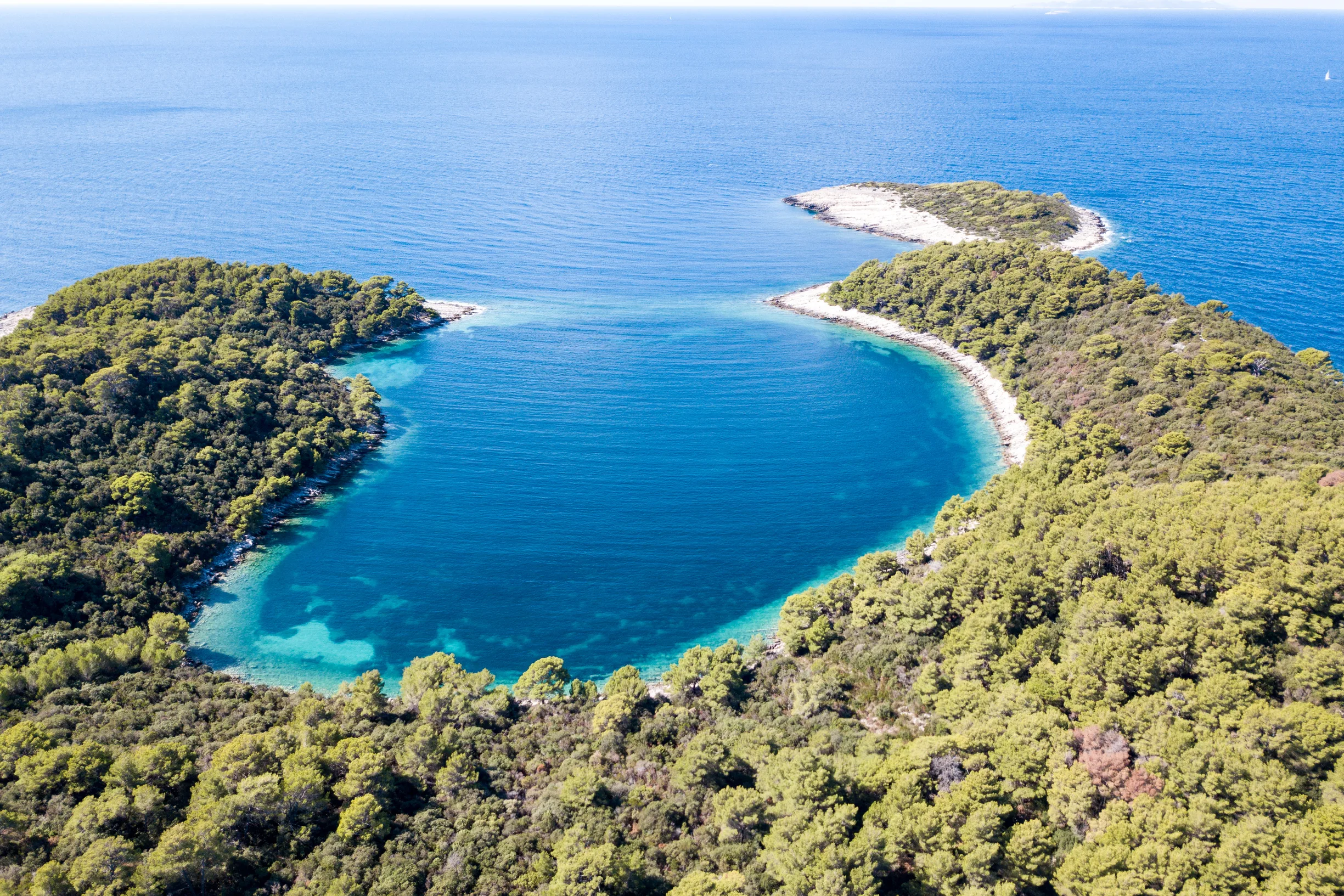
Croatia has one of the longest clothing-optional traditions in the Mediterranean. The shorthand you will see on charts, signs and old guidebooks is FKK, from the German Freikörperkultur, and it has been part of Adriatic beach life since the 1930s. For sailors, that history matters in a practical way: there are coves and islets where swimming without a suit is simply normal, and nobody will think twice.
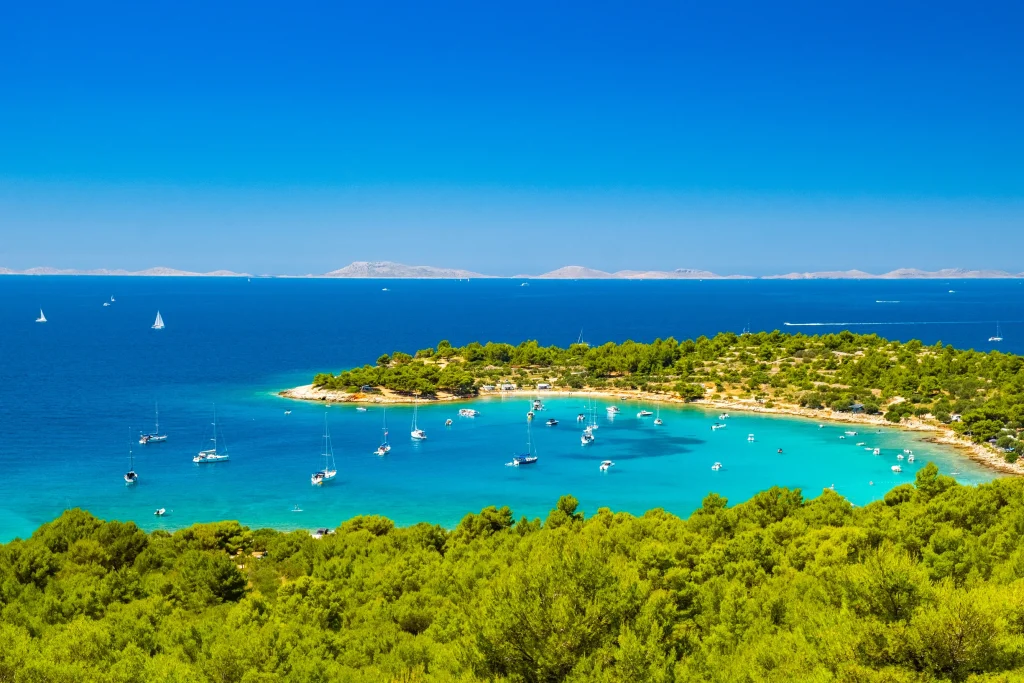
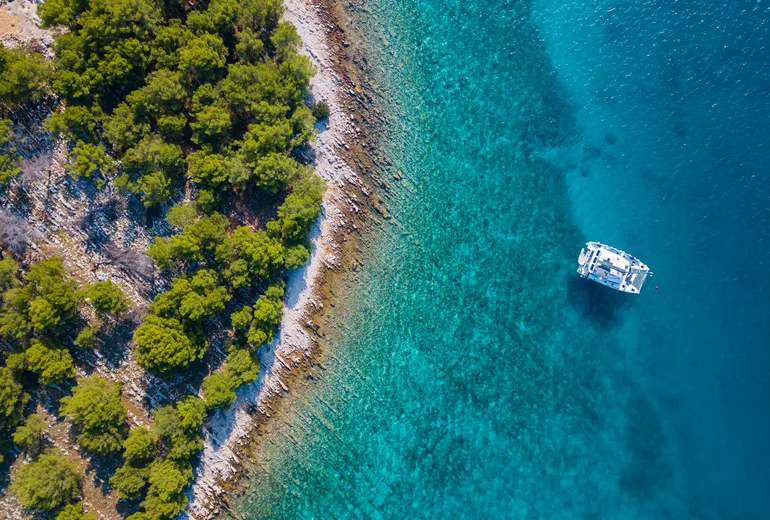
This is where naturist sailing croatia comes into its own. On a catamaran you control the distance to shore, the angle of the cockpit and how exposed your swim platform is. You are not perched on a public beach next to a snack bar. You drop the hook off a quiet pine-fringed shore, swim off the steps, and the only audience is the gulls. Below is an honest map of where it works, how to read the signs, and the unwritten rules crews tend to follow.
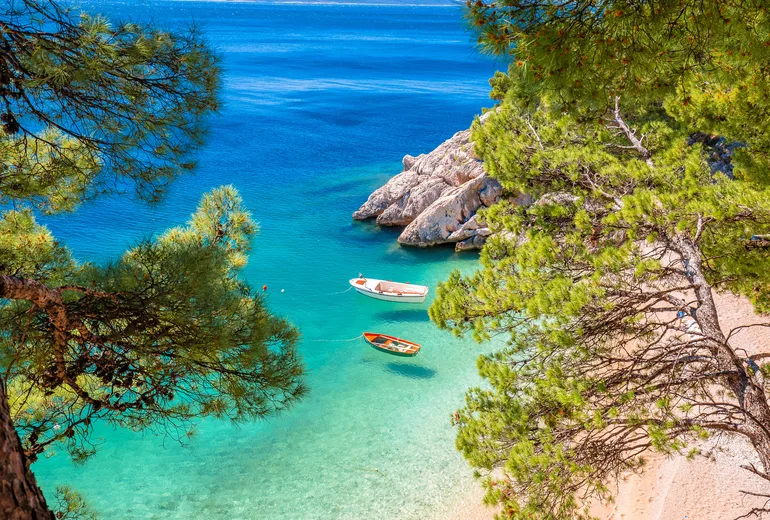
FKK is not a vague vibe; it is a recognised category. Tourist boards list official naturist beaches and campsites, and many carry a small blue-and-white sign at the path. On those stretches, full nudity is expected rather than tolerated. Away from marked beaches, the line is softer. On a boat anchored 80–150 metres offshore, a discreet swim off the transom is broadly accepted across most of Dalmatia, provided you are not staring down a family beach.
The key distinction most crews learn fast: marked FKK zones are for everyone openly; everywhere else relies on distance and good judgement. A catamaran’s beam gives you a wide cockpit, so you can sunbathe on the foredeck or trampoline out of sight of the shore path. That privacy is the whole reason cats suit this kind of cruising better than a narrow monohull cockpit.
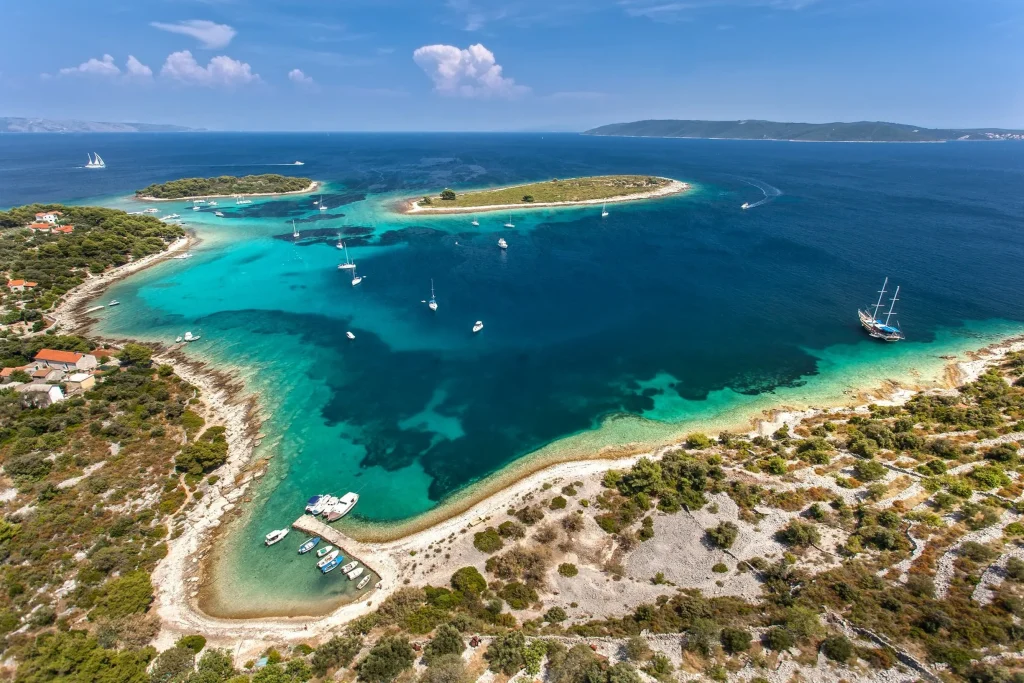
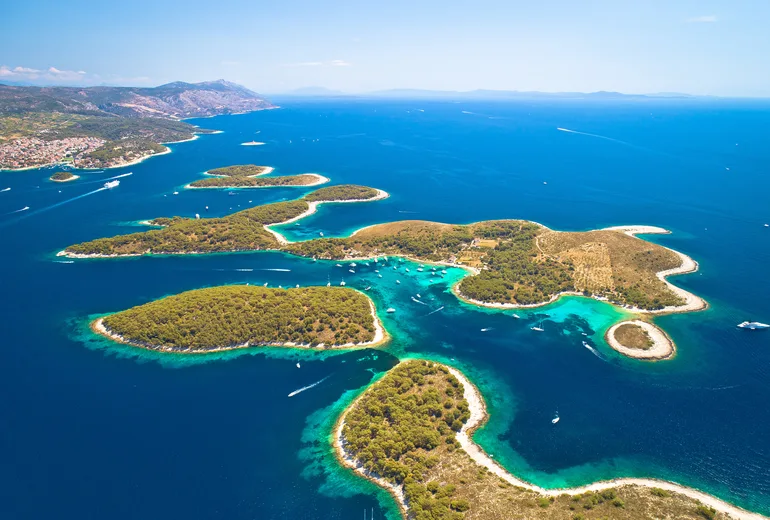
The Pakleni islands, the green chain just off Hvar town, hold the best-known clothing-optional spots in central Dalmatia. Jerolim, the closest islet to Hvar, has a long-standing naturist beach on its south-east side, easy to reach by dinghy once you have anchored in the channel. A few hundred metres on, Stipanska bay mixes a beach club with quieter rocky shelves where suits come off without comment.
Anchoring here takes some care. The Pakleni channels get busy in August and the holding is patchy over weed in places, so set the hook in a clear sandy patch and dive on it. Expect to share the wider anchorage with day boats; the trick is to tuck into a smaller indentation on the islets’ outer faces where the crowds thin out by late afternoon. For a full breakdown of the better holding spots and where to swing overnight, our notes on the best anchoring locations and bays around Croatia are worth a read before you go.
If you sail the Kvarner, Kandarola on the Frkanj peninsula near Rab town is part of naturist history. It claims one of Europe’s first official nude beaches, opened after a royal visit in 1936, and it still runs as a proper FKK beach today. The bay is sheltered, the bottom sandy in patches, and you can anchor off and dinghy in, or take a buoy if one is free. Rab itself is a handsome walled town, so this is an easy combination of a relaxed swim and a town evening.
One caution: the Kvarner channel funnels the bura, the cold north-easterly, harder than central Dalmatia. Check the forecast and have a plan-B harbour like Rab marina if the wind builds, because an exposed swim stop is no fun in a chop.
Near Dubrovnik, the wooded island of Lokrum has a marked naturist section on its rocky south-eastern shelves, signed FKK and a short hop from the city. It gets day visitors off the regular ferry, so mornings are calmer. Anchoring off Lokrum is restricted in parts because it is a protected reserve, so read the local signage and keep clear of marked no-anchor zones.
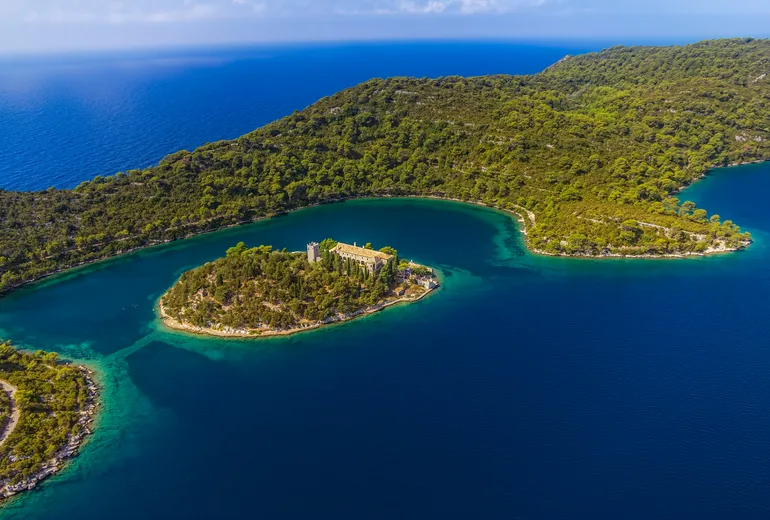
Further along, the national park island of Mljet offers quieter, unmarked coves on its southern coast where a discreet swim raises no eyebrows. These are not official FKK beaches; they simply suit crews who anchor away from the saltwater lakes and the busier Polače and Pomena harbours. The water here, fed by the open sea, runs a notch cooler and clearer than the central island channels.
Naturism on the Adriatic works because people are quietly respectful, and a charter crew should fit in rather than stand out. A few habits go a long way. Keep cameras and phones away from the swim platform when other boats are near; nothing sours an anchorage faster. If you anchor close to a marked family beach, keep suits on until you are well offshore. And on marked FKK beaches, the convention is the reverse: turning up clothed and gawking is the awkward move, not the nudity.
On board, the cockpit and foredeck of a catamaran are your private space, but the dock is not. Cover up before you come alongside a town quay or a busy buoy field. Croatians are easy-going about this, yet local konoba owners and harbour staff still expect ordinary dress ashore.
Late June through early September gives sea temperatures around 23–26°C, warm enough that nobody rushes the swim. August brings the crowds, so the discreet outer coves matter more then. The maestral, the reliable afternoon north-westerly, picks up around midday and freshens to 12–18 knots; it makes the swing in open anchorages livelier, so morning swims are usually the calmest. If you want quieter water and softer light, the shoulder of early September is hard to beat.
The shallow draft of most charter cats, often around 1.2–1.5 metres, lets you nose into thinner water and anchor closer to a sheltering shore than a deep-keeled monohull. The wide stern and twin hulls give a stable, low swim platform that feels private even with another boat 100 metres off. And the flat foredeck or trampoline is a sun lounge you simply do not get on a heeling monohull.
That combination, privacy plus stability plus shoal draft, is exactly why so many naturist-minded crews choose a cat. If you are weighing islands and routes for a relaxed, swim-led week, the round-up of Croatia’s quieter islands worth visiting pairs well with the coves above. For pure swimming and beach quality, our list of the best beaches along the Croatian coast flags several spots that double as relaxed swim stops.
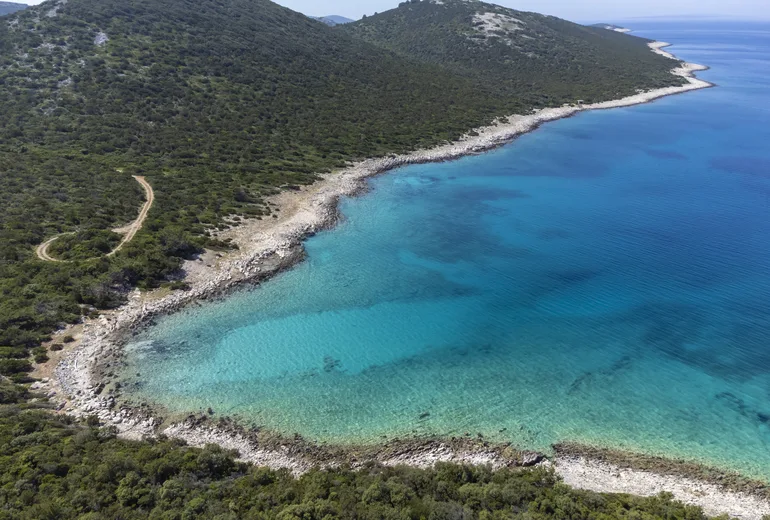
A simple way to string these together from Split or Trogir: day one, sail south to the Pakleni islands and pick a quiet outer cove off Jerolim, roughly 25 nautical miles depending on your base. Day two, hop to Vis or back along Hvar’s south shore for empty bays and a town dinner. Day three, swing into a sheltered anchorage for a final lazy swim before the marina run home. None of the legs need exceed 20–25 NM, leaving long mornings at anchor.
If you would rather skip the marinas entirely and live at anchor, the approach in our guide to a no-marina catamaran week using anchorages and buoys around Šolta translates neatly to a swim-focused trip.
Yes, on marked FKK beaches it is fully accepted and signed. Elsewhere, a discreet swim off an anchored boat away from family beaches is broadly tolerated. There is no blanket ban, but local signage and common sense apply, especially near towns and busy beaches.
The best-known marked beaches include Jerolim and Stipanska in the Pakleni islands near Hvar, Kandarola on Rab, and a section of Lokrum near Dubrovnik. Many campsites along the coast also run their own FKK beaches with easy dinghy access.
Not far, but with judgement. A swim off the transom is usually fine when you are 80–150 metres off a quiet shore. Keep suits on near marked family beaches and when coming alongside any town quay or buoy field.
Late June to early September gives the warmest sea, roughly 23–26°C. August is warmest but busiest, so the quieter outer coves matter most then. Early September often brings calmer water, softer light and noticeably fewer boats.
Ready to plan a quiet, swim-led week at your own pace? Browse our Croatia catamaran charter destinations and routes and find a boat with the cockpit privacy and shoal draft these coves reward.