October on a Catamaran in Croatia: Cabin Comfort, Heating & the Last Good Weather Windows
Is October too late for a catamaran charter in Croatia? An honest, comfort-first verdict on heating, daylight and the last good weather windows.
Lire la suite
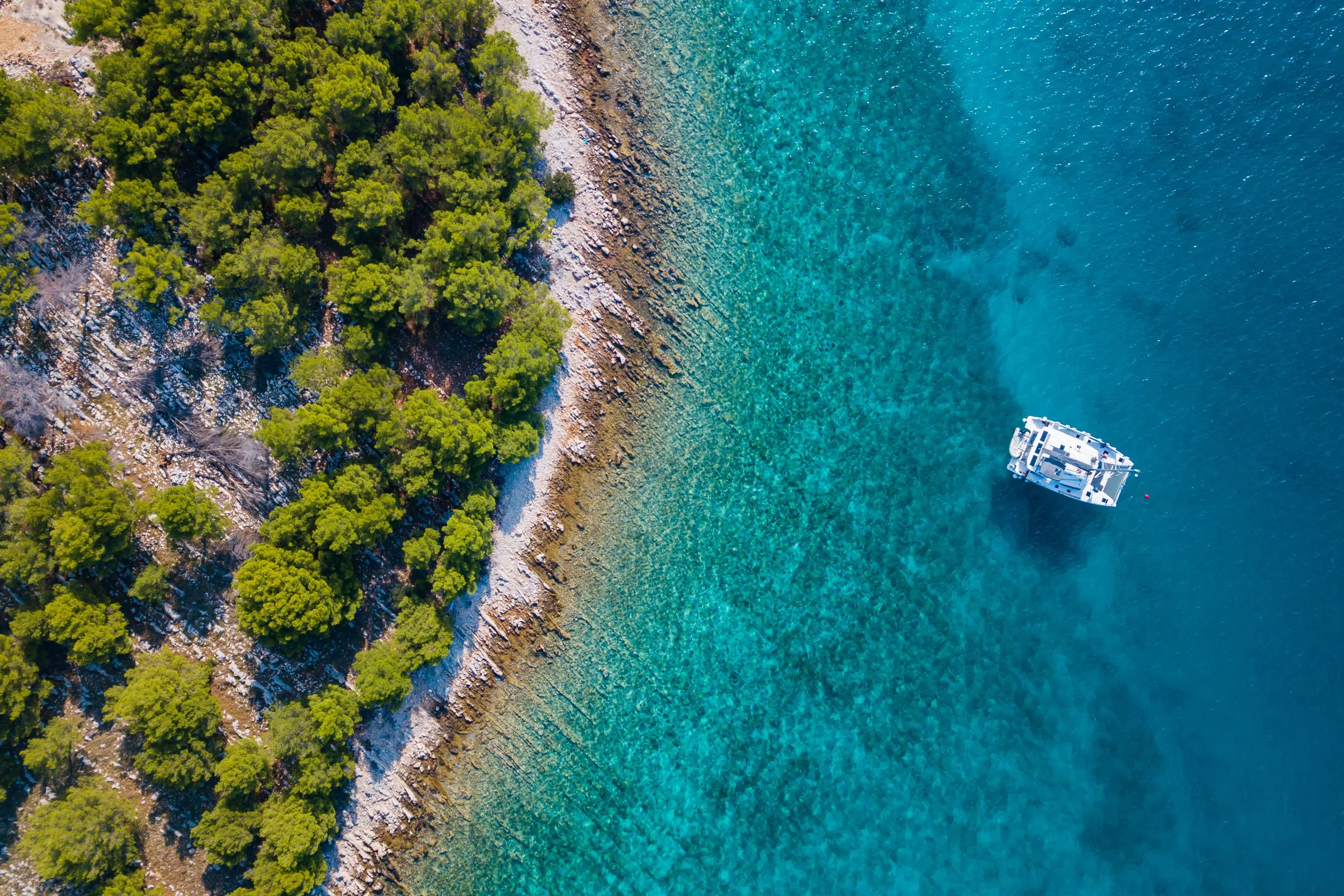
Yes, you can sail a whole charter week in Dalmatia and never tie up in a paying marina. We have done it, our clients do it most summers, and on a catamaran it is easier than on a monohull. The shallow draft lets you tuck into bays a deeper keel would avoid, the water tanks usually run to 600–900 litres, and a decent battery bank with solar will carry your fridge and lights for days. Sailing Croatia without marinas, in other words, is mostly a question of using what the boat already gives you.
This is a real Split round-trip you can copy, built on anchorages and konoba buoys instead of marina berths. Sailing Croatia without marinas is partly about saving money and partly about waking up somewhere quiet. At the end there is a night-by-night cost ledger so you can see exactly what the week costs versus a marina-hopping plan.
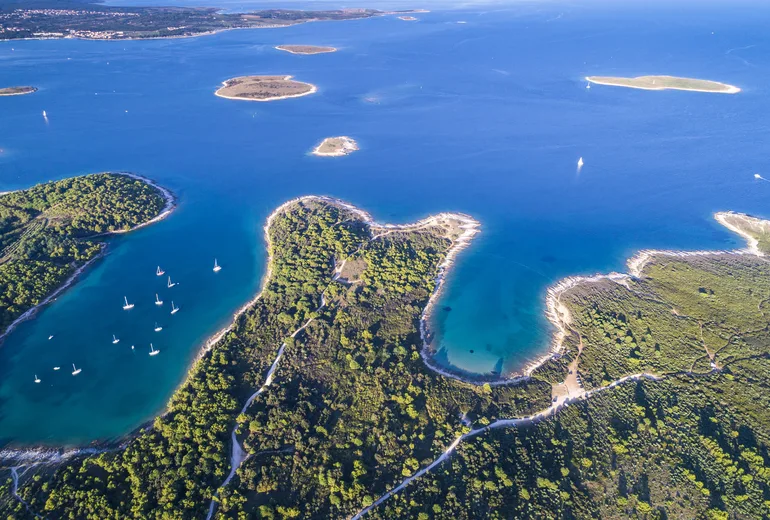
A wide hull sits flat at anchor, so nobody rolls out of their bunk when a ferry wake rolls through at midnight. That stability is the practical reason crews who try it once tend to repeat it. Add the tankage and the solar, and you are no longer chained to shore power and a water hose every evening.
The catch is discipline. You manage fresh water like it is rationed, you anchor properly the first time, and you read the wind forecast before you commit to a bay. Get those three habits right and the marina becomes optional rather than necessary. Our guide to the best anchoring spots in Croatia is worth a read before you leave the base, because half of a calm night is choosing the right cove.
No marina means no laundry, no easy provisioning trolley, and no quayside restaurant two steps from the passerelle. You also skip the marina cost itself, which in peak weeks is the single biggest variable in your budget. For most crews the trade is worth it; for a family with toddlers who need a flat pontoon to run off energy, mix in one or two marina nights and you still come out ahead.
Leave the Split or Trogir base in the afternoon once the boat is checked and provisioned, and make the short hop across to Šolta. It is barely 9 NM, under two hours, which is exactly what you want on handover day. Pick up a konoba buoy in Šešula bay below Maslinica; the restaurants there lay free buoys for guests who eat ashore, so your first night costs the price of dinner and nothing more.
Šešula is well sheltered from the prevailing maestral and the holding on the few free-anchoring patches is good sand. Eat grilled fish at one of the konobas, sleep, and you have started the week without a single marina euro. If you want the fuller picture of this island, the planned Šolta micro-guide for catamarans covers Nečujam and Stomorska too.
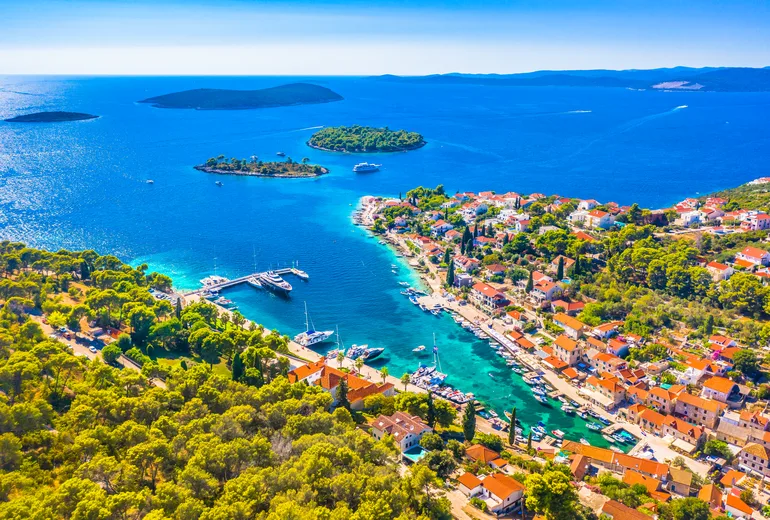
From Šolta point the bows south-west to Vis, roughly 22 NM and three to four hours depending on the maestral. Vis sits furthest offshore of the central Dalmatian islands, which keeps it quieter and the water clearer. Anchor in Stončica, a wide sandy bay on the north-east coast with excellent holding and a little beach taverna, or carry on to Komiža on the west side.
Stončica is a free anchorage in the truest sense; drop the hook in 4–6 metres of sand and you will sleep well unless a rare easterly is forecast. Komiža harbour does charge for the town quay, so if you want to stay free, anchor off the bay rather than going alongside. Either way, walk into Komiža for the fishermen’s konobas and a glass of local Vugava white.
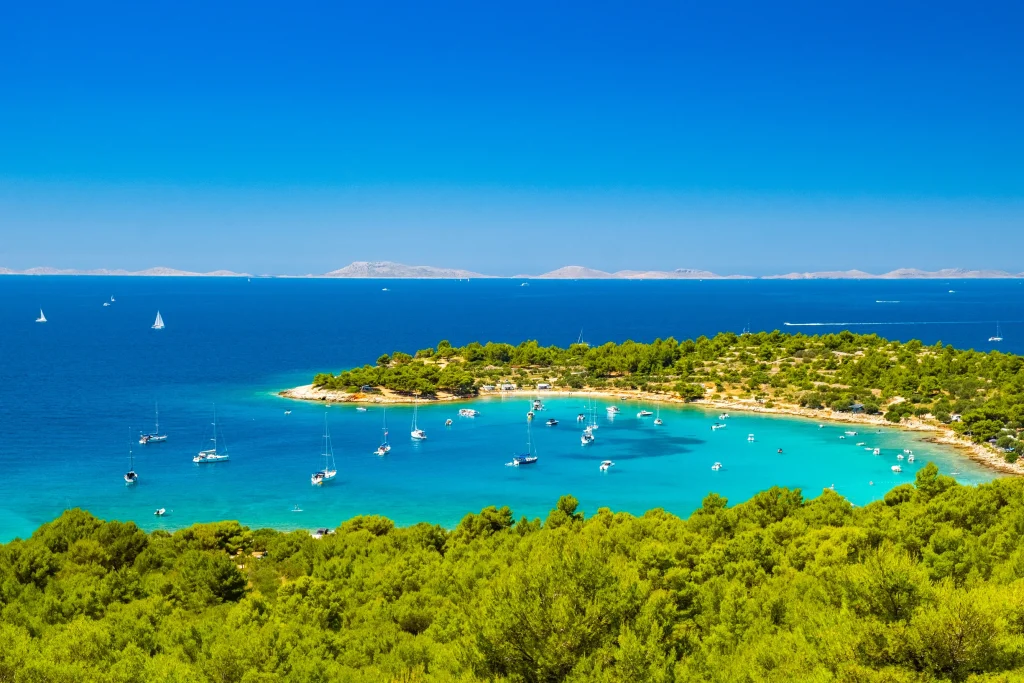
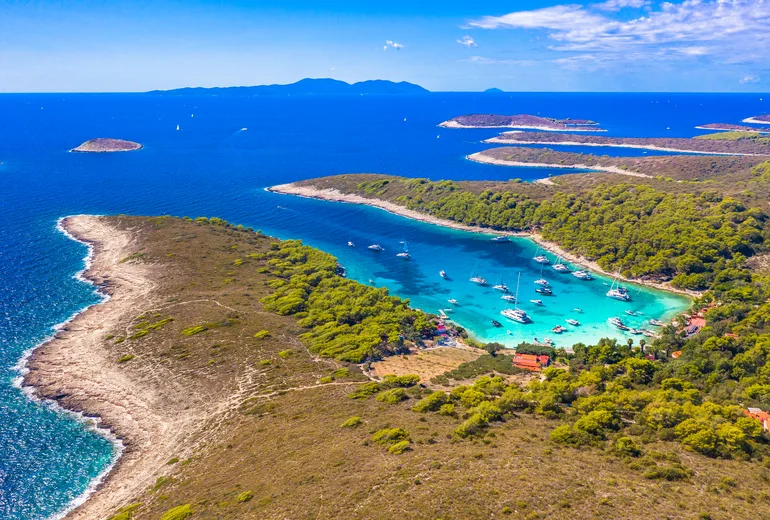
The Pakleni archipelago, the scatter of islets just off Hvar town, is the prettiest free-anchoring water on this route. From Vis it is about 14 NM north, two to three hours. Palmižana has a small marina, but the bays around it, Vinogradišće and the channels toward Ždrilca, hold dozens of boats on the hook in turquoise water over sand and weed.
Anchor early; by mid-afternoon in July the good sand patches fill up and you end up over weed, where the hook drags. If you want a quieter night, slip across to the Ždrilca and Mlini lagoon between the islets, shallow enough that a cat is in its element. Dinghy across to Hvar town for the evening, then return to your boat rather than paying for the famously expensive Hvar town quay.
Lay out scope of at least four times the depth, more in weed, and reverse hard to set the anchor before you relax. If the boat next to you arrived first and is on a short scope, give them room rather than dropping on top of their chain. Most arguments at anchor come down to someone swinging into someone else, so leave a generous circle and check your transits before you crack open a drink.
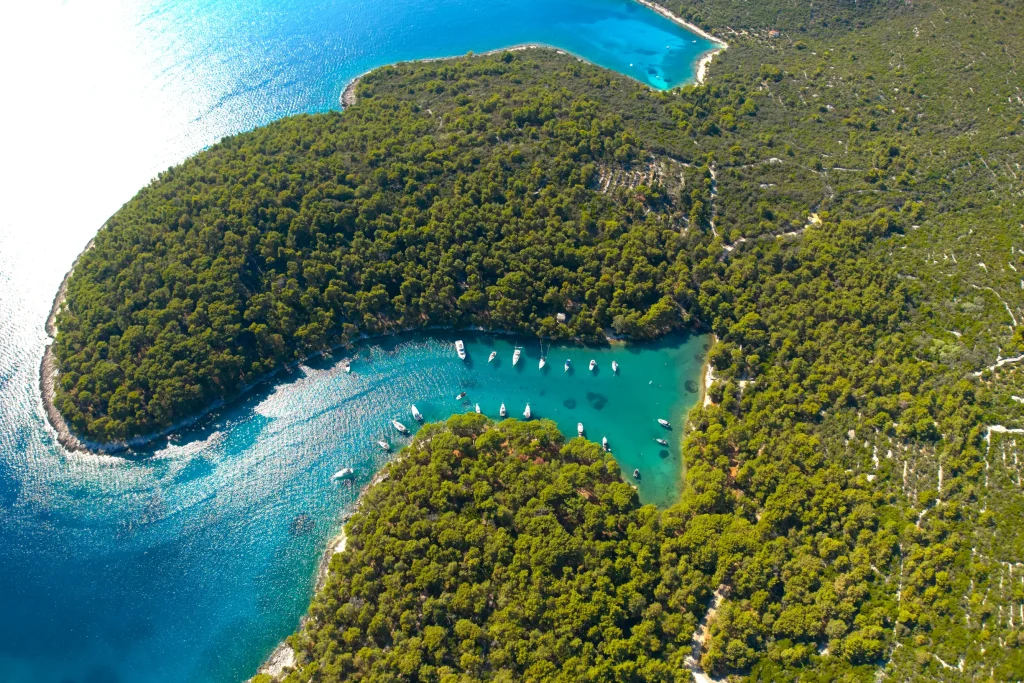
Track north-east to Brač, around 16 NM to the bays on the south coast. Lučice is a fjord-like inlet with several fingers, free anchoring, pine shade and good shelter from the maestral. Bobovišća on the west coast is another quiet, deep inlet with room to swing. Both let you spend nothing on a berth while sitting in genuinely sheltered water.
Brač also gives you the famous Zlatni rat spit off Bol, best seen by day-anchoring before the tripper boats arrive, then moving on to overnight somewhere calmer. The planned complete catamaran charter guide for Croatia sets out how these central islands link together if you want to extend the loop.
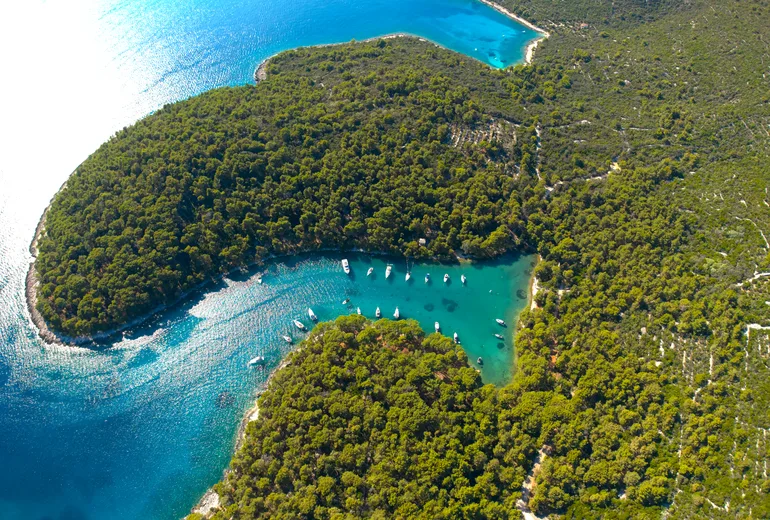
Aim to be within a couple of hours of the base by the final evening. Many crews anchor one last night in a bay near Trogir or off Čiovo, then run in early to refuel and hand over. Top up water at the fuel quay if your tanks are low; a week of careful use on a catamaran usually leaves a comfortable margin, but it is bad form to return the boat with empty tanks.
Plan fuel realistically. A week of mostly sailing with short motoring legs burns surprisingly little, often 60–120 litres on a 45-foot cat, so diesel is a minor line in your no-marina budget.
Here is the week priced two ways, for a typical 45-foot charter catamaran in July. Marina figures use mid-season ACI and private rates; the no-marina column assumes konoba buoys paid for with dinner and free anchorages elsewhere. For the marina side of the maths, our 2026 guide to Croatian marina fees breaks down the per-night rates.
Money aside, the bigger return is the mornings: swimming off the steps before breakfast in a bay with two other boats instead of a packed marina. That is the real reason crews keep choosing this kind of week.
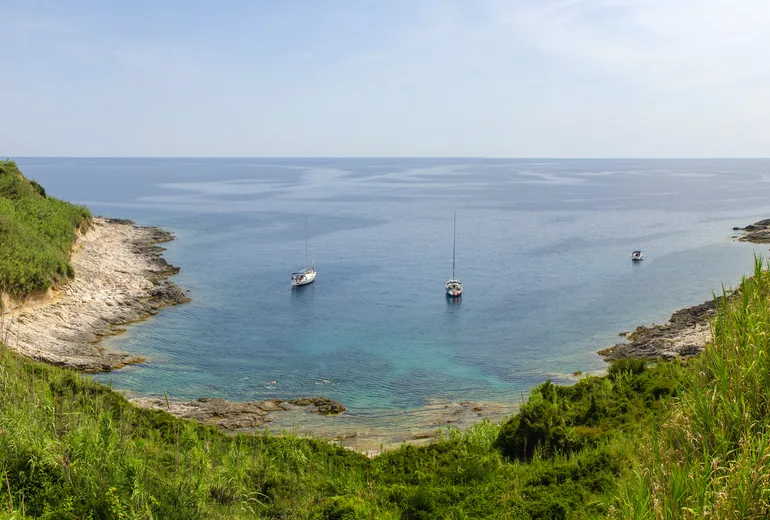
Stock up heavily at base before you leave, because resupply ashore in small villages is limited and pricier. Carry a few large water containers as backup so you are never anxious about the tanks. Run the watermaker if the boat has one, and shower off the swim platform with a solar bag to spare the freshwater pump.
Keep the fridge cold by anchoring bow-to-breeze so the saloon vents, and charge devices while the engine runs on passage rather than draining the house bank overnight. None of this is hard; it is just the rhythm of self-sufficient cruising, and a catamaran’s tankage and solar give you a wide margin of error.
A few small habits stretch the week further still. Wash dishes in seawater and rinse with a quick freshwater splash, collect the cold water you run off before the shower turns warm, and keep one tank in reserve so a forecast change never forces you into a marina just to refill. Buy the heavy provisions, water, beer and soft drinks in Split where they are cheapest, then top up only fresh bread, fruit and the day’s fish from the island konobas as you go. Done this way, a week on the hook costs less in mooring fees than a single peak-season night in Hvar.
You can anchor free in most open bays, but anchoring is restricted or banned inside national parks and some nature parks, where you pay for a buoy or a ticket instead. Konoba buoys are technically free if you dine at the restaurant that lays them. Always check local signage and avoid laid mooring fields that belong to a marina or a charter operator.
On a modern charter catamaran with solar and a healthy battery bank, the fridge, lights and pumps run comfortably for days if you charge while motoring. Water is the tighter constraint; with careful showering and dishwashing, 600–900 litres of tankage typically stretches across a week for four to six people. A watermaker removes the worry entirely.
Choose bays with good holding and shelter from the forecast wind direction, set the anchor properly, and keep an anchor-watch app running. The summer threat is the nevera, a fast squall from the west, so favour bays that are protected from that quarter. If the forecast looks unsettled, a marina or a town quay for one night is cheap insurance.
Confident beginners manage it well with a relaxed route and short hops, like this one. The skills that matter are anchoring properly and reading a forecast, both of which you can learn quickly. If you are unsure, take a skipper for the week or start with one or two anchor nights mixed into a more conventional itinerary.
Ready to plan your own anchor-only week? Browse our catamaran charter destinations across Croatia and build a route that keeps you on the water and out of the marina queue.