Lagoon 51 Review for Croatia: the Flybridge Family Cat
A practical Lagoon 51 review for Croatia: flybridge, cabin layouts, marina costs and how it compares to the Lagoon 46.
Read more
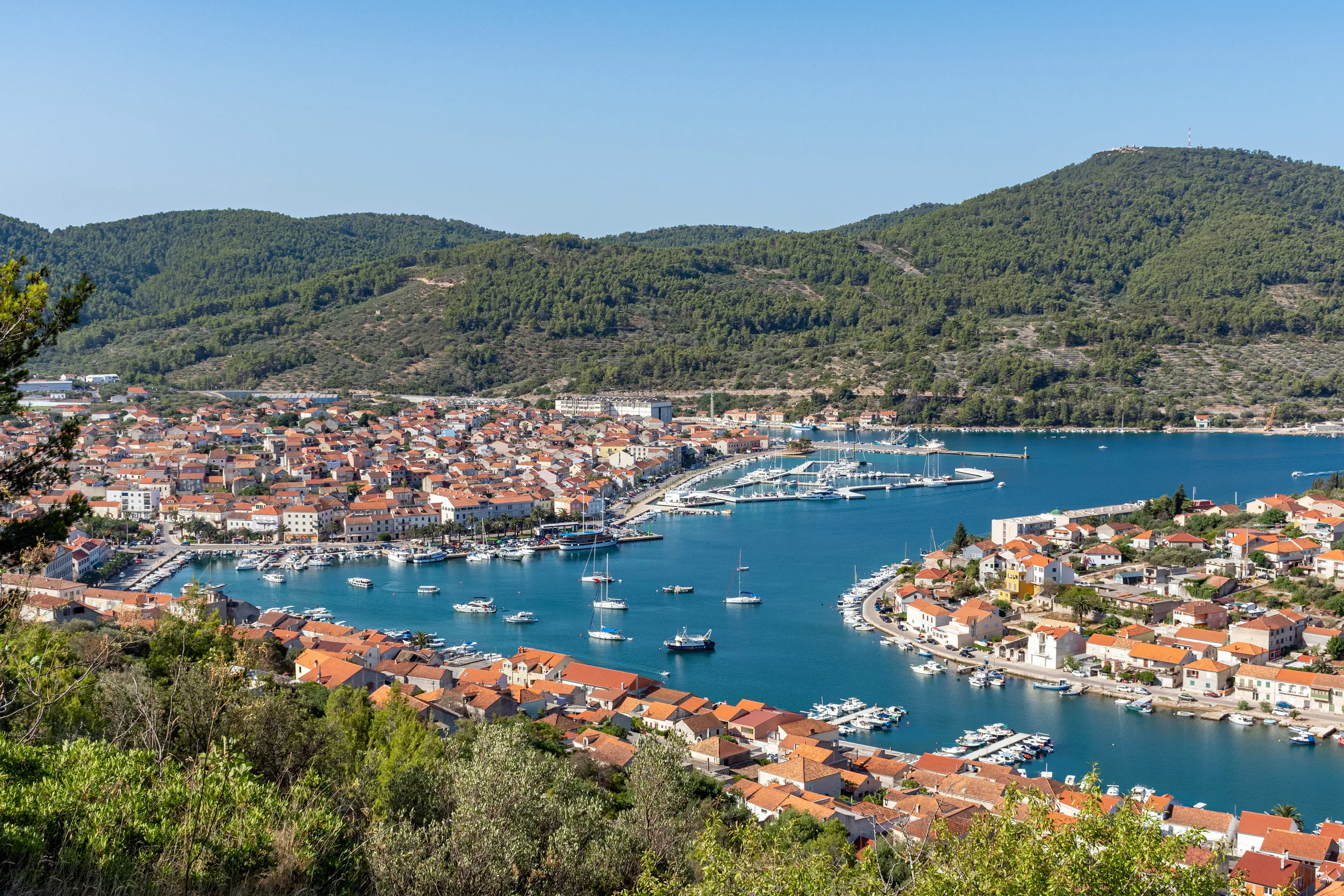
A catamaran charter Croatia from Canada has a new direct option in summer 2027: Air Canada will start non-stop service from Montreal to Dubrovnik three times a week from 11 May 2027, while Air Transat has flown seasonal Toronto to Zagreb flights in recent summers; check its 2027 schedule.
Most of the questions that we receive from potential Canadian clients relate to 2 weeks of holiday time around school’s end in late June and Labour Day in early September. Others wonder why a PCOC (Pleasure Craft Operator Card) does not qualify them to rent a bareboat. Then there are those who compare Dalmatia with Georgian Bay or the Gulf Islands. We have also written out a sample 1 week holiday from Dubrovnik to take advantage of the new Air Canada non-stop service from Montreal. We have also attempted to cost it all out in Canadian dollars.
The nonstop flights from Canada were announced by Air Canada in September 2026 for Boeing 787 flights Montreal to Dubrovnik, operating 3 times per week from May 11 until October 23, 2027. There are no flights scheduled from Toronto to Dubrovnik, so Ontario crews connect through Montreal. However Air Transat’s seasonal Toronto to Zagreb flights have been the other nonstop option in recent summers; check its 2027 schedule. From Zagreb, it is a short domestic flight or a 4 hour drive down the A1 highway to the various marinas in the Split area.
From Vancouver and Calgary, connection through a European airport (airports such as Amsterdam, Frankfurt, London) or through Montreal will be the way to travel to Croatian charter locations. A long travel day and a 9-hour time difference are to be expected from the West Coast of Canada. A 6-hour difference in time from Eastern Canada in summer is manageable if you arrive a day before the boat.
Air Canada’s published schedule, subject to change, has the Montreal flights leaving on Tuesday, Thursday and Saturday evenings and landing in Dubrovnik the next morning. In the meantime, note that most Croatian charters change over on Saturday afternoons. Thus, it would be ideal to arrive in Dubrovnik on the Friday morning flight and then board on Saturday afternoon at the charter’s change over. Typically, crews fix the charter dates first, so book the boat before the flight.
Most Canadian families travel between the end of school in late June and Labour Day, and two weeks is the classic shape for a European trip. In 2027 Canada Day falls on a Thursday, so a family can take the Thursday evening flight from Montreal, land on the Friday and start the charter on Saturday 3 July, just before the busiest weeks on the coast. At the other end, Labour Day is Monday 6 September 2027. The last week of August still has the warmest water of the year, and prices typically start to ease as European school holidays finish.
Generally, couples and crews without children have more room in their dates. The Victoria Day weekend in 2027 falls on May 24th, some two weeks following the first Montreal to Dubrovnik flight of the season. Late May presents lovely, quiet anchorages, light air and early season rates. September is the preferred month for experienced Canadian sailors who have already had one or more summers of cruising in Croatia.
An example of a good pattern of travel would be to spend one week sailing and then travel to land for the following week. So you would arrive in Dubrovnik and then spend a week of sailing from there before traveling up the coast to Split, Šibenik and visiting the beautiful Plitvice Lakes before departing from Zagreb on a one-way ticket to return to Toronto. The reverse itinerary would also work well, ending your trip of sailing when you have had time to get into European time. Crews who would rather spend both weeks afloat can follow our 10 to 14-day catamaran itinerary along the full coast.
In Canada, most boaters hold a Pleasure Craft Operator Card. You get this card by passing a test with a Transport Canada accredited course provider, to ensure that boaters have some knowledge of the laws and safe practices required for operating a boat on Canadian waters. In Croatia, however, a PCOC is not considered to be a recognized foreign sailing certificate and on its own will not get you a bareboat catamaran, even for an experienced sailor.
What Croatia recognizes according to the table published by the Ministry of the Sea, Transport and Infrastructure:
An International Certificate of Competence (ICC) issued by IYT (up to 18 m) or by the RYA (up to 24 m for sail) is recognized in Croatia, and Canadians can get one through either in time for the start of the spring season. For an experienced sailor who does not have any formal cruising certificates, this is often the fastest route to chartering a bareboat. In addition to the sailing certificate, a VHF radio operator certificate (national or foreign) is required to charter a boat with a VHF on board. Many Canadian boaters already hold a ROC(M) which is a national VHF certificate, however we need to confirm that this will be acceptable to the charter company prior to your departure. In addition to your certificates, a sailing resume would also be expected.
If you have no certificate and no time to obtain one before your charter, hiring a skipper for the week is a cost of about €1,750 + skipper’s food for the week, and you can still helm as much as you like. We have written a post on whether you need a skipper licence in Croatia detailing the issues for and against.
In some ways Canadian crews arrive very well-prepared. For example Gulf Islands sailors who time their passage of Active Pass or Porlier Pass to the minute will find the tides in the Adriatic to be almost non-existent, a few tens of cm of water movement and thus no need for tidal information. Lake Ontario sailors already know that there is no tide to worry about, but also none of that warm salt water to enjoy in July and August. The sea temperature in July and August averages in the mid-twenties Celsius and it’s not uncommon for the lunch stop to be turned into a long swim off the back of the catamaran.
Georgian Bay crews will feel at home among the bare rock and pine trees, minus the shoals. But even the rock gives way to dropping depths within meters of the shore. As a result you will anchor in 6 to 10 meters of water in a very short distance from shore. In very tight coves you will often tie a line ashore to stop the boat from swinging round. BC sailors will recognize this immediately from stern-tying in Desolation Sound.
There are two main things to note about sailing in Croatian waters: mooring and wind. Quays and marinas in towns are generally Mediterranean moored, reverse into space, pick up the lazy line and cleat off at the bow. With engines spaced well apart on a catamaran, this is relatively easy to do. A day’s sailing generally follows a pattern of calm mornings, a northwesterly maestral of 10 to 20 knots by midday that dies down again in the evening. Hops are short and generally in the range of 10 to 20 NM so a day’s sailing will include a swim, an afternoon of sailing and then dinner ashore in a local fish restaurant with a glass of the local white, Pošip.
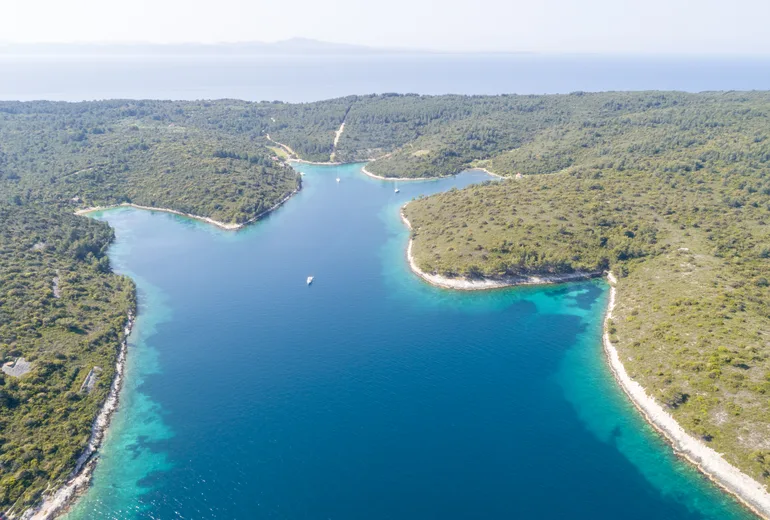
It makes sense to depart from Dubrovnik as this is where your nonstop flight lands. There are fewer boats in the Dubrovnik fleet than there are in Split so it is best to book early. However, the southern islands offer a great deal of space and some of the best food that Croatia has to offer. A typical loop, weather permitting:
There are more anchorages around Korčula than you can squeeze into a week’s charter. Our guide to Korčula by catamaran, from Badija to Lumbarda explores the many anchorages around the island. Wind in the south behaves a little differently from Split, so we look at the sailing weather around Dubrovnik in a separate post.
As a Canadian, you are entitled to enter Croatia without a visa for up to a 90 day period within any 180 day time frame. The 90 days are shared across the Schengen area, which Croatia joined in 2023. Two weeks of travel in Croatia and a few days of travel in Italy will use up very little of this allowance. The passport must have been issued within the last 10 years and be valid for at least three months beyond your departure from Schengen.
The EU’s Entry/Exit System (EES) is now fully operational as of April 2026. On your first entry into the Schengen area under the new system, the border officer takes your fingerprints and a photo. This may cause some delays at very busy places like Dubrovnik airport in the peak season. Note that the EU’s ETIAS travel authorization system is not yet in place and has no start date announced yet as of November 2026 (estimated fee of about €20), so check the EU’s official travel-europe site before you fly. If you are visiting London on your way to Croatia, Canadians now require an Electronic Travel Authorization to enter Britain. It costs £20.
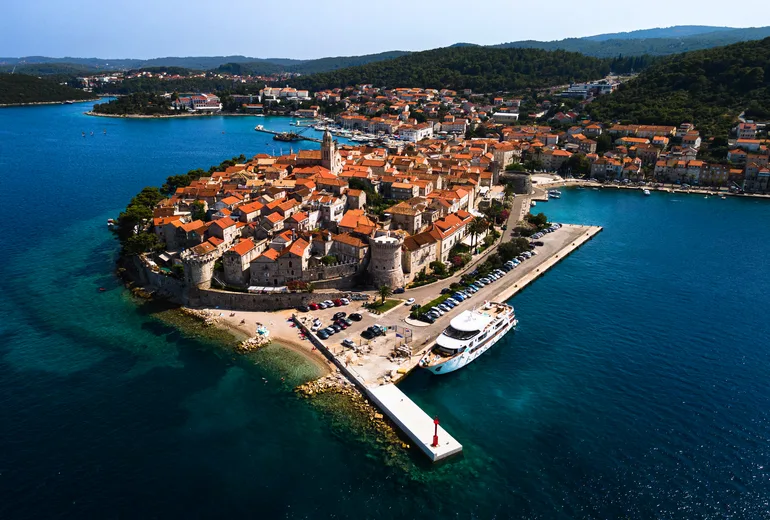
The price you will pay for your program is in euros. You can switch the prices on this website to Canadian dollars as a guide; the contract and the payment are in euros. The converted price in Canadian dollars that you see while browsing is based on current currency exchange rates. For purposes of estimating costs, we’ve used the Bank of Canada rate of C$1.5672 per euro (23 November 2026) below.
The contract is made in euros, so that a weaker Loonie between booking the trip and final payment can cost more in $ than a stronger Loonie would have cost. It’s even possible to pay the balance in early to take advantage of a better rate than is current at the time of final payment. Further, when a card terminal in Croatia offers to charge you in Canadian dollars, always choose euros. The rate offered by the terminal will be poor.
The best value in 2027 sits in the shoulder weeks, with some very reasonable warm weeks as well, and we detail 2027 price bands and the cheapest warm weeks in a separate article. Booking over the winter opens the early-bird discounts for 2027, which matters most for July weeks right after Canada Day.
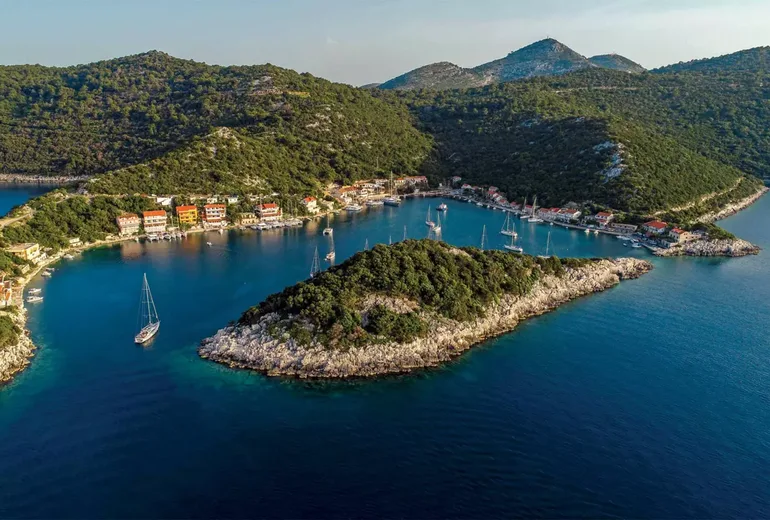
From 11 May 2027 Air Canada will operate non-stop Montreal to Dubrovnik flights three times a week until late October. Air Transat, in the meantime, has operated seasonal Toronto to Zagreb flights in 2026; check its 2027 schedule. And in the meantime, there are flights from Vancouver to Europe and from there to Croatia, or from Vancouver to Montreal and then to Dubrovnik.
No, the PCOC (Pleasure Craft Operator Card) is not one of Croatia’s recognized foreign certificates. A Canadian who holds a Sail Canada Intermediate Cruising (Bareboat) Standard, an IYT International Bareboat Skipper certificate or an ICC recognized in Croatia, plus a VHF radio certificate, can charter a boat in Croatia. Many charterers also hire local skippers for their crews.
You get an International Certificate of Competence (ICC) from IYT or the RYA through an assessment of your sailing experience and skills. Croatia recognizes an IYT ICC up to 18 m and an RYA ICC up to 24 m for sail. Start the process in winter so that it is in hand before spring booking deadlines.
A 40 to 42-foot bareboat catamaran costs about C$4,100 to C$9,900 a week in May, June or September and about C$8,700 to C$11,900 in July and August (middle half of our 2027 listings, checked November 2026, at C$1.5672 per euro). Fuel, marinas, provisions and tourist tax come on top.
Book during the winter of 2026/27 for the weeks surrounding Canada Day and the rest of July 2027. If you want a 40 to 45ft catamaran for 8 people, especially from the smaller Dubrovnik fleet, book the boat before the flight.
Once you have chosen your travel dates, look through our Croatian catamaran bases, from Dubrovnik to the north and send us the chosen week; we then will let you know which boats line up with your flights from Montreal.
Your privacy
You can read more about how we protect your personal data and use cookies in our Privacy Policy.
With your consent, we and Google use cookies and similar technologies to store and access information on your device and to process personal data such as your visit to this website, your IP address and cookie identifiers. You can withdraw your consent at any time through “Cookies Settings” at the bottom of every page.
We and Google process data for:
Website analytics and visit statistics, recordings of visits to improve the website, ad measurement and remarketing, storing and accessing information on your device