October on a Catamaran in Croatia: Cabin Comfort, Heating & the Last Good Weather Windows
Is October too late for a catamaran charter in Croatia? An honest, comfort-first verdict on heating, daylight and the last good weather windows.
Mehr erfahren
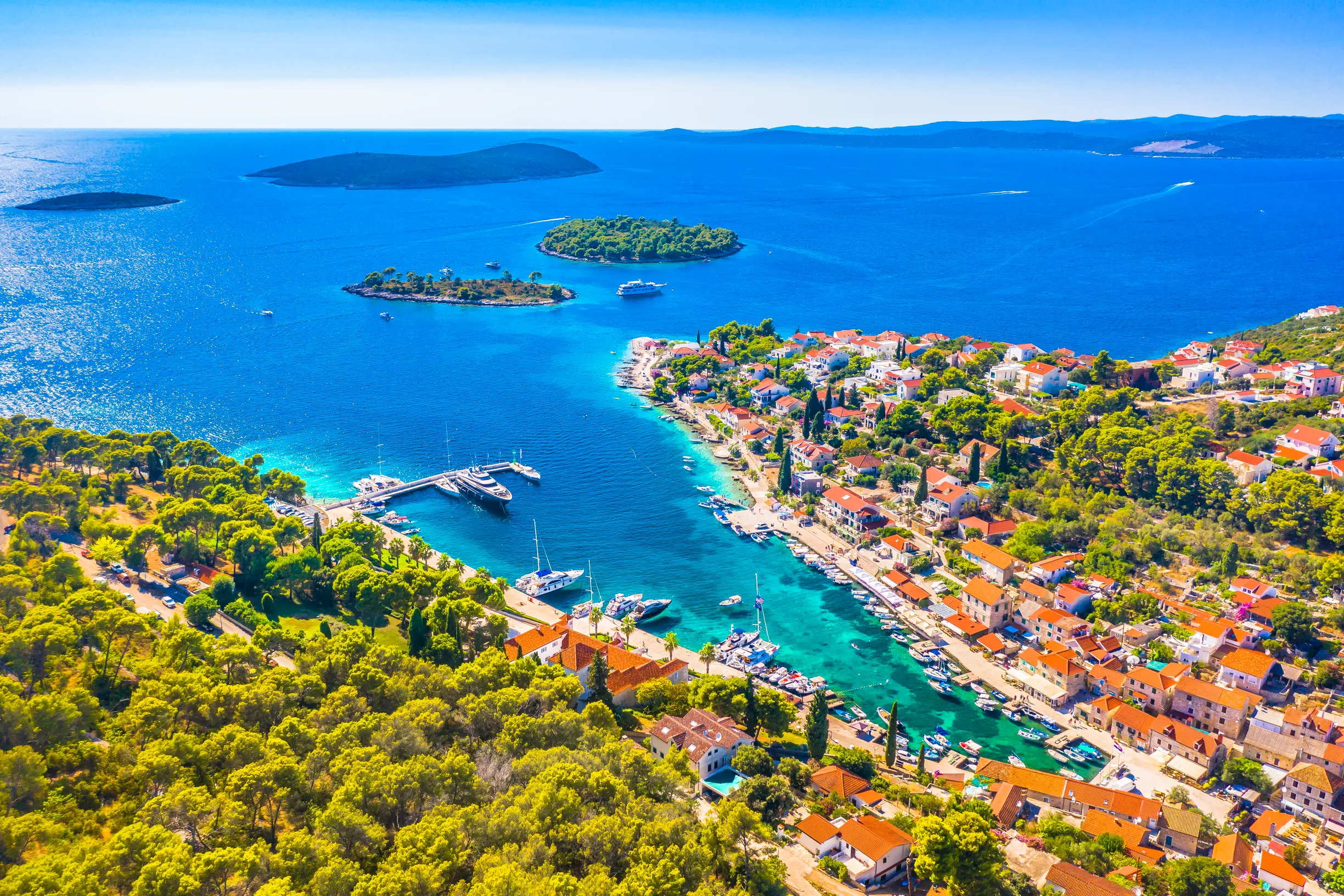
Šolta sits barely an hour from the Split and Trogir charter bases, yet most crews sail straight past it toward Hvar and Vis. That is exactly why it works as a first or last night, or as a quiet bolt-hole when the headline islands are full. The Šolta island anchorages are sheltered, shallow enough for a wide cat, and ringed by konobas that lay free buoys for dinner guests.
This is the practical version: where to drop the hook or grab a buoy on Šolta, what the depths and holding are like, and which bays to favour in the prevailing summer wind. We have written it for wide-beam catamarans, where draft is a non-issue but swinging room and shelter matter.
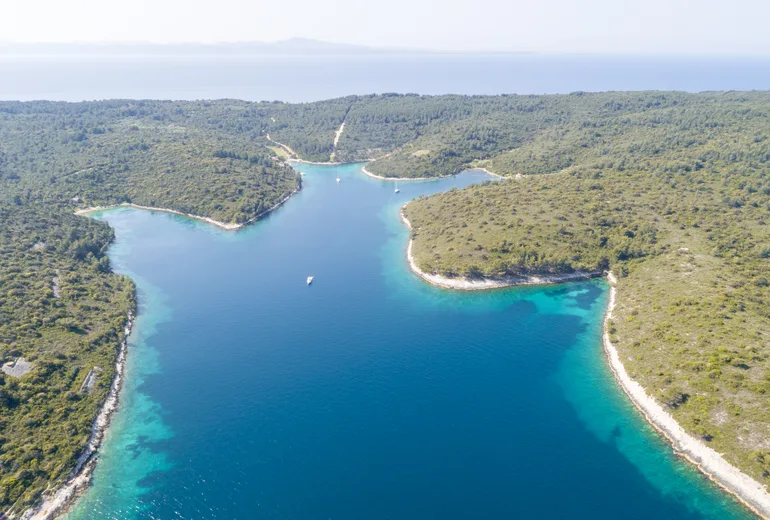
From Split’s ACI marina or the Trogir bases it is roughly 9–12 NM to the north coast of Šolta, a comfortable 1.5 to 2 hours under sail or motor. The Split channel can kick up a short chop when the maestral fills in the afternoon, so an early or late crossing is smoother. There is no tricky pilotage; the bays open clearly and the water is deep right up to the shore in most of them.
Because it is so close, Šolta is the ideal handover-day destination. Provision in Split, sail across in the afternoon, and you wake up on a real island rather than in the marina. For the bigger Dalmatian picture, our planned anchor-only week around Dalmatia uses Šolta as its opening night for exactly this reason.
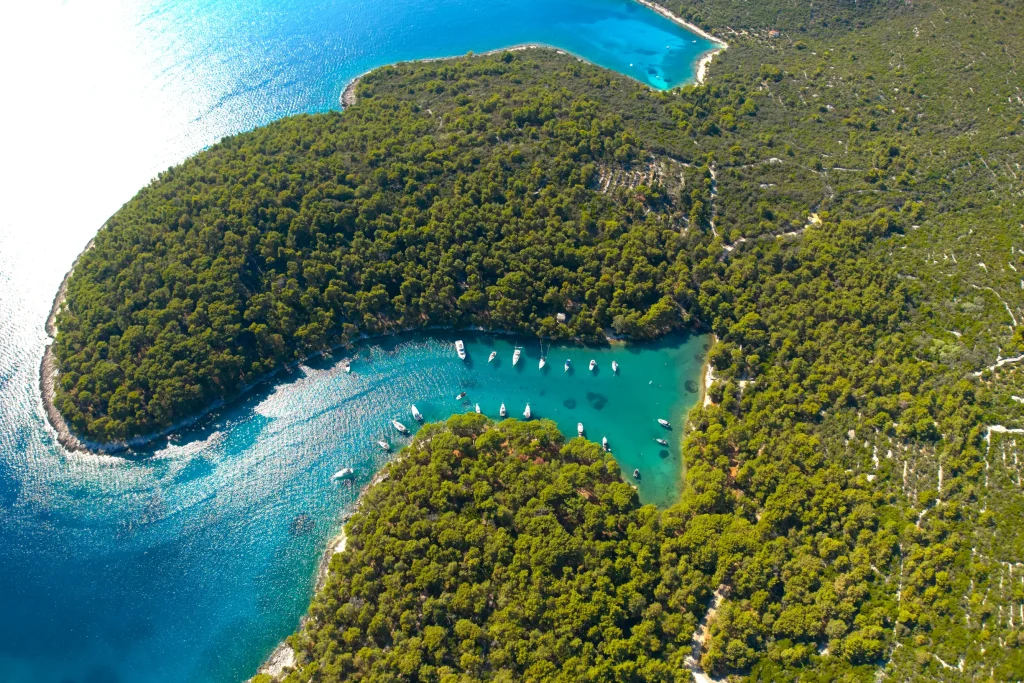
Šešula is a narrow, deep inlet just south of Maslinica, and it is the anchorage most crews come for. The bottom is mud and weed, holding is decent once set, and the surrounding hills give good all-round shelter, including from the west, which makes it a sensible choice if a nevera threatens. Several konobas, Šišmiš among the best known, lay free buoys for guests who book a table.
Pick up a buoy rather than anchoring if you can, because the inlet is tight and fills early in July. Reverse gently to confirm the buoy is well set, then dinghy ashore. Dinner is the price of the mooring, and Šolta’s food is the reason to be here: olive oil from the island’s old groves, lamb peka, and the local Dobričić red.
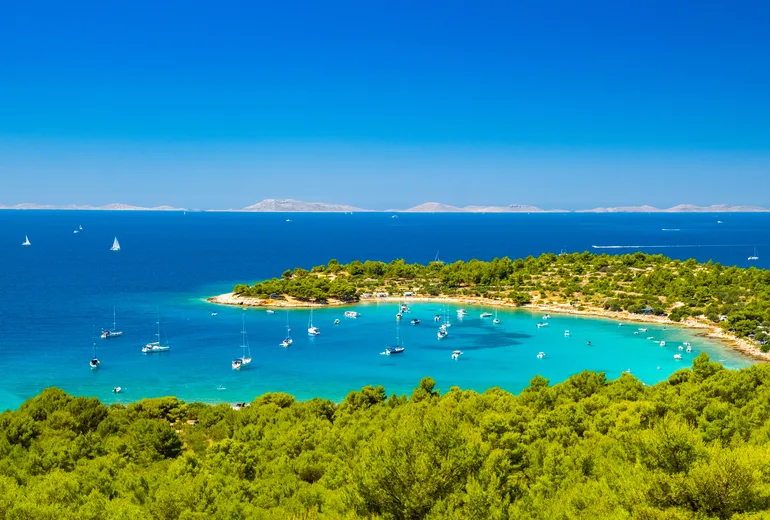
If you must anchor in Šešula, drop in 8–12 metres toward the head of the bay and lay plenty of scope, then check the set hard because the weed patches let an anchor skate. Leave room for the boats already on buoys, which swing differently from anchored boats. In a busy bay, a tripping line is worth rigging in case your anchor fouls debris on the bottom.
Just around the corner, Maslinica is the prettiest village on Šolta, a stone hamlet facing a cluster of seven small islets. There is a smart marina at Martinis Marchi if you want a berth and a meal at the restored castle, but the anchoring is the draw. The channels between the islets offer turquoise water over sand and good day-anchoring for a swim stop.
Overnight, the bays here are more exposed to the west than Šešula, so read the forecast before committing. On a calm night, anchoring off the islets with the village lights across the water is one of the nicer spots in central Dalmatia. Day or night, match your bay to the wind, a habit our best anchoring locations in Croatia guide drills into every itinerary.
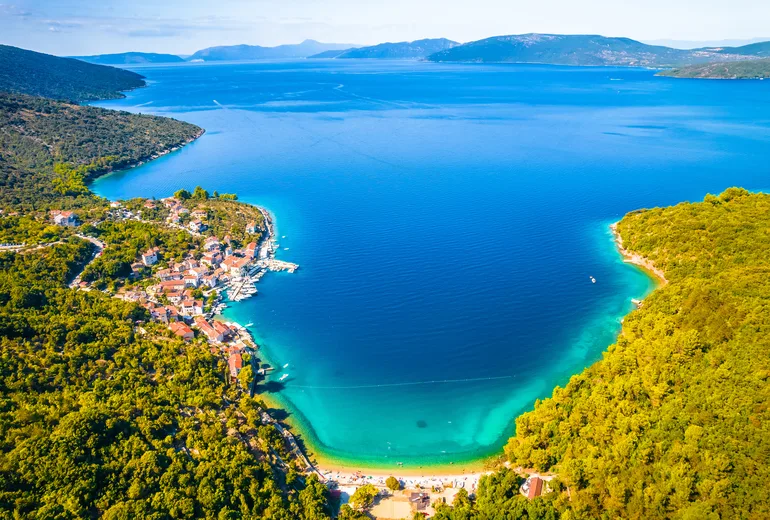
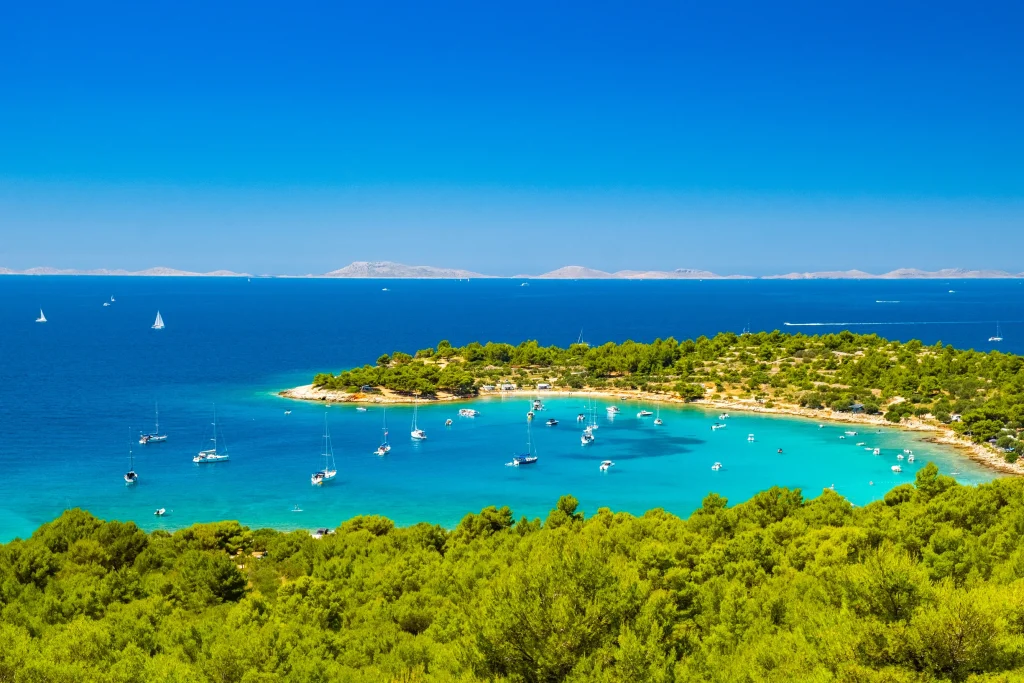
On the north coast, Nečujam is the largest bay on Šolta, a broad indentation with several arms and the gentlest swimming on the island. Holding is good over sand in the inner bays, depths are moderate, and the shelter from most summer winds is reliable. It is the obvious pick for families, with shallow water, a couple of beaches and easy dinghy access to small shops and cafés.
Spread out into one of the side arms for more privacy, and you will often have a stretch of the bay to yourself even in season. If you are sailing with children, Nečujam pairs well with the kid-friendly bays in our family catamaran guide to Croatia’s best bays for kids.
On the east coast, Stomorska is Šolta’s oldest seafaring village and offers a small town quay plus anchoring in the bay. It is a working harbour with a relaxed waterfront, a handful of restaurants, and good shelter from the maestral. If you want one night with the convenience of stepping straight ashore, Stomorska gives you that without the prices or the crowds of Hvar town.
Anchor off if the quay is full, in 5–8 metres over sand and weed, and dinghy in. The village is unhurried in the best way, the kind of place where dinner runs long and nobody is in a rush to leave.
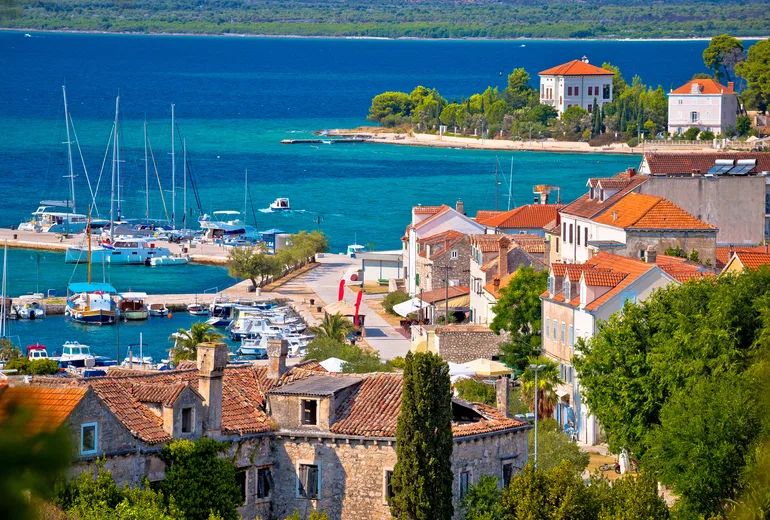
If you remember nothing else, remember this short ranking of the Šolta island anchorages. Šešula is your konoba-buoy night and your best western shelter. Nečujam is the family bay, broad and shallow with easy swimming. Maslinica is the day-anchoring beauty among the islets, settled-weather only. Stomorska is the step-ashore village quay. Between them they cover almost any wind and any mood, which is why Šolta punches well above its size as a first or last island. Pick by the forecast first and by the dinner you fancy second, and you will rarely get it wrong.
Šolta is small, so do not count on a big supermarket. Maslinica and Stomorska have modest shops and a bakery, good for bread, fruit, eggs and the basics, but stock up properly in Split before you cross. The island’s own produce is the reward here: cold-pressed olive oil from groves that have been worked for centuries, honey, capers, and figs in late summer. Buy oil direct from a producer if you can, because Šolta’s oil is among the best in Dalmatia and a bottle makes a fine souvenir.
For water, top up at the Martinis Marchi marina in Maslinica or at Rogač, the ferry port, rather than expecting a hose in the anchorages. Getting ashore is easy by dinghy in Šešula and Nečujam; in Stomorska you can usually come alongside the quay. Mobile coverage is good across the island if you need to check a forecast or rebook a leg, and the konobas take cards, though it is wise to carry some cash for the smallest places.
Šolta runs on a slower clock than Hvar or Split. Lunch service can finish early in the smallest konobas and reopen for dinner, so if you arrive mid-afternoon hungry, ask rather than assume. Shops may close for a long midday break. This is part of the charm, not a frustration, once you sail to the island’s rhythm instead of fighting it.
A satisfying Šolta day looks like this: a morning swim stop among the Maslinica islets, lunch at anchor, an afternoon sail around the north coast, then a konoba buoy in Šešula for the evening. It is low-mileage, low-stress sailing that still feels like a proper island day, which is exactly what handover day and tired-crew days call for.
Šolta rewards crews who slow down. It has no must-see monument and no marquee nightlife, and that is the point. As an opening night, a quiet refuge, or a final stop before you hand the boat back, it earns its place on almost every central-Dalmatia route.
If you have an extra hour, the south coast of Šolta hides a string of tiny coves, Tatinja, Senjska and Stračinska among them, that rarely see a charter boat. They are open to the south and only worth it in settled weather, but on a calm day they are some of the most private swim stops within an easy sail of Split. Drop the hook, lower the swim ladder, and you may not see another boat for hours. These southern coves are open to the swell, so they are strictly fair-weather lunch stops rather than overnight bays, and you would not want to be caught there in a southerly. But on the right day they are the kind of quiet, glassy water that reminds you why you came to sail Croatia in the first place, all within a short hop of the busiest charter base in the country.
Šešula bay below Maslinica is the main spot, where konobas such as Šišmiš lay buoys free for guests who eat ashore. Reverse gently to confirm the buoy is secure, then dinghy in for dinner. The buoy effectively costs the price of your meal, which on Šolta is worth it for the local lamb, olive oil and Dobričić wine.
Yes. The bays are deep enough and the entrances clear, so a catamaran’s draft is never an issue, and the swinging room in Nečujam and Maslinica suits a wide boat. Šešula is tighter, so a buoy is better than anchoring there in season. Overall Šolta is one of the easier central islands for a beginner cat crew.
Šešula and the inner arms of Nečujam give good protection from the prevailing north-westerly maestral. Stomorska on the east coast is also sheltered from it. Maslinica’s outer anchorages are more exposed to the west, so move there only in settled conditions and watch the afternoon forecast.
Roughly 1.5 to 2 hours from the Split or Trogir bases, covering about 9–12 NM depending on which bay you choose. The crossing is straightforward, though the channel chops up when the maestral fills in, so an earlier or later passage is more comfortable, especially with children aboard.
Planning a central-Dalmatia route that starts gently? Explore the islands and bays on our Croatia catamaran destinations pages and build Šolta into your first or last night.